What Do Chimpanzees Eat? Chimpanzee Diet Explained
What Do Chimpanzees Eat: Chimpanzees are omnivores, but they eat mostly fruit. Ripe fruit makes up about half or more of a wild chimpanzee’s diet, especially figs.
The rest is leaves, shoots, seeds, flowers, bark and pith, plus insects such as termites and ants, honey, birds’ eggs and some meat. Chimpanzees also hunt small animals, especially red colobus monkeys, but meat is only a small part of their diet, usually just a few percent of what they eat.
A wild chimpanzee can eat from more than 100 different plant species over a year, changing its diet with the seasons. Chimps are also skilled tool users: they fish for termites with twigs, crack nuts with stones and use leaves as sponges to drink water.
This guide explains what chimpanzees eat in the wild, how they find and hunt their food, and how their diet changes through the year. It also covers what chimps eat in sanctuaries, and where you can watch them feeding on a chimpanzee tracking safari in Uganda.
Chimpanzee Diet at a Glance
| Food type | Share of diet | Examples |
| Fruit | About half or more | Figs, wild plums, berries, palm fruits |
| Leaves and plant parts | About a quarter or more | Young leaves, shoots, pith, stems, flowers, bark |
| Seeds and nuts | Seasonal | Seeds, nuts cracked with stones in West Africa |
| Insects | Small but regular | Termites, ants, larvae, bees |
| Honey | Occasional | Wild bee honey, collected with sticks |
| Meat | Small, a few percent | Red colobus monkeys, young antelopes, bushpigs |
| Other foods | Occasional | Birds’ eggs, mushrooms, soil, medicinal plants |
What Do Chimpanzees Eat in the Rainforest
1. Fruit: The Favourite Food of Chimpanzees
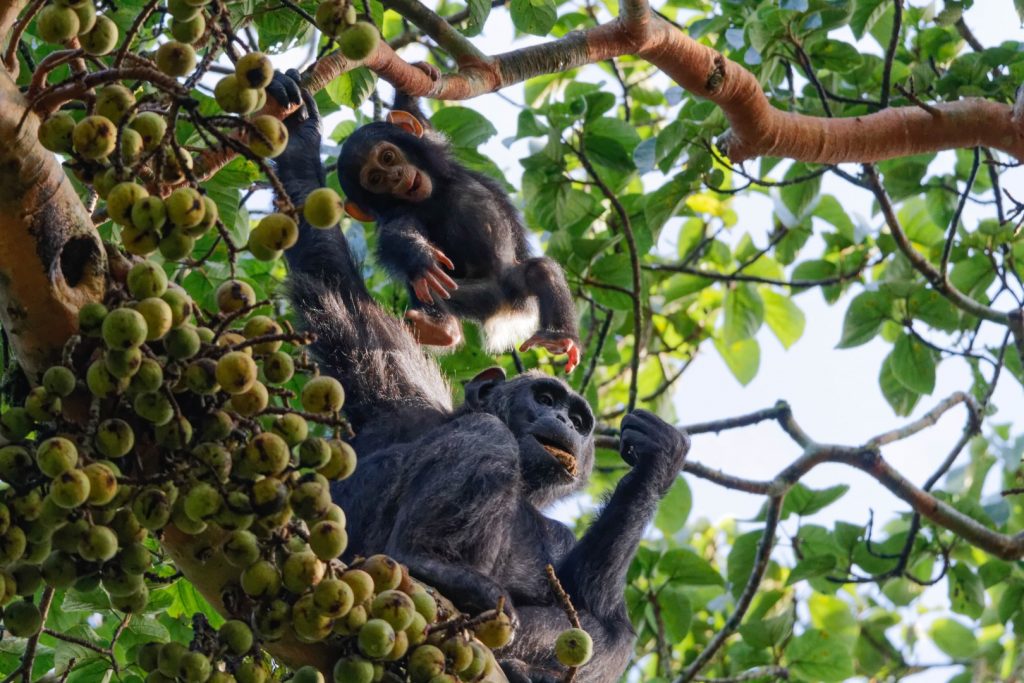
Fruit is the heart of the chimpanzee diet. Chimps spend hours each day travelling between fruiting trees and remember where and when each tree will produce ripe fruit. Figs are especially important, because fig trees fruit at different times through the year and give chimps food even when other fruit is scarce.
When a large tree is full of ripe fruit, a whole chimpanzee community may gather to feed, with loud “pant-hoot” calls announcing the find. That is one of the best moments to see chimps on a Kibale Forest chimpanzee tour.
2. Leaves, Pith, Bark and Flowers
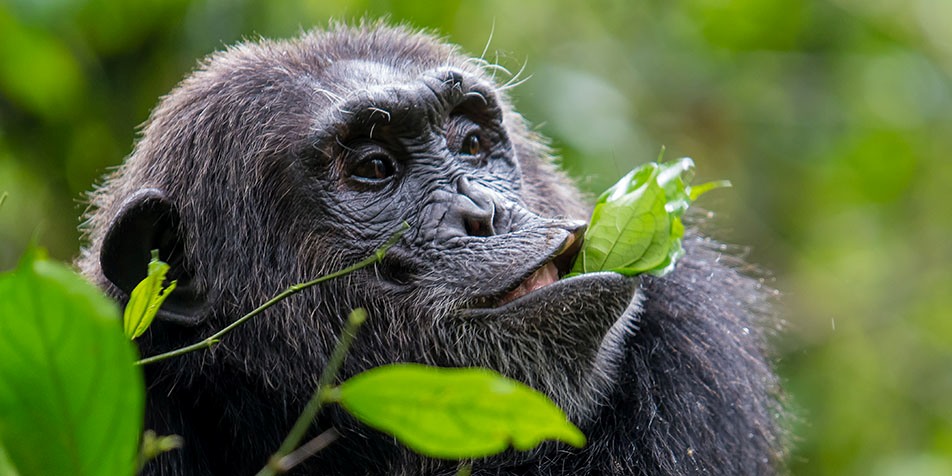
When fruit is scarce, chimpanzees eat more young leaves, shoots, stems, pith (the soft inside of plant stems), flowers and bark. These foods are always available, so they act as “fallback foods” in the dry season. Chimps carefully choose tender young leaves, which are easier to digest and more nutritious than old ones.
3. Insects: Termites, Ants and Larvae
Insects give chimpanzees valuable protein and fat. The most famous example is termite fishing: a chimp strips a twig or grass stem, pokes it into a termite mound, waits for termites to bite on, then pulls it out and eats them.
Jane Goodall’s discovery of this behaviour at Gombe in Tanzania in 1960 changed how scientists saw animal intelligence. Chimps also dip sticks into ant nests to eat army ants, and eat beetle larvae and caterpillars.
4. Honey and Birds’ Eggs
Chimpanzees love honey and will use sticks to reach into bees’ nests, often accepting a few stings for the reward. They also raid birds’ nests for eggs and chicks when they find them.
Do Chimpanzees Eat Meat?
Yes. Chimpanzees hunt and eat meat, which sets them apart from gorillas, which are almost entirely vegetarian. Meat makes up only a small part of their diet, usually a few percent, but hunting is an important social activity.
- Main prey:Red colobus monkeys are their favourite prey in many forests, including Kibale. They also hunt other monkeys, young bushbucks and duikers, bushpigs and other small mammals.
- Group hunting:Adult males often hunt together, with some chimps chasing the monkeys while others block escape routes in the trees.
- Sharing meat:Successful hunters share meat with allies and females, strengthening friendships and social status.
The chimpanzees of Ngogo in Uganda’s Kibale National Park are among the most skilled hunters ever studied, and their hunting has reduced the local red colobus population. In Senegal, chimpanzees at Fongoli have even been seen using sharpened sticks to hunt bush babies. Learn more about chimpanzee social life in chimpanzee mating rituals.
How Chimpanzees Use Tools to Get Food
Chimpanzees are among the most skilled tool users in the animal kingdom, and most of their tools are for getting food.
| Tool behaviour | How it works | Where it is seen |
| Termite fishing | Twig or grass stem poked into termite mounds | Gombe (Tanzania) and many other forests |
| Ant dipping | Stick dipped into army ant nests | Across Africa |
| Nut cracking | Stone or wood hammer and anvil to crack hard nuts | West Africa (Ivory Coast, Guinea) |
| Leaf sponging | Chewed leaves used to soak up water from tree holes | Across Africa |
| Honey dipping | Sticks used to reach honey in bees’ nests | Across Africa |
| Hunting spears | Sharpened sticks used to stab bush babies | Fongoli, Senegal |
Different chimpanzee communities use different tools, which scientists see as a form of animal “culture” passed from mother to young.
Do Chimpanzees Eat Medicinal Plants?
Yes. Chimpanzees sometimes eat plants that seem to work as medicine. Sick chimps have been seen chewing the bitter pith of plants such as Vernonia and swallowing rough leaves whole, such as Aspilia. These behaviours seem to help them get rid of intestinal parasites. Chimps also eat small amounts of soil, which may provide minerals or help settle the stomach.
How the Chimpanzee Diet Changes with the Seasons
A chimpanzee’s diet depends heavily on what is in season.
- Wet seasons:More fruit is available, so chimps eat mainly fruit and often travel in larger groups.
- Dry seasons:Fruit becomes scarce, so chimps eat more leaves, pith, bark and seeds, and may split into smaller groups to search for food.
Because they rely on fruit, chimps travel several kilometres each day through the forest. That’s why chimpanzee tracking guides follow their calls and feeding trees to find them. See the chimpanzee permit costs in Uganda to plan your trek.
How Do Chimpanzees Drink Water?
Chimpanzees get much of their water from juicy fruit and leaves. They also drink from streams and use leaf sponges, chewing leaves into a ball, soaking them in water trapped in tree holes, then squeezing the water into their mouths.
What Do Baby Chimpanzees Eat?
Baby chimpanzees drink their mother’s milk for about four to five years. From a few months old they start tasting soft fruit and leaves, learning what to eat by watching their mother. Young chimps also learn tool skills, such as termite fishing, by copying adults over several years.
What Do Chimpanzees Eat in Sanctuaries and Zoos?
In sanctuaries and zoos, chimpanzees eat a balanced diet of fresh fruit, vegetables, leafy greens, nuts, seeds and specially made primate pellets. At Ngamba Island Chimpanzee Sanctuary on Lake Victoria, rescued chimps forage in the island’s forest and receive supplementary feeds of fruit and vegetables. Visitors can watch the feeding sessions from a viewing platform. Join a 1 Day Ngamba Island Chimpanzee Tour to see it.
Chimpanzee Diet vs Gorilla Diet
| Chimpanzee | Gorilla | |
| Diet type | Omnivore | Mainly herbivore |
| Main food | Ripe fruit | Leaves, stems and shoots |
| Meat | Yes, hunts monkeys and small mammals | No |
| Insects | Termites, ants, larvae | Small amounts of ants and termites |
| Tool use for food | Common | Rare |
Where to See Chimpanzees Feeding in the Wild
Uganda is one of the best countries in Africa to watch wild chimpanzees feed, hunt and socialise:
- Kibale Forest National Park:The “Primate Capital of the World”, with about 1,500 chimpanzees and very high sighting rates. Stay at Primate Lodge Kibale or book a 3 Days Kibale National Park Safari.
- Budongo Forest:Near Murchison Falls, with habituated chimps feeding in giant mahogany forest. See the 3 Days Budongo Forest Chimpanzee Safari.
- Kyambura Gorge:A sunken forest in Queen Elizabeth National Park. See the 3 Days Kyambura Gorge Chimpanzee Safari.
- Kalinzu Forest:An affordable chimp tracking option near Queen Elizabeth. See the 3 Days Kalinzu Forest Primate Safari.
- Nyungwe Forest, Rwanda:Chimps in one of Africa’s oldest rainforests. See the 2 Day Nyungwe Forest Safari.
The best time to watch chimps feeding is in the early morning, when they come down from their nests to eat in fruiting trees.
FAQs: What Do Chimpanzees Eat?
What is a chimpanzee’s favourite food? Ripe fruit, especially figs, which make up the largest part of their diet.
Are chimpanzees herbivores or carnivores? Chimpanzees are omnivores. They eat mainly plants but also insects, eggs and meat.
Do chimpanzees eat monkeys? Yes. They hunt monkeys, especially red colobus, usually in groups led by adult males.
Do chimpanzees eat bananas? Wild chimps rarely find bananas in the forest, but they will eat them if available. Bananas are common in captive diets and are sometimes raided from farms near forests.
How much do chimpanzees eat a day? Chimpanzees spend roughly half of their waking day feeding and travelling between food sources. Adult chimps eat several kilograms of food each day.
Do chimpanzees eat humans? No. Chimpanzees do not hunt humans for food. However, they are very strong and can be dangerous, which is why chimp tracking is always led by trained rangers.
Conclusion: Fruit Lovers, Clever Foragers and Occasional Hunters
Chimpanzees are fruit lovers first, eating mostly ripe figs and other fruit, with leaves, insects, honey and occasional meat filling the gaps. Their clever tool use, cooperative hunting and seasonal foraging make them one of the most fascinating animals to watch in the wild.
See chimpanzees feeding in the wild: Book a chimpanzee safari in Uganda with Gorilla Nests Safaris. Choose a 2 days chimpanzee safari in Uganda, combine chimps and gorillas on our 4 Days Gorillas and Kibale Chimpanzees or 5 Days Gorillas and Chimpanzee Safari, or explore all Uganda primate safaris. Call +256 758 097 093, email info@gorillanestssafaris.com or contact us to start planning.