
Great Migration Animals: Complete Guide to the Serengeti & Masai Mara Wildlife Spectacle
Discover the incredible Great Migration animals, from millions of wildebeest and zebras to lions, cheetahs, and crocodiles. Learn which species take part in Africa’s greatest wildlife spectacle.
The Great Migration animals form one of nature’s most breathtaking phenomena — an endless cycle of life involving over two million hoofed creatures and the predators that shadow them across Tanzania’s Serengeti and Kenya’s Masai Mara. Anyone planning a Masai Mara safari tour around this event is chasing what’s often called the “Greatest Wildlife Show on Earth.”
The Serengeti migration animals and Masai Mara migration wildlife include massive herds of wildebeest, zebras, and gazelles, along with the iconic big cats and crocodiles that hunt them.
Every year, these animals undertake a roughly 1,800-mile (3,000 km) circular journey driven by rain and fresh grass, producing dramatic river crossings, mass calvings, and near-constant predator-prey action.
If you’ve searched for “Great Migration animals,” you’re likely planning — or dreaming of — a safari to witness this bucket-list event. This guide covers every animal involved, their behaviors, a month-by-month calendar, survival strategies, and practical tips to help you experience the migration at its peak.
Primary Migratory Animals of the Great Migration
Wildebeest (Blue Wildebeest — Connochaetes taurinus)
With a population of roughly 1.5–1.7 million, wildebeest are the undisputed stars and engine of the Great Migration. They form super-herds that can stretch 40 km long, with males establishing temporary territories during the rut. Their migration is driven by rain-triggered grass growth, and their short, square lips let them crop very short grass that other species can’t touch.
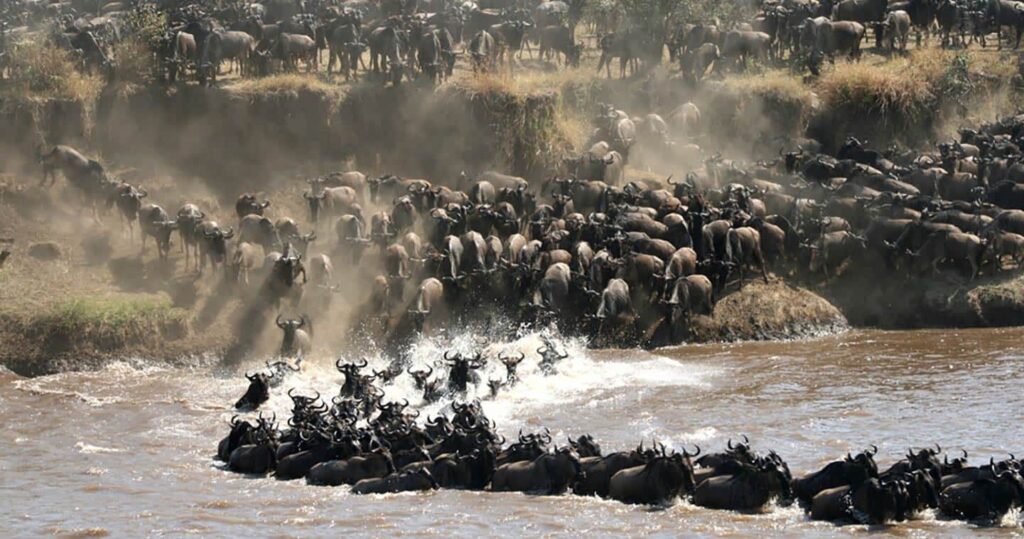
Around 250,000–500,000 calves are born in a synchronized 2–3 week window, usually in February, with up to 8,000 newborns arriving per day at peak. River drownings and predation from lions and crocodiles claim up to 250,000 wildebeest annually, mostly calves.
Plains Zebra (Equus quagga)
Roughly 300,000 zebras act as the “pathfinders” of the migration, traveling ahead of the wildebeest herds. They prefer taller grass with higher fiber content, and their digestive system processes it faster — leaving shorter, protein-rich grass behind for wildebeest.
Their stripes help confuse predators and biting flies, and they become primary lion prey during the dry season as they lead the migrating columns.
Thomson’s Gazelle (Eudorcas thomsonii)
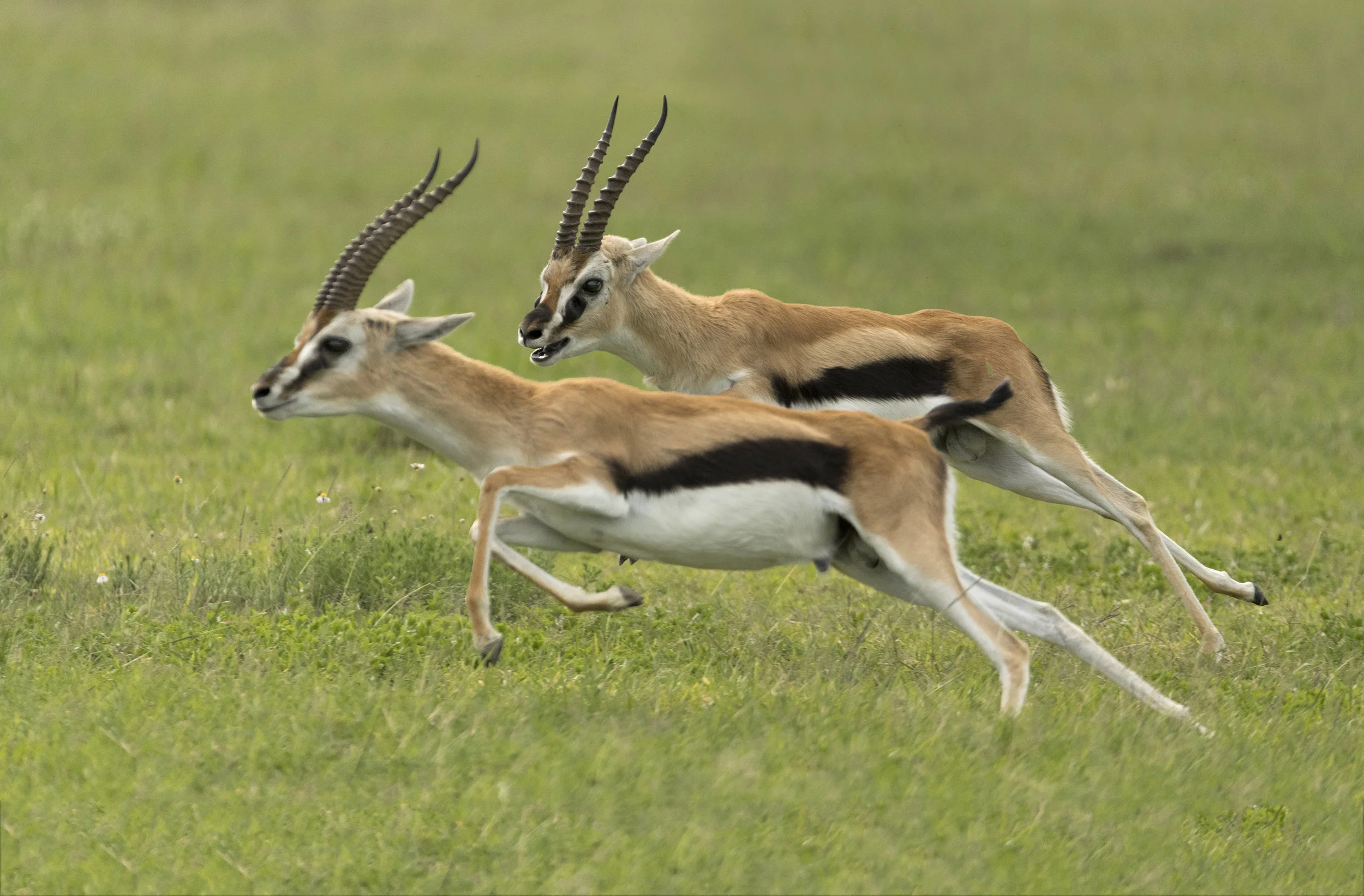
Numbering around 200,000–300,000, Thomson’s gazelles are the “tail-end Charlies” that follow weeks behind the main herds, feeding on the grass regrowth left after wildebeest have grazed.
Males defend small mating territories, and the species can reach speeds of 60 mph (100 km/h) — the second fastest land animal after the cheetah.
Grant’s Gazelle and Eland
Present in smaller numbers but still part of the migration, eland are the largest antelope species and can jump 2.5 meters from a standing start.
Predators That Follow the Great Migration
- Lions – The Serengeti holds roughly 3,000 lions, with Mara River prides specializing in ambush tactics at crossing points; kill rates spike dramatically during the July–October crossings.
- Cheetahs – Prefer open plains and typically target Thomson’s gazelle fawns.
- Leopards – Solitary hunters that drag kills into trees, away from competing hyenas.
- Spotted Hyenas – An estimated 8,000–10,000 roam the Serengeti, with clans of 60 or more following the calving grounds each February.
- African Wild Dogs, Black-backed Jackals, and Vultures – Clean up the remains left by larger predators.
- Nile Crocodiles – The Mara River hosts some of Africa’s largest crocodiles, up to 6 meters and 1,000 kg. Over 3,000 congregate during peak crossing months, with some individuals waiting a full year between meals.
Great Migration Calendar: Month-by-Month Highlights
| Months | Location | Key Animals & Events |
|---|---|---|
| Dec–Mar | Southern Serengeti / Ndutu | Wildebeest calving, zebra foaling, predator activity peaks |
| Apr–May | Central Serengeti | Long rains push herds to split and move north |
| Jun–Jul | Western Corridor & Grumeti | First major river crossings (Grumeti River) |
| Jul–Oct | Northern Serengeti & Masai Mara | Dramatic Mara River crossings, peak predator action |
| Nov | Northern Serengeti | Short rains begin, herds start moving south |
| Dec | Southern plains | The cycle restarts |
The best window for river crossings falls between late July and early October on the Mara River, while the best time for newborn calves and dense predator activity is February in the Ndutu region — both worth building your Kenya safari package or Serengeti trip around.
Before you travel, it’s worth checking the current Maasai Mara National Reserve entrance fee, since crossing-season rates and permits can differ from the quieter months.
Why Do These Animals Migrate?
The migration is triggered by rainfall patterns across East Africa. Wildebeest have an almost mythical ability to sense distant rain, moving north and west as southern plains dry out in pursuit of fresh thunderstorms.
Zebras tend to lead the herds, relying on superior route memory that benefits the less navigationally gifted wildebeest behind them. The entire loop is a striking example of co-evolution — grazers, grass, rain, and predators locked in constant balance.
Dramatic Behaviors You’ll Witness
- Synchronized calving – around 80% of wildebeest calves are born within the same 2–3 week window, overwhelming predators with sheer numbers.
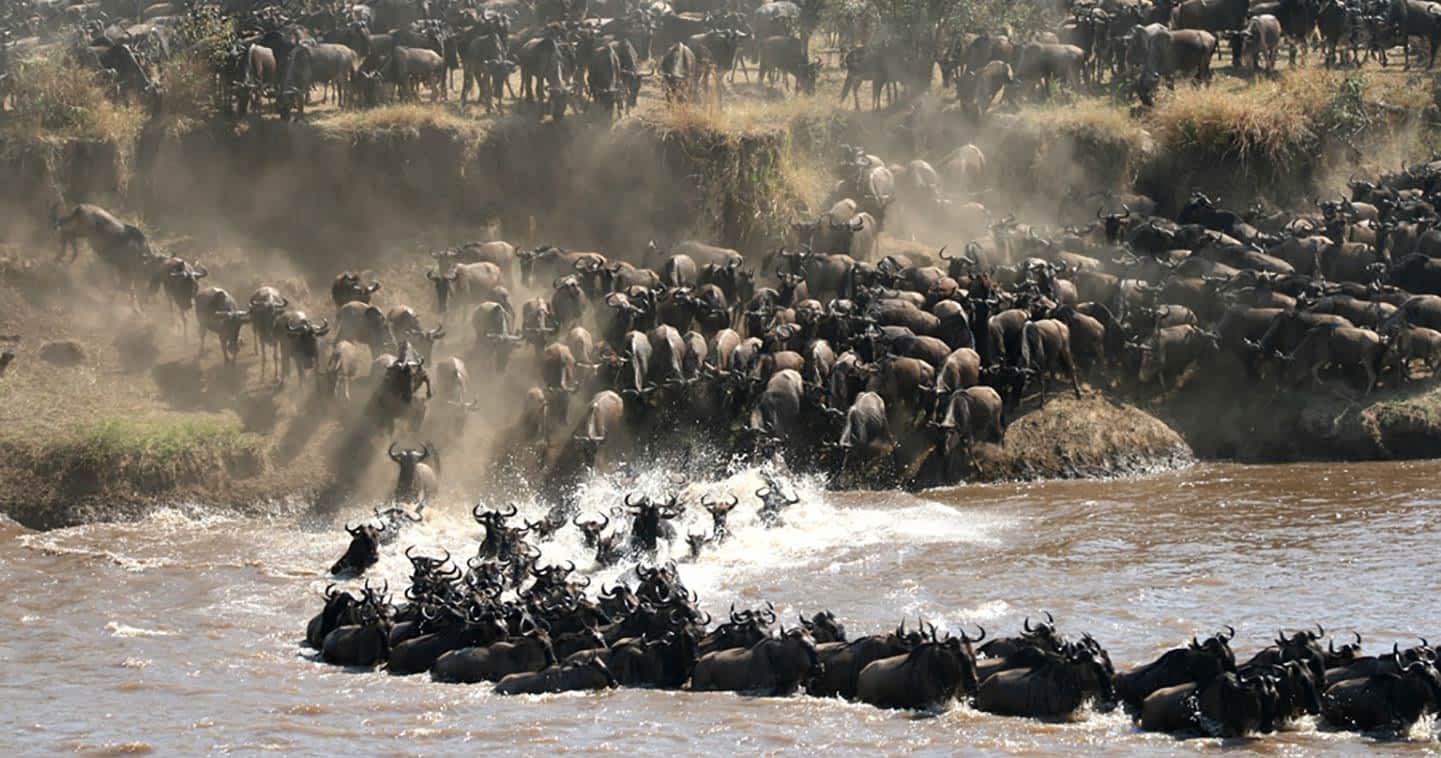
- Mara River chaos – herds can hesitate for hours or days before one animal leaps, triggering a mass plunge into the water.
- Crocodile ambushes – crocodiles target the middle of a crossing, where panicked animals bunch together.
- Lion “fishing” – prides wait at known exit points, picking off exhausted swimmers as they climb the riverbank.
- Vulture highways – hundreds of vultures circle above drowning or injured animals within minutes.
Mind-Blowing Migration Facts & Statistics
- Roughly 2 million hoofed animals migrate each year.
- Herds travel up to 800 km (500 miles) annually.
- Wildebeest calves can run within 10 minutes of birth.
- Up to 10,000 animals can cross the Mara River in a single day.
- Natural mortality runs around 10–12% of the herd annually, acting as a form of population control.
According to the Tanzania National Parks Authority, the government body responsible for managing the Serengeti and Tanzania’s other protected areas, Serengeti National Park alone spans nearly 14,763 square kilometers of savanna — giving a sense of just how vast a stage this migration plays out on.
Great Migration Animal Count (Approximate)
- Wildebeest: 1.5 million
- Zebra: 300,000
- Thomson’s Gazelle: 250,000
- Predators: approximately 15,000 large carnivores following the herds
FAQs About Great Migration Animals
Which animals participate in the Great Migration? Mainly wildebeest (around 1.5 million), plains zebra (around 300,000), and Thomson’s and Grant’s gazelles, with lions, hyenas, cheetahs, leopards, crocodiles, and vultures following as predators.
Where can I see the Great Migration animals? Tanzania’s Serengeti National Park and Ngorongoro Conservation Area, or Kenya’s Masai Mara National Reserve, including quieter private conservancies bordering both.
Which month is best for seeing the river crossings? Late July through October, with August and September usually marking the peak for dramatic Mara River crossings.
Do all the animals survive the migration? No — an estimated 250,000–300,000 wildebeest and around 30,000 zebras die each year from predation, exhaustion, drowning, or thirst, a natural process that keeps the ecosystem healthy.
How dangerous are the river crossings? Extremely. A single bad crossing can drown thousands of animals if the herd panics and piles up, while crocodiles take hundreds more during peak season.
Practical Safari Planning: How to See the Great Migration Animals
Best months by experience:
- Calving and predator action → January–March (Ndutu, southern Serengeti)
- Grumeti River crossings → June–early July
- Mara River crossings → late July–October
- Fewer crowds → May, June, November — see our broader guide to the best month to do a safari in Kenya for more seasonal detail
Top viewing locations:
- Kogatende (northern Serengeti) – closest access to the main Mara crossings
- Lamai Wedge & Mara Triangle (Masai Mara) – quieter than the main reserve
- Seronera (central Serengeti) – strong year-round cat sightings
- Ndutu (Ngorongoro Conservation Area) – prime February calving season
Recommended safari types include mobile camping safaris that follow the herds, fly-in packages to private conservancies, and luxury safari lodges in Maasai Mara positioned for permanent river-crossing views.
What to pack: binoculars (8×42 or 10×42), a bean bag or tripod for photography, neutral-colored clothing, a rain jacket for the green season, a power bank, and a GoPro for capturing river crossings.
Photography tips: use a fast shutter speed (1/2000 or faster) for splashing water, continuous autofocus, shoot in bursts during crossings, and bring a 100–400mm or 200–600mm lens for distant action.
Combine the Migration with a Wider East Africa Adventure
Many travelers pair their Great Migration safari with a deeper look at the region — our national parks in Kenya guide covers other reserves worth combining with a Mara visit, our 3 Days Masai Mara Private Safari offers a shorter alternative for tighter schedules, while a family safari in Kenya itinerary can be built around migration season for travelers bringing children along.
Most journeys begin with a flight into Jomo Kenyatta International Airport before a road or air transfer out to the Mara. For those wanting to extend even further, our safari combos page covers cross-border options linking the Mara with Uganda’s gorilla trekking or Tanzania’s wider parks circuit.
Ready to Witness the Great Migration Animals Live?
Nothing compares to the thunder of 1.5 million hooves, the raw power of a Mara River crossing, or the sight of a lion pride taking down a wildebeest at dawn.
Gorilla Nests Safaris can secure your spot for front-row seats to nature’s greatest drama, whether that means a classic 4 Days Masai Mara Safari timed for peak crossing season or a longer, fully customized migration itinerary.
Secure your spot for 2026 or 2027 now — the best camps and private concessions book 12–18 months in advance, especially for the July–October crossing season. Contact us today and don’t just watch the migration in documentaries — be there when it happens.