
Where Do Ostriches Live? Habitat, Range & Where to See Them
Ostriches live in Africa’s open, dry country: wild ostriches are found in savannas, semi-arid plains, grassy woodland and the semi-deserts of the Sahel across sub-Saharan Africa, with the largest numbers reported in eastern and southern Africa, in countries such as Kenya, Tanzania, Ethiopia, Namibia and South Africa.
They avoid dense tropical forest, where they could neither see danger coming nor run, and they were once also found in parts of Arabia and the Middle East before the Arabian ostrich was hunted to extinction.
For a safari traveller, the answer is encouraging: you can see wild ostriches in East Africa, from Uganda’s remote Kidepo Valley National Park to the open plains of Kenya’s Maasai Mara and Tanzania’s Serengeti.
This guide explains where ostriches live, which habitats they need, where each subspecies is found, whether ostriches live in deserts, how wild and farmed ostriches differ, and where to see ostriches in East Africa.
Where Do Ostriches Live? A Quick Overview
| Question | Answer |
|---|---|
| Which continent? | Africa (wild populations today) |
| Habitat | Savanna, semi-arid plains, grassy woodland, scrub, semi-desert |
| Where is it too wet or dense? | Dense tropical forest, where ostriches cannot run or watch for danger |
| Largest numbers | Reported in eastern and southern Africa |
| Conservation status | Common ostrich: Least Concern. North African subspecies: fragile |
| Best places to see them | Kidepo Valley (Uganda), Maasai Mara, Amboseli, Samburu, Tsavo (Kenya), Serengeti, Tarangire, Ngorongoro (Tanzania) |
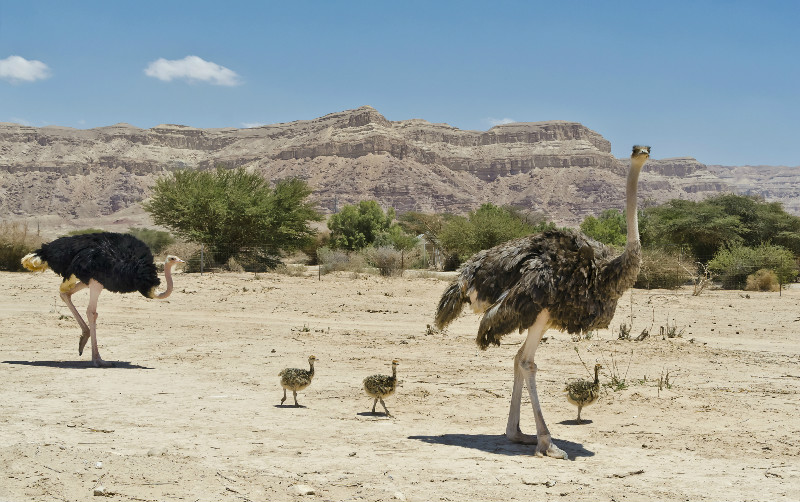
Ostrich Habitat: What Kind of Place Do Ostriches Live In?
Ostriches are birds of open country. The ostrich habitat that suits them best has three features:
- Wide open ground. An ostrich’s main defence is its eyesight and its speed. It needs a long view to spot lions, cheetahs and hyenas early, and room to run.
- Dry to semi-dry conditions. Ostriches thrive in arid and semi-arid land, and can tolerate very large temperature swings between night and day.
- Food and a little cover. They need grasses, seeds, shoots and insects (see our guide to what ostriches eat), and scattered shrubs or trees for shade and nesting.
That combination is exactly what Africa’s savannas, semi-arid plains and scrublands offer, which is why ostriches are so closely associated with East Africa’s safari landscapes.
Why ostriches do not live in rainforest. A flightless bird that relies on sight and speed would be at a serious disadvantage in dense forest, where visibility is poor and there is nowhere to run.
This is also why ostriches are absent from places like the mountain gorilla forests of Bwindi and Volcanoes National Park, and why a safari that includes both gorillas and ostriches has to cross from forest country to open plains.
Where Do Ostriches Live in Africa?
Wild ostriches occur on both sides of the equatorial forest belt, in a band of open habitats across the continent:
| Region | What You Find There |
|---|---|
| North Africa and the Sahel | The North African ostrich, once widespread, now in fragmented pockets, with conservation and reintroduction work under way in places |
| East Africa | The Masai ostrich across Kenya, Tanzania and Uganda; the Somali ostrich in the north |
| The Horn of Africa | The Somali ostrich in northern Kenya, Ethiopia and Somalia |
| Southern Africa | The South African ostrich, from southern Angola and Zambia south through Namibia, Botswana, Zimbabwe and Mozambique to South Africa |
Ostriches are generally most numerous in eastern and southern Africa, while populations in West Africa and the Sahel have been reduced by hunting and habitat loss.
Ostrich Subspecies and Where Each One Lives
There are several forms of ostrich, and each lives in a different part of Africa:
| Ostrich | Neck Colour | Where It Lives |
|---|---|---|
| North African ostrich | Red-necked | The Sahel and parts of North Africa, now in fragmented pockets |
| Masai ostrich | Pink to red | Kenya, Tanzania and Uganda, mainly dry savanna |
| Somali ostrich | Blue-grey | The Horn of Africa, including northern Kenya and Ethiopia |
| South African ostrich | Grey-blue to black-necked | Southern Africa, from Angola and Zambia south to South Africa |
The Somali ostrich is recognised as a separate species by many authorities, and it evolved apart from the common ostrich, separated by the East African Rift. In places where the Masai and Somali ostrich ranges overlap, the two are kept apart by behaviour and habitat preferences. The Arabian ostrich, which once lived in Arabia and the Middle East, has been extinct since the middle of the last century.
Where Do Ostriches Live in East Africa?
East Africa is one of the best regions in the world to see wild ostriches, and it holds two distinct forms:
- The Masai ostrich lives across the dry savanna of Kenya, Tanzania and Uganda. Breeding males develop pink to red necks and legs, which makes them easy to identify.
- The Somali ostrich lives further north, in the arid country of northern Kenya, Ethiopia and Somalia, and is recognisable by its blue-grey neck.
In Uganda, ostriches are found in the dry, open country of the far north-east, in Kidepo Valley National Park and the surrounding Karamoja region, including areas such as Pian Upe. Kidepo is a remote savanna park far from the gorilla forests of the south-west, which makes it a rewarding add-on for travellers with more time.
In Kenya, ostriches are a familiar sight on the plains of the Maasai Mara, Amboseli and Tsavo, and the Samburu region is home to the Somali ostrich, one of the area’s “Special Five” species.
In Tanzania, ostriches are common on the Serengeti plains and in Tarangire and the Ngorongoro Crater.
Do Ostriches Live in the Desert?
Partly. Ostriches live in semi-desert and the dry fringes of the Sahara, such as the Sahel, where they can survive on sparse plants and moisture from their food. But they are not creatures of the deepest, barest desert; they need enough vegetation, seeds and insects to feed on.
The dry-country relatives of the common ostrich survive in these marginal habitats, while the largest, healthiest populations live in savanna, where food is more reliable. In short, ostriches are tough, dry-country birds, but savanna and semi-arid plains are their true home.
How Do Ostriches Use Their Habitat?
- They roam widely. Ostriches move across large areas in search of food and water, often following the rains.
- They live in groups. Outside the breeding season, ostriches are often seen in loose flocks, and they frequently mix with zebras and antelope, which helps everyone spot predators.
- They nest on the ground. Ostriches build simple nests in scrapes in the open, with the male preparing the site, and several females may lay in the same nest.
- They depend on open sightlines. Ostriches stay in country where they can see for long distances.
Wild Ostriches vs. Farmed Ostriches
Wild ostriches live only in Africa, but ostriches are also farmed in many countries around the world, and a few feral populations exist outside Africa, including in Australia, from escaped farm birds.
South Africa is the centre of ostrich farming, and the industry is concentrated around the town of Oudtshoorn. If you want to see ostriches in their natural habitat, behaving as they do in the wild, you need to travel to an African national park or reserve.
Are Ostriches Endangered?
The common ostrich as a whole is listed as Least Concern, meaning it is not currently considered threatened as a species. But that overall picture hides important differences.
The North African ostrich has disappeared from most of its former range and is the focus of conservation and reintroduction projects, while the Somali ostrich is reported to be declining because of habitat degradation and hunting. Protected areas, particularly in East Africa, are one of the reasons ostriches remain a common sight on safari.
Best time to see ostriches. Ostriches can be seen year-round, but the dry season is usually best, when the grass is shorter and wildlife gathers around water. Early morning and late afternoon give you the most activity and the best light.
Tips for Seeing Ostriches in the Wild
- Choose open country. Head for savanna and dry plains, not forest.
- Travel in the dry season for the clearest views and easiest game drives.
- Bring binoculars to watch them at a distance.
- Stay in your vehicle. Ostriches are powerful, and a kick can be dangerous.
- Look for chicks and nests in the breeding season, and give them space.
Combine Ostriches With Gorillas and Big Game
You do not have to choose between forest and savanna. These Gorilla Nests Safaris itineraries let you see ostriches on the plains and gorillas in the forest on one trip:
- 7 Days Uganda-Kenya Safari: Uganda’s primates plus Kenya’s plains.
- 7 Days Uganda and Tanzania Safari: Uganda plus the Serengeti.
- 15 Days Kenya, Tanzania and Uganda: all three countries on one grand safari.
- 4 Days Masai Mara Safari and 4 Days Amboseli and Lake Nakuru Safari: Kenya’s best-known savannas.
- 3 Day Serengeti Safari: Tanzania’s endless plains.
- Birdwatching in Uganda and the 15 Days East Africa Birding Safari: for bird lovers.
For Uganda’s own wildlife, see Lake Mburo, Murchison Falls, Queen Elizabeth National Park and the Kazinga Channel. To plan where to stay in a remote park like Kidepo, read our guide to the best safari lodges in Uganda, and to see what else lives on Kenya’s plains, see Kenya wildlife animals and our family safari in Kenya.
Frequently Asked Questions: Where Do Ostriches Live?
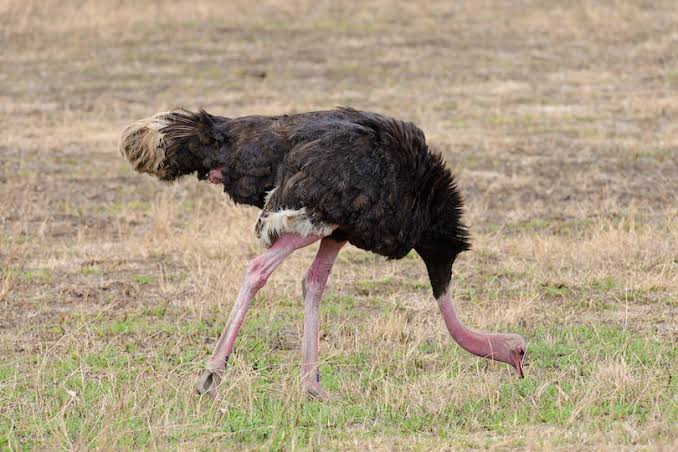
Where do ostriches live? In Africa, in open dry country: savannas, semi-arid plains, grassy woodland, scrub and semi-desert, with the largest numbers reported in eastern and southern Africa.
Where do ostriches live in the wild? Wild ostriches live only in Africa today, in national parks, reserves and open rangelands from the Sahel to South Africa.
What is the habitat of an ostrich? Open savanna and semi-arid plains with sparse trees and shrubs, where they can see predators from far away and run.
Do ostriches live in the desert? They live in semi-desert and the dry margins of deserts such as the Sahel, but they need some vegetation, so savanna is their real stronghold.
Do ostriches live in forests? No. Dense forest does not suit a flightless bird that depends on sight and speed.
Where do ostriches live in East Africa? Kenya, Tanzania and Uganda are home to the Masai ostrich, and northern Kenya and the Horn of Africa to the Somali ostrich.
Can you see ostriches in Uganda? Yes, mainly in Kidepo Valley National Park and the dry Karamoja region in the far north-east.
Where is the best place to see ostriches in Africa? East Africa’s open parks, including Maasai Mara, Amboseli, Samburu, the Serengeti and Kidepo Valley, are among the best.
Do ostriches live outside Africa? Wild ostriches no longer do. Ostriches are farmed worldwide, and a few feral populations exist, such as in Australia, but the Arabian ostrich is extinct.
Are ostriches endangered? The common ostrich overall is Least Concern, but the North African subspecies is much more fragile and the Somali ostrich is reported to be declining.
What do ostriches eat where they live? Mostly grasses, seeds, leaves, flowers and insects. See our guide to what do ostriches eat for the full diet.
Come and See Where Ostriches Live, With Us
You can read about the places where ostriches live, but nothing compares with standing on an open plain at sunrise and watching a tall, long-legged ostrich stride through golden grass, with zebra and giraffe grazing nearby. East Africa is the best place to do it.
The best places to see ostriches are Kidepo Valley National Park in Uganda, the Maasai Mara, Amboseli, Samburu and Tsavo in Kenya, and the Serengeti, Tarangire and Ngorongoro Crater in Tanzania.
With Gorilla Nests Safaris you can combine them with mountain gorillas, chimpanzees and Uganda’s big-game parks, on one trip planned around the animals you most want to see.
Browse our Uganda safari packages, read about us, or contact our team today and tell us you want to see ostriches in East Africa. We will plan the route, the lodges and the guides, so all you have to do is look up and enjoy the view.