

African Wild Dog Habitat: Where do african wild dogs live?
African Wild Dog Habitat: The African wild dog, also called the painted dog or painted wolf, lives across a genuinely wide range of habitats, savanna, open plains, woodland, scrubland, and even mountainous terrain, avoiding only dense lowland rainforest and true desert.
What actually limits where they survive today isn’t habitat type at all, it’s human activity: roads, agriculture, and settlements have fragmented their range so severely that this once-widespread species now survives in only 39 small, scattered subpopulations, with roughly 6,600 mature individuals left across the entire African continent.
This guide covers exactly what African wild dog habitat looks like, how far these packs actually roam, why their range has collapsed, and where you can realistically still see them.
African Wild Dog Habitat at a Glance
| Habitat types | Savanna, open plains, woodland, scrubland, semi-arid bush, mountainous terrain |
| Avoided habitats | Dense lowland rainforest, true desert |
| Conservation status | Endangered (IUCN Red List, since 1990) |
| Global population | About 6,600 mature individuals |
| Number of subpopulations | 39, mostly small and fragmented |
| Largest single subpopulation | Fewer than 250 individuals |
| Typical pack territory | Up to 1,500 km² |
| Daily movement | Up to 50 km |
| Main range today | Fragmented pockets across southern and eastern Africa |
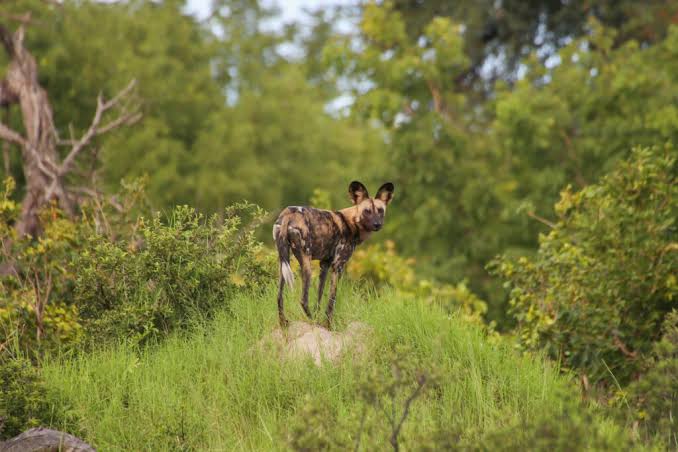
What Kind of Habitat Do African Wild Dogs Actually Need?
Early research in Tanzania’s Serengeti led to the belief that African wild dogs were primarily an open-plains species. More recent data has overturned that: painted dogs actually reach some of their highest densities in thicker bush and woodland, not open grassland.
In practice, the species is a genuine habitat generalist, found historically across savanna, scrubland, woodland, semi-arid bush, and even mountainous country, wherever prey is available and human pressure is low.
The two habitat types wild dogs consistently avoid are dense lowland rainforest, where their cooperative, long-distance hunting style doesn’t work well, and true, waterless desert. Beyond that, their historical range once covered most of sub-Saharan Africa.
African Wild Dog Range: Then and Now
In the 1970s, African wild dogs ranged across nearly all of sub-Saharan Africa. Today, they’ve disappeared from the vast majority of that former range. Current resident populations are fragmented across parts of:
- Southern Africa: Botswana, Zimbabwe, Namibia, Zambia, South Africa (this region now holds the species’ strongest remaining populations)
- East Africa: Tanzania (notably the Selous/Nyerere ecosystem and Ruaha), Kenya, and small, scattered numbers elsewhere
- Central and West Africa: highly fragmented and, in West Africa, effectively vestigial
Uganda sits at the edge of the species’ historic range, and today sightings here are genuinely rare and unreliable, limited mainly to occasional reports around Kidepo Valley National Park in the far northeast, near the borders with South Sudan and Kenya. If seeing a wild dog is a priority for your trip, that’s worth knowing before you plan around it; Uganda’s real wildlife strengths lie elsewhere.
Our Uganda safari packages focus on the country’s genuinely reliable wildlife: mountain gorillas, chimpanzees, tree-climbing lions, and savanna game in Queen Elizabeth and Murchison Falls National Parks.
Pack Territory and How Far Wild Dogs Roam
African wild dog packs are highly mobile, a defining feature of the species. A pack can cover up to 50 kilometers in a single day and holds a territory of up to 1,500 km², among the largest home ranges of any African carnivore relative to body size.
The largest documented resident range on record, roughly 43,000 km², supports only around 800 individuals, a reminder of just how low-density wild dog populations naturally are, even in intact habitat.
This constant movement is partly why wild dogs are so vulnerable to habitat fragmentation: a pack ranging over 1,500 km² inevitably crosses park boundaries, roads, and farmland, exposing it to snares, vehicle collisions, and conflict with livestock farmers far more than a more sedentary predator would face.
Why African Wild Dog Habitat Is Disappearing
Habitat fragmentation is the primary driver of the species’ decline. As agriculture, settlements, and road networks expand, the large, connected ranges wild dogs need get carved into smaller, isolated patches.
Human-wildlife conflict rises directly as a result: fragmented habitat pushes wild dog packs into closer, more frequent contact with livestock and people at the edges of their range.
Disease compounds the fragmentation problem. Because most surviving subpopulations are small, an outbreak of rabies or canine distemper, often introduced by domestic dogs, can be devastating; larger, better-connected populations recover from disease far more easily than small isolated ones.
Competition and predation from lions, and to a lesser extent spotted hyenas, also naturally suppress wild dog numbers even in healthy habitat, part of why the species has always existed at low density, even before human pressure intensified.
Conservation Status: Why the African Wild Dog Is Endangered
The African wild dog has been listed as Endangered on the IUCN Red List since 1990. Population estimates vary by source but consistently point to around 6,600 mature individuals across 39 fragmented subpopulations, with the single largest subpopulation holding fewer than 250 individuals.
That makes it the second most endangered carnivore in Africa, behind only the Ethiopian wolf, and its numbers continue to decline across most of its range even as some individual reserves, particularly in South Africa, report local increases through active management and reintroduction programs.
Where to Realistically See African Wild Dogs in the Wild
Given how fragmented and low-density wild dog populations are, seeing one takes planning around the right country and reserve, not just any savanna park:
- Southern Africa: Botswana’s Okavango Delta and Moremi, Zimbabwe’s Hwange, and several private and provincial reserves in South Africa offer some of the most reliable sightings.
- Tanzania: the Selous/Nyerere ecosystem and Ruaha National Park hold significant populations.
- Kenya: Laikipia and parts of the Masai Mara ecosystem have recovering populations worth targeting specifically.
- Uganda: as noted above, sightings are rare and unreliable, mainly around Kidepo Valley National Park; this is not a country to build a wild-dog-focused trip around.
For travelers who want a realistic shot at wild dogs alongside Uganda’s gorillas and chimpanzees, a cross-border itinerary is the practical answer.
See our 7 Days Uganda-Kenya Safari, 7 Days Uganda and Tanzania Safari, or the full 15 Days Ultimate East Africa circuit, all of which pair Uganda’s primates with stronger wild-dog territory elsewhere in the region.
African Wild Dog Habitat vs. Uganda’s Other Wildlife Habitats
Uganda’s own protected areas cover very different habitat niches, which is worth understanding when planning realistic wildlife expectations:
| Habitat type | Uganda park | Signature wildlife |
|---|---|---|
| Montane rainforest | Bwindi Impenetrable NP | Mountain gorillas |
| Tropical rainforest | Kibale Forest NP | Chimpanzees |
| Savanna and bushland | Queen Elizabeth NP | Tree-climbing lions, elephants |
| Savanna and riverine forest | Murchison Falls NP | Elephants, giraffes, the Nile |
| Dry acacia savanna | Lake Mburo NP | Zebra, walking safaris |
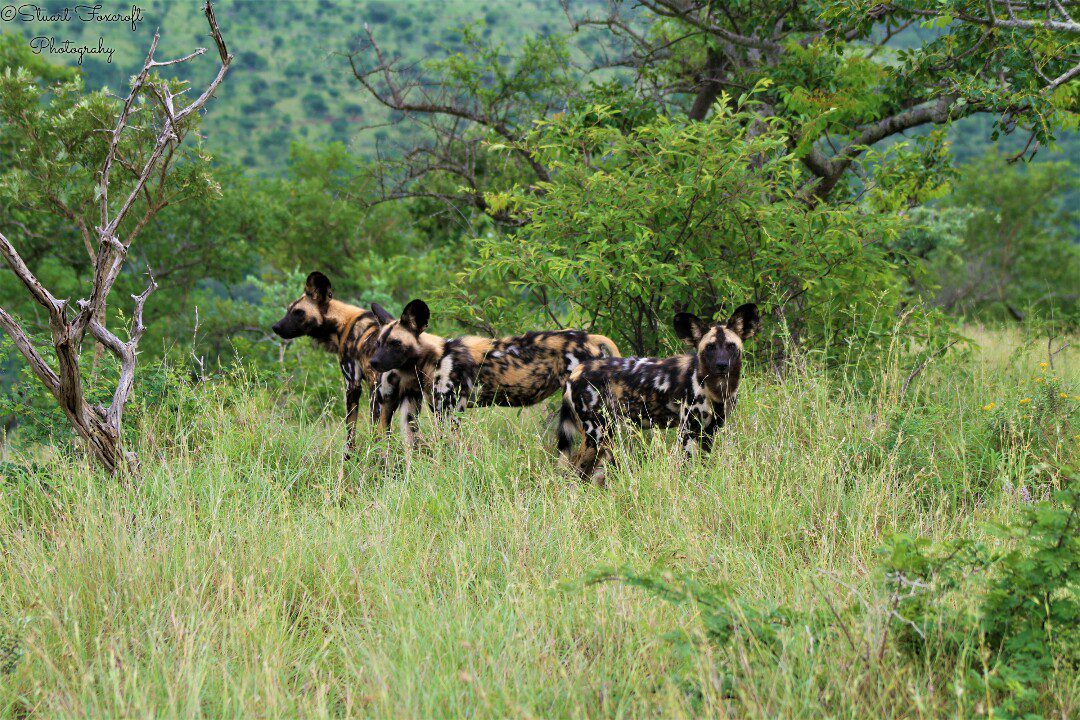
Interestingly, Uganda’s savanna parks like Queen Elizabeth and Murchison Falls do sit within habitat types wild dogs could theoretically use, but resident packs simply aren’t established there today, another reminder that current range is shaped far more by human pressure and history than by habitat suitability alone.
African Wild Dog Habitat FAQs
What habitat do African wild dogs live in? A wide range: savanna, open plains, woodland, scrubland, semi-arid bush, and mountainous terrain. They avoid only dense lowland rainforest and true desert, and research shows they often reach their highest densities in thicker bush rather than open plains.
Where do African wild dogs live today? In fragmented pockets across southern and eastern Africa, with the strongest populations in Botswana, Zimbabwe, South Africa, and parts of Tanzania. Their historic range once covered most of sub-Saharan Africa.
How big is an African wild dog pack’s territory? Up to 1,500 km², with packs moving as much as 50 km in a single day, among the largest ranges of any African carnivore.
Why are African wild dogs endangered? Mainly habitat fragmentation from roads, agriculture, and settlement, which increases human-wildlife conflict and leaves small, isolated populations vulnerable to disease outbreaks like rabies and canine distemper.
How many African wild dogs are left in the world? Around 6,600 mature individuals across 39 subpopulations, with the largest single subpopulation holding fewer than 250 individuals.
Can I see African wild dogs in Uganda? Sightings are rare and unreliable, limited mainly to occasional reports around Kidepo Valley National Park. Uganda is not a reliable wild-dog destination; Botswana, Zimbabwe, South Africa, and Tanzania offer far better odds.
Are African wild dogs the same as hyenas? No. Despite superficial similarities, wild dogs (Lycaon pictus) are true canids, closely related to wolves and domestic dogs, while hyenas belong to an entirely separate family more closely related to cats and mongooses.
Plan a Wildlife Safari Built Around Realistic Expectations
Want a trip that combines Uganda’s gorillas and chimpanzees with genuinely strong odds of other rare wildlife elsewhere in East Africa? Browse our combination safaris, read about us, or contact our team to build an itinerary around what you actually want to see.