Where Do Mountain Gorillas Live? Countries, National Parks & Habitat
Where Do Mountain Gorillas Live: Discover where do mountain gorillas live across Uganda, Rwanda, and DR Congo. Explore their habitat, national parks, and how to visit these endangered primates.
Mountain gorillas are found in only one place on Earth—a small region of Central Africa where three countries converge. If you’re asking “where are mountain gorillas found?” or planning to visit their habitat, the answer is both geographically specific and ecologically remarkable.
These endangered primates live exclusively in the high-altitude forests of the Virunga Mountains and Bwindi Impenetrable Forest, making their location one of the most restricted ranges of any large mammal on the planet.
Understanding where do mountain gorillas live is the first step toward planning an authentic gorilla trekking experience. Unlike lowland gorillas or western gorillas that inhabit vast rainforest territories, mountain gorillas occupy less than 1,000 square kilometers (about 400 square miles) of forest—a territory smaller than many national parks in North America.
The Three Mountain Gorilla Countries: Uganda, Rwanda, and the Democratic Republic of Congo
Mountain gorillas exist in only three countries, each offering unique opportunities to experience these remarkable animals in their natural habitat. The mountain gorilla countries are defined by their participation in conservation efforts and their management of gorilla tourism.
Uganda: Home to the Largest Mountain Gorilla Population
Uganda is home to approximately half of the world’s remaining mountain gorillas—around 500-600 individuals. These gorillas primarily live in the southwestern part of the country, where the landscape transitions from tropical rainforest to misty montane forest at high elevations.
The primary mountain gorilla habitat in Uganda is Bwindi Impenetrable National Park (often called Bwindi), a UNESCO World Heritage Site covering 331 square kilometers of densely forested terrain. The name “Impenetrable” is earned—this rainforest is so thick that sunlight barely penetrates the canopy, and movement through the forest requires machetes and experienced guides.
A smaller but significant population of mountain gorillas also inhabits the northern sector of Mgahinga Gorilla National Park, a smaller protected area adjacent to the Virunga Mountains. The mountain gorilla habitat in Uganda encompasses some of the most pristine and protected forests in Africa.
When planning a Uganda gorilla safari, most visitors head to Bwindi, where approximately 30 habituated family groups have been studied for decades. This extended habituation period means visitors have reliable opportunities to encounter gorillas during gorilla trekking in Uganda.
Rwanda: Gateway to Volcanoes National Park
Rwanda hosts approximately 480 mountain gorillas, making it the second-most important country for gorilla conservation. Nearly all of Rwanda’s mountain gorillas live in Volcanoes National Park, located in the northwestern corner of the country along the border with Uganda and Congo.
The mountain gorilla habitat in Rwanda is characterized by five volcanic peaks—Karisimbi, Visoke, Sakuyu, Gahinga, and Muhabura—which give the park its distinctive landscape. The higher elevation of these mountains (reaching up to 4,507 meters on Mount Karisimbi) creates unique cloud forest ecosystems where mountain gorillas thrive.
Volcanoes National Park covers about 160 square kilometers and is adjacent to Virunga National Park in Congo and Mgahinga Gorilla National Park in Uganda. The park has been pioneering gorilla tourism since the 1970s, when conservationist Dian Fossey established her groundbreaking research there.
A Rwanda gorilla safari typically involves gorilla permits and guided treks to one of the habituated family groups. The terrain is steep and challenging, but the accessibility of habituated gorillas makes Rwanda a preferred destination for many visitors.
Democratic Republic of Congo: The Largest Protected Area
The Democratic Republic of Congo (DRC) is home to the remaining 200-300 mountain gorillas, primarily within Virunga National Park. While this represents the smallest population of the three countries, Virunga is the largest and most biodiverse protected area for mountain gorillas.
Virunga National Park spans approximately 8,000 square kilometers along the eastern border of DRC, encompassing the northern portion of the Virunga Mountains. The park contains active volcanoes, extensive high-altitude forests, and serves as a critical refuge for endangered species.
Gorilla trekking in DRC is less common due to security concerns and logistical challenges, but it remains possible in select areas. The mountain gorilla habitat in Congo represents an irreplaceable part of the species’ range and requires ongoing conservation support.
The Geographic Heart of Mountain Gorilla Habitat: The Virunga Mountains
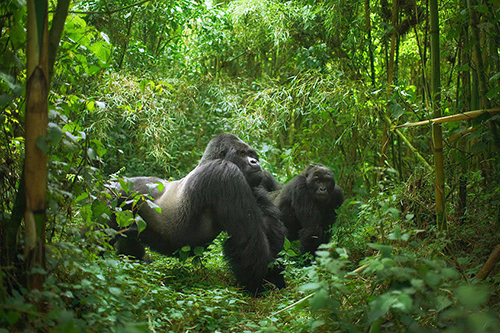
The Virunga Mountains form the geographic center of mountain gorilla distribution, with these high-altitude peaks rising from the junction of Uganda, Rwanda, and Congo. Understanding the terrain is crucial to understanding where to see mountain gorillas.
Elevation and Terrain
Mountain gorillas live at elevations between 2,200 and 4,300 meters (7,200 to 14,100 feet), the highest altitude range of any wild ape species. This elevation requirement is critical—at these heights, the climate is cool (temperatures averaging 10-15°C), the air is thin, and the forests are perpetually shrouded in mist.
The terrain is extremely challenging, with steep volcanic slopes, dense vegetation, and poorly developed trails. When you trek to find mountain gorillas, you’re hiking through some of Africa’s most difficult terrain, often climbing 1,000+ meters vertically in a single day.
Forest Type and Vegetation
The mountain gorilla’s habitat is characterized by montane forest—a specific forest type that exists only at high elevations in equatorial mountain ranges. This forest differs dramatically from lowland rainforests in structure, species composition, and climate.
The understory is dense with herbaceous plants, particularly bamboo, which comprises up to 90% of mountain gorilla diet during certain seasons. The canopy is lower and more broken than in lowland forests, with frequent gaps created by frequent winds, landslides, and volcanic activity.
This specific forest type exists only in the Virunga and Bwindi mountain ranges, which explains why mountain gorillas are found nowhere else. Unlike lowland gorillas that can inhabit vast rainforest territories, mountain gorillas are restricted to this narrow elevation range on these specific mountains.
National Parks: The Protected Refuges for Mountain Gorillas
Three national parks across the three countries form the protected foundation for mountain gorilla conservation. Each offers distinct experiences and varying levels of accessibility.
Bwindi Impenetrable National Park, Uganda
Bwindi Impenetrable National Park is the world’s most important gorilla conservation area, home to approximately 50% of all mountain gorillas. Established in 1991, Bwindi covers 331 square kilometers of dense montane forest in southwestern Uganda.
The park is divided into four sectors: Buhoma, Rushaga, Ruhija, and Nkuringo. Each sector has habituated gorilla families available for trekking. The landscape is incredibly steep—hiking in Bwindi is physically demanding, with elevation changes of 1,000+ meters over challenging terrain.
A Bwindi gorilla trek typically begins at dawn, with experienced guides leading small groups through dense forest in search of habituated family groups. The immense difficulty of the terrain is offset by the exceptional reliability of gorilla encounters—the extensive habituation programs make Bwindi one of the best places to experience mountain gorillas.
Volcanoes National Park, Rwanda
Volcanoes National Park is Rwanda’s most famous conservation area, known not only for mountain gorillas but also for its dramatic volcanic landscape. The park is smaller than Bwindi but offers equally compelling wildlife experiences.
The park contains five volcanic peaks, with Mount Karisimbi at 4,507 meters being the highest. The terrain is steep but generally less densely forested than Bwindi, offering somewhat easier trekking. The views from higher elevations, particularly early in the morning before mist rolls in, are spectacular.
A Rwanda gorilla safari includes permits to trek with one of several habituated gorilla families. The park also offers opportunities to see golden monkeys, hike volcanic peaks, and explore forest trails in addition to gorilla trekking.
Virunga National Park, Democratic Republic of Congo
Virunga National Park is Africa’s oldest national park (established 1925) and spans 8,000 square kilometers along the Congo’s eastern border. The park encompasses three active volcanoes, extensive montane forest, and diverse ecosystems from lowland rainforest to high-altitude alpine zones.
The park is one of Africa’s most biodiverse protected areas, with over 3,000 animal species and 1,000 bird species. However, political instability and conservation challenges have made gorilla trekking in Virunga less accessible than in Uganda or Rwanda.
Why Mountain Gorillas Live Only Here: Ecological and Evolutionary Factors
Understanding where mountain gorillas are found requires understanding the unique ecological requirements of these remarkable animals.
The Mountain Gorilla Niche
Mountain gorillas occupy a specific ecological niche—high-altitude, herbivorous great apes adapted to cold, misty forest conditions. This niche is found nowhere else on Earth except in the Virunga and Bwindi forests.
The montane bamboo forest provides ideal food resources: abundant tender bamboo shoots, leaves, and herbaceous plants that are available year-round at these elevations. The cool temperatures mean reduced predation risk from large carnivores and insects. The high elevation means reduced competition from other great apes.
Over millions of years, mountain gorillas evolved specific adaptations to this environment—thicker fur than lowland relatives, different dietary preferences, and specialized thermoregulation. These adaptations make them supremely suited to their mountain habitat but unable to survive in other environments.
Geographic Isolation
The Virunga and Bwindi forests are separated from other major forest blocks by dry savannas and agricultural land. This geographic isolation has existed for thousands of years, creating a biogeographic barrier that prevents natural range expansion.
Even if habitat were available elsewhere, mountain gorillas would face barriers to dispersal—they’re specialized mountain dwellers with little inclination to traverse open terrain. Their small population size and restricted range make them particularly vulnerable to extinction.
The Conservation Implications of Restricted Range
The fact that mountain gorilla habitat is restricted to such a small geographic area has profound conservation implications. With fewer than 1,100 individuals remaining in the wild and all located in just three countries, mountain gorillas face significant extinction risks.
Habitat loss through deforestation, agricultural encroachment, and human settlement directly reduces available living space. Climate change threatens to shift the elevation zones where bamboo and other key food plants grow, potentially making current habitat unsuitable.
Disease transmission—particularly respiratory diseases that jump from humans to gorillas—poses serious threats to small, geographically isolated populations. The fact that all remaining mountain gorillas live in adjacent forest blocks means disease in one area can quickly spread to others.
Conservation efforts must therefore focus on protecting and potentially expanding the existing protected areas. International cooperation between Uganda, Rwanda, and Congo is essential for long-term mountain gorilla conservation.
Planning Your Visit: Where to See Mountain Gorillas
If you’re interested in experiencing mountain gorillas in their natural habitat, knowing where to see mountain gorillas helps you plan effectively. Each location offers distinct advantages.
Best Destination for Reliable Encounters: Bwindi, Uganda
Bwindi National Park offers the highest probability of encountering mountain gorillas due to extensive habituation of multiple family groups. With approximately 30 habituated families, opportunities for gorilla encounters are excellent.
The terrain is challenging—Bwindi is significantly steeper and more densely forested than alternatives—but the rewards are substantial. A Bwindi gorilla safari is an unforgettable experience that combines challenging trekking with near-certain wildlife encounters.
Uganda gorilla permits are required and typically cost $700 (discounted to $350 in low season). The permit grants access to one gorilla family for one hour of observation.
Best Destination for Scenery and Accessibility: Volcanoes, Rwanda
Volcanoes National Park offers dramatic volcanic landscapes, easier terrain than Bwindi, and equally habituated gorilla families. The park has excellent infrastructure, including lodges ranging from budget to luxury.
The park is smaller, so trekking distances can be shorter (though still challenging). The volcanic terrain offers spectacular views—particularly Mount Karisimbi, the park’s highest peak.
Rwanda gorilla permits typically cost $1,500 per person, among the highest gorilla permit fees globally. However, the permit includes access to a habituated family group for one hour.
Adventure Destination: Virunga, Congo
For experienced trekkers and adventurous travelers, Virunga National Park offers the ultimate mountain gorilla adventure. The park is less developed for tourism, which means gorilla encounters feel more wild and authentic.
However, security concerns and logistical challenges make Virunga a destination only for experienced travelers comfortable with additional risks and uncertainties.
How to Plan Your Mountain Gorilla Adventure
Visiting mountain gorillas requires careful planning and the support of experienced operators familiar with the specific location.
A gorilla trekking adventure typically includes:
- Obtaining a valid gorilla permit for your chosen country and national park
- Arranging transportation to the national park headquarters
- Hiring an experienced guide licensed to conduct gorilla treks
- Preparing physically and mentally for challenging high-altitude hiking
- Following strict health protocols to protect gorillas from human diseases
The best time to visit depends on your destination and fitness level. Best time for gorilla trekking is typically during dry seasons (June-August and January-February), though gorillas can be tracked year-round.
Experience Mountain Gorillas Where They Live: Book Your Safari Today
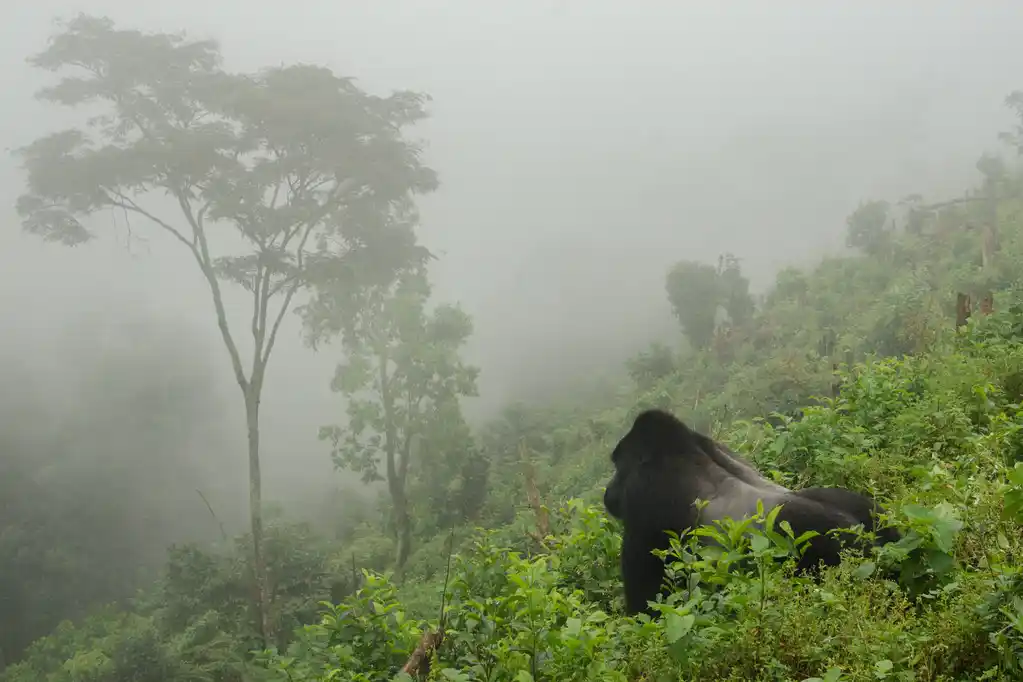
Understanding where mountain gorillas live is just the beginning. The truly transformative experience is visiting them in person in their natural habitat—the misty mountain forests where they’ve evolved and survived.
Whether you choose the challenging terrain of Bwindi Impenetrable National Park, the dramatic landscapes of Volcanoes National Park, or the wild frontier of Virunga National Park, a mountain gorilla encounter will change your life.
These remarkable primates are found nowhere else on Earth. They survive only in these three countries, in these specific mountain forests, in numbers small enough to fit inside a large sports stadium. Your decision to visit directly supports the conservation efforts that keep them alive.
Our expert guides know these forests intimately. They’ve spent years learning gorilla behavior, studying family dynamics, and perfecting the art of safe, ethical gorilla encounters.
They understand the terrain, the weather patterns, the best times to trek, and the protocols that ensure both your safety and the gorillas’ well-being.
Contact us today to reserve your mountain gorilla adventure. We’ll help you choose the perfect destination, arrange permits, organize transportation, and ensure every aspect of your journey is planned to perfection. From Uganda gorilla safaris to Rwanda gorilla experiences, we have the expertise to make your dream a reality.
The mountain gorillas are waiting. Their habitat is ready to welcome you. This is the journey of a lifetime—don’t delay.
Related Pages
Explore these resources to deepen your knowledge and plan your mountain gorilla expedition:
- Bwindi Impenetrable National Park: Complete Guide
- Volcanoes National Park Rwanda: What to Expect
- Gorilla Trekking in Uganda: Step-by-Step Experience
- Rwanda Gorilla Safari: Permits, Costs & Planning
- Mountain Gorilla Facts: Biology & Behavior
- Best Time to Visit Mountain Gorillas: Seasonal Guide
- Gorilla Permits Explained: Prices & Regulations
- Sustainable Gorilla Tourism: Conservation Impact
Ready to discover where mountain gorillas truly live? Book your gorilla trekking adventure today and experience these incredible primates in their only remaining habitat on Earth. The journey awaits.