Where Do Elephants Live, Land or Water?
Where do elephants live: Elephants live on land across sub-Saharan Africa and parts of South and Southeast Asia, inhabiting savanna grasslands, dense rainforest, woodland, and swamp habitat wherever sufficient food and water are available.
There are three living elephant species today — the African bush elephant, the African forest elephant, and the Asian elephant — each occupying genuinely distinct habitat and geographic range.
This guide covers exactly where each species lives, what determines elephant habitat, and where you can see wild elephants for yourself in Uganda and Rwanda.
Where Do African Elephants Live?
African elephants live across roughly 37 countries in sub-Saharan Africa, spanning savanna, grassland, woodland, swamp, and rainforest habitat, though their actual range has contracted significantly from historical levels due to habitat loss and human population growth.
Since 2021, African elephants have been formally recognized as two genetically distinct species rather than one, with genuinely different habitat preferences: the African bush elephant and the African forest elephant.
Where Do African Bush Elephants Live?
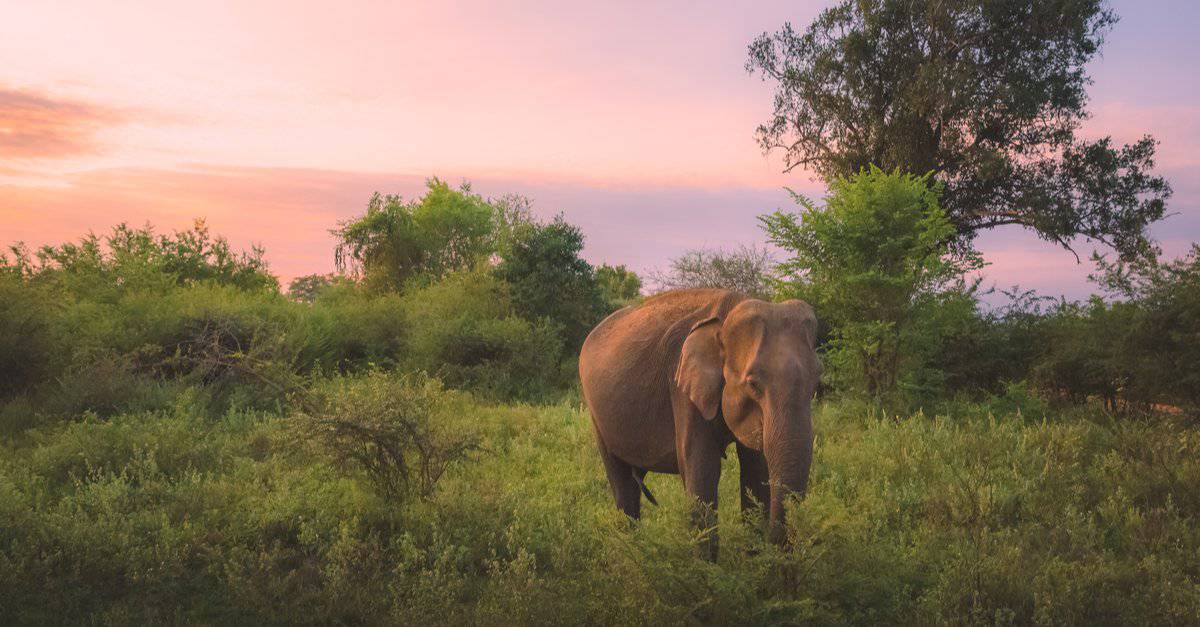
African bush elephants — the larger of the two African species and the one most people picture when they think of “an elephant” — live across East and Southern Africa’s open savanna, grassland, and woodland habitats, in countries including Uganda, Kenya, Tanzania, Botswana, Zimbabwe, and South Africa.
This is genuinely the more visible of the two African species on safari specifically, since open savanna terrain makes elephant herds far easier to spot than the dense forest the other species prefers.
Where Do African Forest Elephants Live?
African forest elephants live in the dense rainforest of Central and West Africa, concentrated heavily in the Congo Basin across countries including Gabon, the Republic of Congo, Cameroon, and the Democratic Republic of Congo.
Forest elephants are genuinely smaller than their bush elephant relatives, an adaptation suited to navigating dense forest terrain rather than open plains, and their more secretive, forest-dwelling lifestyle makes them considerably harder to observe than bush elephants on a typical safari.
Where Do Asian Elephants Live?
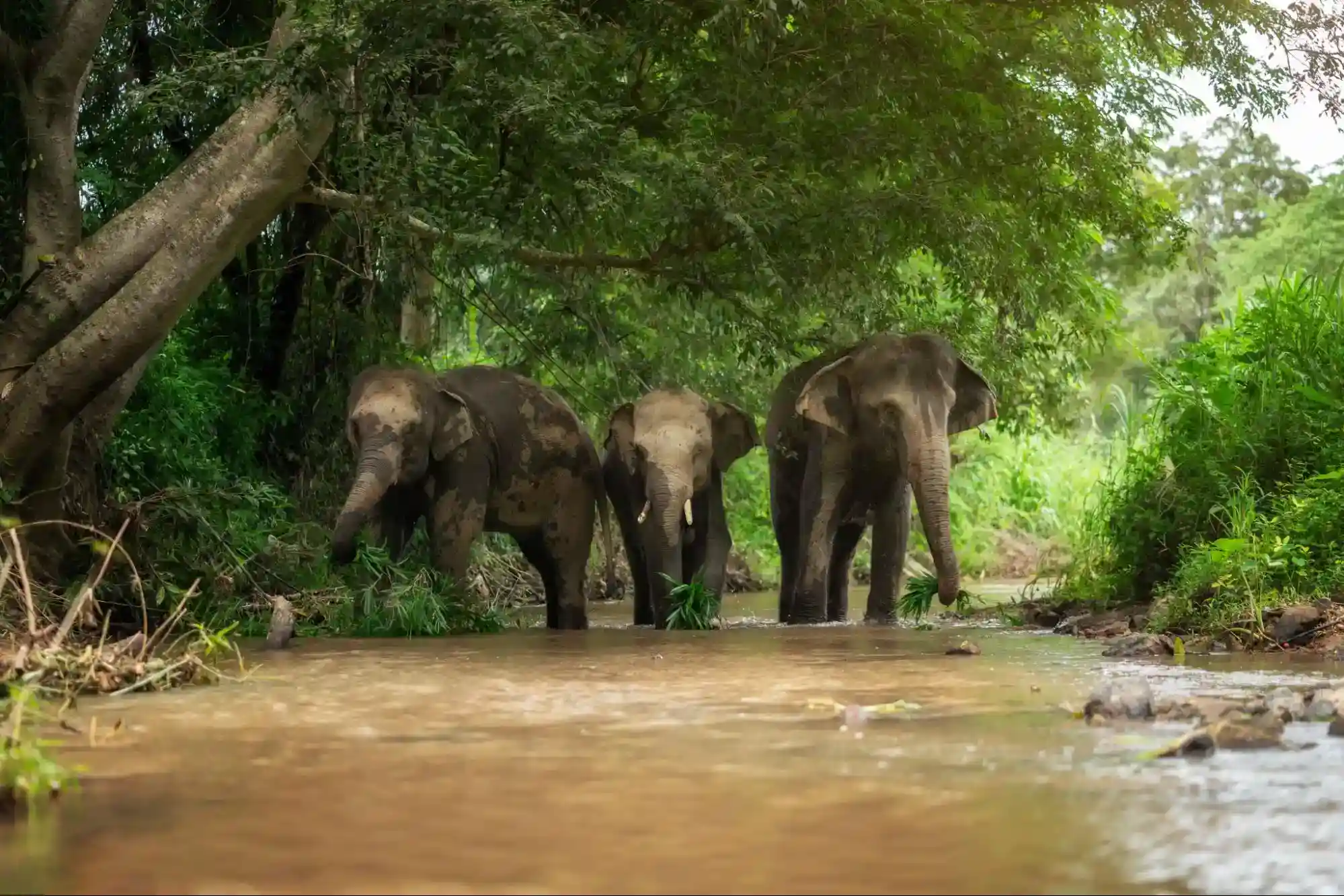
Asian elephants live across South and Southeast Asia, in countries including India, Sri Lanka, Thailand, Myanmar, and Indonesia, inhabiting tropical forest, grassland, and scrubland habitat.
Asian elephants are smaller than African bush elephants and have notably smaller ears, one of the easiest visual distinctions between the African and Asian species at a glance.
What Determines Where Elephants Actually Live?
Access to water is genuinely non-negotiable for elephant habitat — an adult elephant drinks 150 to 300 liters daily, meaning elephant range is fundamentally shaped by proximity to rivers, lakes, and waterholes rather than food availability alone.
Sufficient vegetation matters just as directly, given an elephant’s enormous daily food requirement of 150 to 170 kilograms — habitat needs to support that volume of grazing and browsing sustainably across the elephant’s full range, not just in isolated patches.
Large, connected territory is essential, since elephant herds range over genuinely vast areas — hundreds to thousands of square kilometers depending on habitat quality and seasonal food availability — making habitat fragmentation from human development one of the single greatest threats elephant populations face today.
Protection from poaching and conflict increasingly determines where elephant populations can actually persist, which is exactly why well-managed national parks and reserves have become so critical to elephant survival across both East and Central Africa.
Where Do Elephants Live in Uganda?
Uganda’s elephant population consists primarily of African bush elephants, found across the country’s major savanna national parks. Murchison Falls National Park, Uganda’s largest, hosts genuinely large elephant herds across its northern bank savanna and woodland, regularly seen on game drives and along the Nile during the park’s boat cruise.
Queen Elizabeth National Park offers equally strong elephant populations, particularly around the Kazinga Channel, where elephants regularly come down to drink and graze the surrounding grassland. Lake Mburo National Park hosts a smaller but genuinely present elephant population alongside its zebra and eland.
Where Do Elephants Live in Rwanda?
Rwanda’s elephant population is concentrated specifically in Akagera National Park, in the country’s northeast along the Tanzanian border — genuinely the only place in Rwanda hosting a wild elephant population today.
Akagera’s savanna, woodland, and wetland habitat supports elephants alongside the rest of the park’s Big Five wildlife, and the park’s conservation recovery over the past two decades has been a genuine success story for elephant protection specifically in this part of East Africa, following a period of significant population decline during and after Rwanda’s 1994 genocide and its aftermath.
Elephant Habitat FAQ
Do elephants live in the desert? Some populations, notably in Namibia, have genuinely adapted to semi-arid and desert-edge habitat, but this represents an exception rather than typical elephant habitat — most elephants require considerably more reliable water and vegetation access than true desert can provide.
Do elephants live in groups or alone? Female elephants live in tight-knit matriarchal herds, typically related females and their calves, while adult male elephants are frequently solitary or move in smaller, looser bachelor groups outside of breeding periods.
How large is an elephant’s home range? Genuinely vast — depending on habitat quality and seasonal food and water availability, elephant herds can range across hundreds to several thousand square kilometers over the course of a year.
Can elephants live in captivity outside their natural range? Yes, in zoos and sanctuaries worldwide, though captive habitat inevitably represents a small fraction of the space and complexity wild elephants naturally range across.
See Wild Elephants for Yourself in Uganda and Rwanda
Reading about elephant habitat is one thing — watching a herd move across Murchison Falls’ savanna, graze along the Kazinga Channel, or drink at an Akagera waterhole is something else entirely.
Uganda Safaris Featuring Elephants
Our 3 Days Murchison Falls Safari and 4 Days Murchison Falls Safari both build strong elephant viewing directly into the itinerary — our Murchison Falls facts guide and Murchison Falls accommodation page cover the park in more depth.
Our 3 Days Queen Elizabeth National Park Safari and 5 Days Gorillas & Queen Elizabeth Safari pair elephant viewing with the park’s famous tree-climbing lions, and our safari lodges in Queen Elizabeth National Park guide covers accommodation across every budget tier.
Our 4 Days Bwindi Gorilla Trek and Lake Mburo itinerary adds Lake Mburo’s smaller-scale elephant population to a gorilla-focused trip.
Rwanda Safaris Featuring Elephants
Our 1 Day Akagera National Park Safari offers a focused introduction to Rwanda’s only elephant population, and pairs naturally with a broader gorilla-focused itinerary.
Our Volcanoes National Park Rwanda and things to do in Volcanoes National Park guides cover gorilla trekking and golden monkey tracking as complementary wildlife experiences, and our gorilla permits in Rwanda and Rwanda primates safari guides round out the primate side of a Rwanda trip.
Combine Both Countries
Our 12 Days Rwanda Uganda Gorilla & Wildlife Safari and 12 Days Uganda Rwanda Gorilla, Chimp & Wildlife Safari both give elephant viewing genuine time and space alongside gorilla trekking across both countries, and our comprehensive 14 Days Uganda Gorilla & Rwanda Safari extends this further with a full Akagera Big Five extension.
Our 7 Days Rwanda Uganda Safari, 10 Days Rwanda Uganda Wildlife & Primate Safari, and 12 Day East Africa Combined Safari offer further variations, and our full Safari Combos collection covers every cross-border itinerary we offer.
Book Your Uganda or Rwanda Safari and See Elephants in the Wild
As an operator with over 15 years of combined experience guiding travelers across both Uganda and Rwanda, we build every itinerary around genuinely close, well-timed wildlife encounters, backed by local guides who know exactly where elephant herds are likely to be on any given day.
Browse all our packages or contact our team today to start planning a safari built around seeing elephants, gorillas, and the rest of East Africa’s wildlife in their natural habitat.
Related Pages
- 3 Days Murchison Falls Safari
- 4 Days Murchison Falls Safari
- Murchison Falls Facts
- Murchison Falls National Park Accommodation
- 3 Days Queen Elizabeth National Park Safari
- 5 Days Gorillas & Queen Elizabeth Safari
- Kazinga Channel
- Tree-Climbing Lions Uganda
- Safari Lodges in Queen Elizabeth National Park
- 3 Days Lake Mburo Safari
- 4 Days Bwindi Gorilla Trek and Lake Mburo
- 1 Day Akagera National Park Safari
- Volcanoes National Park Rwanda
- Things to Do in Volcanoes National Park
- Gorilla Permits in Rwanda
- Rwanda Primates Safari
- 12 Days Rwanda Uganda Gorilla & Wildlife Safari
- 12 Days Uganda Rwanda Gorilla, Chimp & Wildlife Safari
- 14 Days Uganda Gorilla & Rwanda Safari
- 7 Days Rwanda Uganda Safari
- 10 Days Rwanda Uganda Wildlife & Primate Safari
- 12 Day East Africa Combined Safari
- Safari Combos
- Contact Us