
Mountain Gorilla Habitat: Environment, Altitude, Diet & Conservation
The mountain gorilla habitat is unlike anywhere else on Earth. These remarkable primates don’t simply live in any forest—they occupy a very specific, highly specialized ecological niche found only in the misty, high-altitude montane forests of Central Africa.
Understanding the mountain gorilla natural habitat is essential to understanding how these endangered animals survive and why they’re found in so few places across the globe.
When you visit where mountain gorillas live in the wild, you’re entering one of Earth’s most distinctive and challenging environments. The mountain gorilla environment presents extreme conditions that only these specialized primates can thrive in—temperatures that would be uncomfortable for humans, altitudes that cause breathlessness, and forest density so thick that daylight barely reaches the forest floor.
The mountain gorilla habitat represents millions of years of evolutionary adaptation. Every feature of these gorillas—from their thick fur to their powerful digestive systems to their social structures—has been shaped by the demands of surviving in this extreme environment.
The Mountain Gorilla Environment: A World of Mist and Altitude
The mountain gorilla environment is defined by specific environmental conditions that create a habitat unlike any other. These conditions exist only at high elevations in the volcanic mountain ranges of Central Africa, making the mountain gorilla forest habitat one of Earth’s most restricted and specialized ecosystems.
Temperature and Climate Conditions
Mountain gorillas live in an environment characterized by cool, humid conditions year-round. Average temperatures range from 10 to 15 degrees Celsius (50 to 59 degrees Fahrenheit), cold enough that visitors trekking to find gorillas must bring heavy jackets and weatherproof gear.
Unlike tropical rainforests that are hot and humid, the mountain gorilla environment is cool and misty. Temperatures can drop to near freezing at night, particularly at higher elevations. This cool climate is a defining feature of the mountain gorilla natural habitat and shapes every aspect of gorilla biology and behavior.
The habitat receives significant rainfall year-round, averaging 2,000-4,000 millimeters annually (80-160 inches). This constant moisture keeps the forest perpetually wet, with water dripping from leaves, running down tree trunks, and pooling on the forest floor. The resulting humidity hovers around 80-90%, creating an environment that feels like walking through a living cloud.
This cool, wet climate creates unique challenges for mountain gorillas. Their thick fur (longer and denser than lowland gorillas) provides insulation in the cold. Their powerful bodies generate heat through constant foraging and movement. Their metabolism has adapted to function optimally in these cool conditions—something visitors unfamiliar with high-altitude environments often underestimate.
Elevation and Topography
The mountain gorilla altitude range defines their habitat more precisely than geography. Mountain gorillas live exclusively between 2,200 and 4,300 meters (7,200 to 14,100 feet) elevation—the highest altitude range of any wild ape species. This elevation requirement is absolute; mountain gorillas are not found significantly above or below this range.
At these elevations, the landscape is dramatically different from lowland Africa. The terrain is steep, with dramatic volcanic slopes and numerous deep valleys. Gorilla habitat in places like Bwindi consists of elevation changes of 1,000+ meters, creating a landscape of ridges and valleys that challenges even experienced hikers.
The mountain gorilla altitude represents a specific ecological zone—montane forest—that exists only in equatorial mountains. In the tropics, temperatures decrease predictably with elevation; at the specific elevations where mountain gorillas live, the temperature, moisture, and vegetation create conditions ideal for these specialized primates.
The topography in gorilla habitat creates both barriers and benefits. The steep slopes reduce human settlement and agricultural encroachment, protecting the forest.
However, the same steep terrain makes movement challenging for gorillas and makes monitoring populations difficult for researchers. When you trek to find mountain gorillas during a gorilla trekking adventure, you’re experiencing the same challenging terrain that gorillas navigate daily.
Vegetation and Forest Structure
The mountain gorilla forest habitat is a montane forest ecosystem with characteristics distinct from lowland rainforests. The trees are generally shorter and more gnarled than lowland rainforest trees, adapted to frequent strong winds that sweep across the high-altitude ridges.
The canopy is more broken and discontinuous than in lowland forests. Frequent landslides, windstorms, and volcanic activity create gaps in the forest canopy. These gaps allow sunlight to reach the forest floor, promoting the growth of dense herbaceous vegetation—the primary food source for mountain gorillas.
The understory is dominated by herbaceous plants and young trees. Bamboo (various Arundinaria species) is particularly abundant in certain areas, creating dense bamboo thickets that can be difficult to walk through. During seasons when bamboo is actively growing, it comprises up to 90% of gorilla diet.
The forest floor is often wet and spongy, covered with moss, ferns, and decaying vegetation. Root systems are shallow in many areas due to volcanic soil and steep slopes, making the forest easily damaged by erosion. This fragility makes habitat protection critical for gorilla conservation.
Large emergent trees tower above the canopy in some areas, particularly where the forest hasn’t been recently disturbed by landslides. These trees provide valuable fruit during fruiting seasons, though gorillas spend most of their time feeding on lower-growing herbaceous plants rather than fruit.
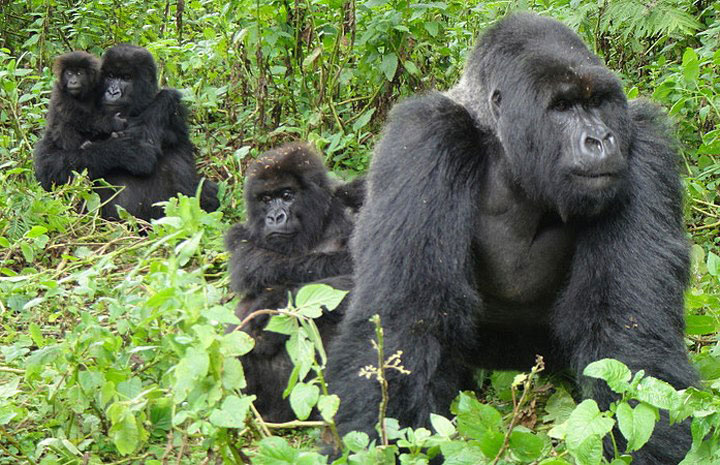
Mountain Gorilla Altitude: The Evolutionary Pressure That Shaped a Species
The mountain gorilla altitude range represents one of the most extreme environments inhabited by any ape. Understanding how gorillas evolved to thrive at these elevations requires examining the mountain gorilla altitude as an evolutionary pressure that shaped every aspect of their biology.
Altitude Adaptations in Gorilla Physiology
Mountain gorillas evolved specific physiological adaptations to function at high altitude where oxygen levels are significantly lower than at sea level. Their lungs are proportionally larger than lowland gorilla lungs, allowing more efficient oxygen extraction from thin air.
Their blood contains higher concentrations of hemoglobin—the protein that carries oxygen—making their blood unusually efficient at oxygen transport. Their metabolism has adapted to function optimally in cool conditions, extracting maximum energy from the food they eat.
Their thick fur is not merely for insulation; it also functions to prevent water loss in the dry, thin air at high elevation. Despite the high humidity of the montane forest, air at high altitude is naturally drier than at sea level.
These adaptations mean mountain gorillas are supremely suited to the mountain gorilla environment where they live. However, these same adaptations make them poorly suited to lowland environments or even moderate elevations. A mountain gorilla moved to lowland conditions would struggle with heat regulation and respiratory function.
The Altitude Barrier to Range Expansion
The altitude requirement creates a natural barrier to range expansion. Even if suitable forests existed at lower elevations, mountain gorillas are physiologically and behaviorally adapted to high-altitude conditions. They have no evolutionary motivation to descend into warmer, lowland environments where their adaptations would be disadvantageous.
This altitude specialization makes the mountain gorilla habitat in Bwindi and the Virunga mountain gorilla habitat essentially their entire world. Unlike lowland gorillas that can range across thousands of kilometers of connected forest, mountain gorillas are restricted to the specific elevations found only in these two mountain ranges.
For conservation implications, this means habitat loss at specific elevations directly eliminates habitat for mountain gorillas. If the forests between 2,200 and 4,300 meters are cleared, there is no lower-elevation alternative where gorillas could survive.
The Mountain Gorilla Diet: Adapting to Limited Food Resources
Understanding what mountain gorillas eat is essential to understanding their habitat. The mountain gorilla natural habitat provides specific food resources that have shaped gorilla diet, social behavior, and range patterns.
Primary Foods: Herbaceous Plants and Bamboo
Mountain gorillas are almost entirely herbivorous, deriving 99% of their diet from plants. Unlike lowland gorillas that rely heavily on fruit availability, mountain gorillas have evolved to subsist primarily on leaves, stems, and herbaceous vegetation—foods available year-round at high altitude.
The diet varies seasonally. During bamboo fruiting season (typically November-January), bamboo shoots can comprise up to 90% of gorilla diet. The tender bamboo shoots are highly nutritious and concentrated, requiring less foraging effort than other food sources.
During seasons when bamboo shoots are not available, gorillas shift to bamboo leaves, other herbaceous plants, tree leaves, stems, bark, and occasionally roots. The most common genera in gorilla diet include:
- Bamboo (Arundinaria)
- Wild celery
- Nettles
- Thistle
- Fruit from various tree species
This primarily herbaceous diet requires gorillas to spend 60-70% of their waking hours foraging. An adult male gorilla consumes approximately 20-30 kilograms (45-65 pounds) of plant matter daily—an enormous quantity necessary to extract sufficient calories from low-nutrient vegetation.
Seasonal Availability and Habitat Dependency
The abundance and availability of food resources in the mountain gorilla forest habitat directly influences gorilla population distribution and behavior. During peak bamboo season, gorillas may concentrate in areas with abundant bamboo, creating temporary population density variations.
During seasons with scarce preferred foods, gorillas expand their foraging range, moving across larger territories in search of nutritious vegetation. This seasonal movement pattern reflects the mountain gorilla natural habitat variability and demonstrates gorillas’ flexibility in responding to food availability changes.
Habitat degradation that reduces food plant abundance directly impacts gorilla survival. If key food plants like bamboo are eliminated or reduced, gorillas must either consume less-nutritious alternatives (reducing body condition and reproductive success) or expand their range beyond remaining protected forest.
This diet-habitat relationship demonstrates why protecting the complete intact mountain gorilla habitat in Bwindi and the Virunga mountains is essential for gorilla conservation.
Conservation Challenges in Mountain Gorilla Habitat
The mountain gorilla habitat faces numerous conservation threats that directly endanger gorilla populations. Understanding these challenges is essential to understanding why gorilla conservation remains urgent despite population increases in recent decades.
Habitat Loss and Fragmentation
Despite legal protection in national parks, the mountain gorilla habitat remains vulnerable to deforestation and encroachment. Agricultural development, logging, and human settlement continue to reduce available habitat, particularly at lower elevations where the forest transitions to accessible agricultural land.
Habitat fragmentation—the breaking of continuous forest into isolated patches—creates additional problems. Small isolated gorilla populations face increased extinction risk, reduced genetic diversity, and difficulty in accessing diverse food resources.
The remaining gorilla habitat is protected primarily in national parks, but park boundaries don’t always coincide with ecological boundaries. Gorillas may migrate between protected areas, requiring transboundary conservation efforts across Uganda, Rwanda, and DRC.
Disease Transmission and Human-Gorilla Contact
The cool, misty mountain gorilla environment creates conditions favorable for respiratory disease transmission. Respiratory pathogens survive longer in cool, humid conditions, and gorillas in close contact can rapidly spread disease.
Tourism, while generating revenue for conservation, creates disease transmission risks. Humans visiting gorilla trekking destinations carry pathogens that can jump to gorillas. Strict health protocols—including mask wearing, social distancing, and pre-trek health screening—reduce but don’t eliminate this risk.
Disease outbreaks in small, isolated populations can be devastating. A respiratory epidemic in Bwindi or Virunga could spread rapidly through habituated family groups, potentially killing significant portions of the population.
Climate Change and Montane Forest Shifting
Climate change poses a subtle but serious threat to mountain gorilla habitat. Rising temperatures are shifting the elevation zones where specific plant species can survive. As the climate warms, the altitude range suitable for montane bamboo and other gorilla food plants may shift upward.
If the elevation range where bamboo can grow shifts above 4,300 meters—the upper limit of current gorilla habitat—gorillas would lose their primary food source.
Even gradual shifts in vegetation zones could reduce habitat suitability long before temperatures become uninhabitable for gorillas themselves.
The mountain gorilla altitude range may become increasingly constrained as warming climate shifts the suitable range upward onto mountain slopes where space is limited.
Poaching and Human-Gorilla Conflict
While large-scale gorilla poaching is rare (gorillas are large, dangerous, and found only in protected areas), illegal hunting does occur. Snares set for other animals sometimes capture gorillas. Human-gorilla conflict occurs when gorillas raid crops in areas adjacent to their habitat.
As human populations increase around protected areas, these conflicts may intensify. Local communities living adjacent to gorilla habitat depend on agriculture; gorillas occasionally raid crops at forest margins, creating tension with conservation efforts.
Conservation Solutions: Protecting Mountain Gorilla Habitat
Effective gorilla habitat conservation requires addressing these threats through integrated conservation strategies.
Protected Area Management and Transboundary Conservation
The foundation of gorilla conservation is maintaining intact protected areas where gorilla habitat is legally protected. The primary protected areas—Bwindi National Park, Volcanoes National Park, and Virunga National Park—represent the critical refuges for mountain gorillas.
Effective management requires adequate funding for anti-poaching patrols, habitat monitoring, and research. It also requires cooperation between the three countries where gorillas live, since populations sometimes move across international boundaries.
Community-Based Conservation
Local communities living around gorilla habitat often depend on forest resources. Conservation programs that provide economic alternatives to forest exploitation—through employment in ecotourism, conservation work, or sustainable forest product harvesting—reduce pressure to destroy habitat.
Gorilla tourism generates substantial revenue that can be directed to local communities and conservation programs. A portion of gorilla permit fees fund community development projects, creating economic incentives for habitat protection.
Gorilla Research and Monitoring
Ongoing research programs monitor gorilla populations, track individual gorillas through noseprint identification, and assess habitat condition. This research provides data necessary for effective conservation decision-making.
Programs like the Dian Fossey Gorilla Fund maintain long-term research sites where researchers study gorilla behavior, social dynamics, and habitat use. This research is critical to understanding how conservation interventions affect gorilla populations.
Experiencing the Mountain Gorilla Habitat: A Journey Into One of Earth’s Rarest Ecosystems
Reading about the mountain gorilla natural habitat cannot compare to experiencing it personally. When you trek through the misty forests in search of mountain gorillas, you’re entering an ecosystem that exists nowhere else on Earth.
The mountain gorilla environment presents challenges—steep terrain, cold temperatures, dense vegetation, slippery trails—but these same challenges create the isolation and protection that have allowed gorillas to survive.
A gorilla trekking experience involves:
- Starting your trek before dawn to locate gorillas as they begin their daily foraging
- Hiking through dense forest with experienced guides who know the terrain and gorilla families
- Understanding how gorillas move through and utilize the mountain gorilla habitat
- Observing gorillas feeding on the vegetation you’ve learned about
- Understanding the relationship between the mountain gorilla environment and gorilla behavior
- Returning to your lodge with profound appreciation for these remarkable primates and their habitat
The most common gorilla trekking destinations are Bwindi Impenetrable National Park in Uganda and Volcanoes National Park in Rwanda, where extensive habituation of gorilla families makes encounters likely.
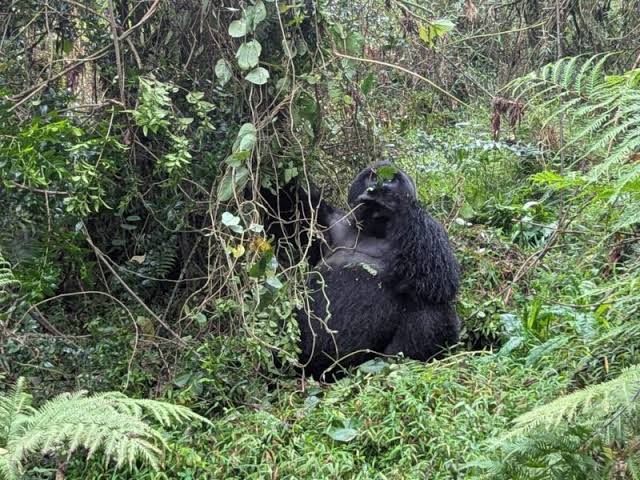
Plan Your Mountain Gorilla Habitat Expedition Today
The mountain gorilla habitat exists in only three countries, occupies less than 1,000 square kilometers, and contains fewer than 1,100 individual gorillas. This is among the rarest terrestrial mammal habitats on Earth.
Your decision to visit this habitat directly supports conservation. Tourism revenue funds the protection programs that keep these forests intact and these gorillas alive. By visiting, you become part of the solution to gorilla conservation rather than a passive observer.
Our expert guides know the mountain gorilla habitat intimately. They understand the ecology, the gorilla families, the seasonal food availability patterns, and the best times and routes to encounter gorillas. They’re trained in minimizing disturbance to gorillas while maximizing the quality of your experience.
Whether you choose to trek in the challenging terrain of Bwindi, the dramatic volcanic landscapes of Volcanoes in Rwanda, or the wild frontier of the Virunga mountains, a mountain gorilla habitat expedition will transform your understanding of nature and your place within it.
Contact us today to reserve your mountain gorilla habitat adventure. We’ll help you prepare physically and mentally for the challenging terrain. We’ll arrange permits, transportation, and all logistics. We’ll connect you with expert guides who live and work in these forests daily. We’ll ensure that your visit to the mountain gorilla habitat is safe, ethical, and unforgettable.
The gorillas are waiting. The misty forests are ready to welcome you. This is the opportunity of a lifetime—to witness one of Earth’s rarest ecosystems and the remarkable primates that call it home.
Related Pages
Expand your knowledge of mountain gorilla habitat and conservation:
- Where Do Mountain Gorillas Live? Countries, National Parks & Habitat
- Bwindi Impenetrable National Park: Complete Habitat Guide
- Volcanoes National Park Rwanda: Habitat & Conservation
- Mountain Gorilla Facts: Biology, Behavior & Ecology
- Gorilla Trekking in Uganda: The Complete Experience
- Rwanda Gorilla Safari: Permits, Planning & What to Expect
- Mountain Gorilla Conservation: Programs & Impact
- Best Time to Visit Mountain Gorillas: Seasonal Guide
- Sustainable Gorilla Tourism: How Your Visit Supports Conservation
Ready to explore the mountain gorilla habitat? Book your gorilla trekking adventure today and experience one of Earth’s most remarkable and rare ecosystems. The misty forests are calling.