Are Hyenas Dogs? Why Hyenas Are Closer to Cats
Are Hyenas Dogs: No, hyenas are not dogs. Hyenas belong to their own family, Hyaenidae, and sit on the cat side of the carnivore family tree. Their closest living relatives are mongooses, civets and cats, not dogs, wolves or foxes.
Hyenas look like dogs because they evolved a similar body for a similar lifestyle: running down prey over long distances in open country. Scientists call this convergent evolution. Underneath the dog-like shape, a hyena’s skull, ears, scent glands and behaviour all point to its cat-like ancestry.
This article explains how hyenas are classified, why they resemble dogs, how they differ from dogs and cats, the four hyena species, and where to see hyenas on safari.
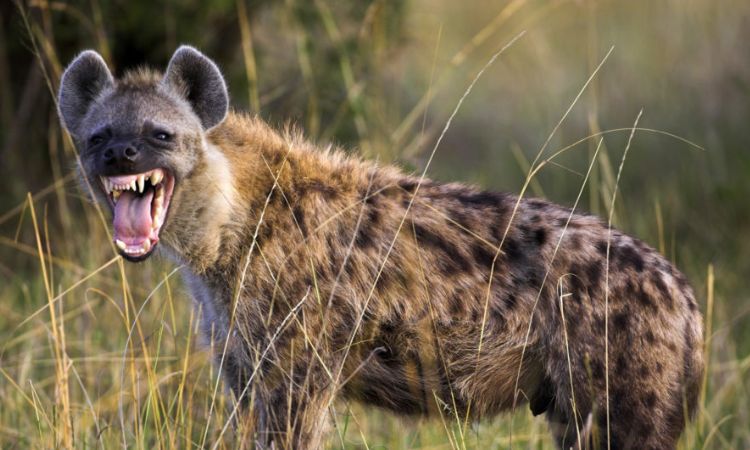
What Kind of Animal Is a Hyena?
A hyena is a carnivorous mammal in the family Hyaenidae. All carnivores belong to the order Carnivora, which split into two branches about 50 million years ago:
- Feliformia, the cat-like carnivores: cats, hyenas, mongooses, civets and genets.
- Caniformia, the dog-like carnivores: dogs, wolves, foxes, bears, seals, weasels and raccoons.
Hyenas are feliforms. That means a hyena shares a more recent common ancestor with a lion or a mongoose than it does with a wolf. In fact, a dog is more closely related to a bear or a seal than it is to a hyena.
Hyena vs Dog vs Cat: Key Differences
| Feature | Hyena | Dog | Cat |
|---|---|---|---|
| Family | Hyaenidae | Canidae | Felidae |
| Branch of Carnivora | Feliformia (cat-like) | Caniformia (dog-like) | Feliformia (cat-like) |
| Closest relatives | Mongooses, civets, cats | Wolves, foxes, bears, seals | Hyenas, mongooses, civets |
| Claws | Blunt, cannot retract | Blunt, cannot retract | Sharp, retractable in most species |
| Body shape | Front legs longer than back legs, sloping back | Level back, legs of similar length | Level back, flexible spine |
| Hunting style | Long chase, kills with teeth | Long chase, kills with teeth | Stalk and ambush, grips with claws |
| Bite | Bone-crushing, among the strongest of any land mammal | Moderate | Strong, built for a killing bite |
| Scent marking | Paste from an anal gland | Urine | Urine and cheek rubbing |
| Social leader | Females, in spotted hyenas | Usually a breeding pair | Varies; most cats live alone |
The table shows the pattern clearly. Hyenas hunt and run like dogs, but their family tree and many hidden features are those of a cat relative.
Why Do Hyenas Look Like Dogs?
Hyenas look like dogs because of convergent evolution. This is when unrelated animals develop similar features because they live in similar ways.
Both hyenas and wild dogs chase prey across open plains instead of ambushing it. That lifestyle rewards the same design:
- Long legs and a deep chest for stamina over long distances.
- Blunt claws that do not retract, which grip the ground like running spikes.
- A long muzzle and strong jaws, because the kill is made with the teeth, not the claws.
- Group hunting, which lets them bring down animals larger than themselves.
Fossils show that some early hyenas, living around 15 to 20 million years ago, were even more dog-like than today’s species. They were light, fast runners that resembled jackals. Most of those forms died out when true dogs spread into Africa and Eurasia, leaving the bone-crushing hyenas we know today.
How Hyenas Are Different From Dogs
Look closely and the differences between hyenas and dogs are clear.
- Sloping back. A hyena’s front legs are longer than its back legs, which gives it a downhill profile no dog has.
- Bone-crushing teeth. A spotted hyena’s bite is estimated at around 1,100 pounds per square inch, enough to crack a giraffe’s leg bone. Its stomach can digest bone, hooves and horns.
- Scent pasting. Hyenas mark territory by wiping a strong-smelling paste from a gland under the tail onto grass stalks. Dogs mark with urine.
- Cat-like grooming. Hyenas clean themselves by licking their coats, much as cats do.
- Female rule. In spotted hyenas, females are larger than males and outrank them. Even the lowest-ranked female dominates the highest-ranked male.
- Unusual anatomy. Female spotted hyenas have external genitals that closely resemble a male’s, a feature found in no dog or cat.
- Different voice. Hyenas do not bark or howl. They whoop, groan and giggle. A whoop can carry about five kilometres.
- Cubs born ready. Spotted hyena cubs are born with their eyes open and teeth already through. Puppies are born blind and toothless.
How Hyenas Are Like Cats
Hyenas are not cats either, but they share inherited features with the cat branch.
- Ear structure. The bony chamber of the middle ear is divided into two parts in hyenas and cats, but not in dogs. This is one of the main features scientists use to separate the two branches.
- Fewer teeth. Hyenas and cats have shorter tooth rows than dogs, with slicing cheek teeth and fewer grinding molars.
- Scent glands. The anal scent pouch is shared with mongooses and civets.
- Rough tongue. A hyena’s tongue is covered in rasping spines, like a cat’s, which helps strip meat from bone.
The Four Hyena Species
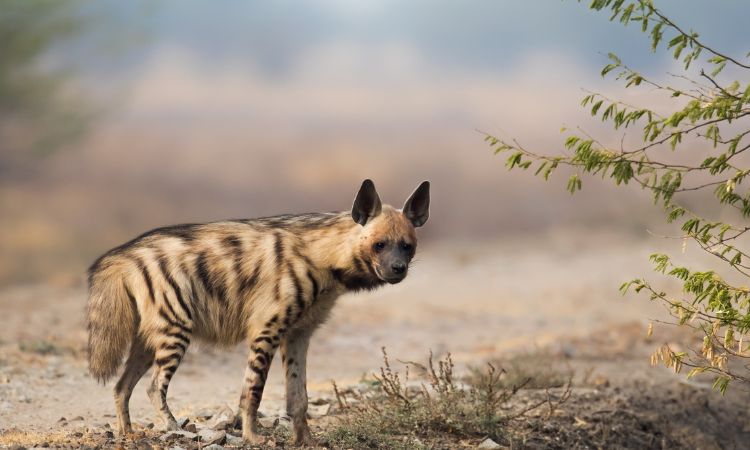
There are four living species in the hyena family. Three are bone-crushing hunters and scavengers, and one eats insects.
| Species | Where it lives | Size | Diet and habits |
|---|---|---|---|
| Spotted hyena | Sub-Saharan Africa | 45 to 80 kg, the largest | Hunts most of its own food in clans of up to 80. Famous for its “laugh”. |
| Striped hyena | North and East Africa, the Middle East, India | 25 to 45 kg | Mostly a solitary night scavenger. Shy and rarely seen. |
| Brown hyena | Southern Africa | 35 to 50 kg | Shaggy-coated scavenger of deserts and coasts. The rarest hyena. |
| Aardwolf | East and Southern Africa | 8 to 12 kg, the smallest | Eats termites, up to 250,000 in a night. Weak teeth, no bone-crushing. |
Are Spotted Hyenas Just Scavengers?
No. Spotted hyenas are skilled hunters and kill most of what they eat, in some areas well over half. A clan can bring down wildebeest, zebra and young buffalo. Lions often steal kills from hyenas, not only the other way round.
Hyenas vs African Wild Dogs
Hyenas are often confused with African wild dogs, which are true dogs.
| Feature | Spotted hyena | African wild dog |
|---|---|---|
| Family | Hyaenidae | Canidae (a true dog) |
| Weight | 45 to 80 kg | 18 to 36 kg |
| Coat | Sandy with dark spots | Patchwork of black, tan and white |
| Ears | Short and rounded | Very large and round |
| Back | Slopes down to the tail | Level |
| Sound | Whoops and giggles | High twittering and hoots |
| Status | Widespread | Endangered |
If the animal has a sloping back and a heavy head, it is a hyena. If it is slim, long-legged and blotched in three colours, it is a wild dog.
Where to See Hyenas on Safari
The spotted hyena is the species you are most likely to see on an East African safari. Hyenas are most active at dusk, at night and in the first hour after sunrise, so early game drives and night drives give the best sightings.
Hyenas in Uganda
- Queen Elizabeth National Park: spotted hyenas follow the Uganda kob herds on the Kasenyi plains and in the Ishasha sector.
- Murchison Falls National Park: look for them on the northern bank game tracks at dawn, often near lion kills.
- Lake Mburo National Park: hyenas are mostly heard at night here, and a night game drive offers a chance to see one.
- Kidepo Valley National Park: Uganda’s best park for variety, with spotted hyenas and occasional records of striped hyenas and aardwolves.
Hyenas Elsewhere in East Africa
- Maasai Mara, Kenya: large clans that are easy to watch at dens in open grassland.
- Serengeti and Ngorongoro Crater, Tanzania: some of the highest hyena densities in Africa.
- Akagera National Park, Rwanda: spotted hyenas are present and sometimes seen on night drives.
Tips for Watching Hyenas
- Go out at first light, when hyenas are returning to their dens.
- Listen at night for the rising “whoop”, which tells you a clan is nearby.
- Ask your guide about active dens, where cubs play outside in the early morning.
- Stay in the vehicle and keep quiet. Hyenas are curious and may walk very close.
FAQs – Are Hyenas Dogs
Are hyenas dogs or cats?
Hyenas are neither dogs nor cats. They form their own family, Hyaenidae. On the family tree they are closer to cats than to dogs, and their nearest living relatives are mongooses and civets.
Only distantly. Hyenas and dogs are both carnivores, but their ancestors separated about 50 million years ago. A hyena is no more closely related to a dog than a lion is.
Can a hyena breed with a dog?
No. Hyenas and dogs belong to different families and are far too genetically different to produce offspring. No hyena and dog hybrid exists.
Is a hyena a type of wild dog?
No. The African wild dog is a true member of the dog family, Canidae. The hyena is a separate animal that only looks similar.
Why do hyenas laugh?
The “laugh” or giggle is a sound spotted hyenas make when they are nervous, excited or being chased off food by a higher-ranking clan member. It is a sign of stress or submission, not amusement.
Are hyenas dangerous to humans?
Hyenas usually avoid people, and attacks on safari visitors are extremely rare. They are powerful predators, though, so you should never approach one on foot or leave food outside a tent.
Can you keep a hyena as a pet?
No. Hyenas are wild animals with a very strong bite and complex social needs. Keeping one is unsafe and is illegal in most countries.
Are hyenas smart?
Yes. Spotted hyenas live in large, ranked societies and recognise every clan member by voice. In problem-solving tests they have performed as well as some primates.
How long do hyenas live?
Spotted hyenas live about 20 years in the wild and up to 25 years or more in captivity.
The Short Answer
Hyenas are not dogs. They are a separate family of carnivores that sits on the cat side of the family tree, alongside mongooses and civets. Their dog-like shape is the result of evolving for the same hunting lifestyle, not shared ancestry.
Seeing a hyena clan at a den or hearing a whoop across the savannah at night is one of the great experiences of an African safari. Contact Gorilla Nests Safaris to plan a trip that includes Uganda’s best parks for hyenas and other predators.