Self-Drive vs Guided Safari in Uganda: Which Is Better?
Self-Drive vs Guided Safari in Uganda: Uganda offers two main ways to explore its national parks: hiring a 4×4 vehicle and driving yourself, or booking a guided safari with a professional driver-guide. Both options allow you to discover Uganda’s wildlife, beautiful landscapes and remarkable attractions, but they offer very different travel experiences.
A self-drive safari is ideal for independent travellers who enjoy driving, navigating unfamiliar roads and organising their own adventures. A guided safari is better for visitors who want a more relaxed, convenient and informative experience, with an experienced local professional handling the journey.
If you are visiting Uganda in December, choosing the right option is particularly important. December is part of Uganda’s short dry season and a popular period for wildlife safaris and gorilla trekking. Planning your transport carefully can make your holiday more enjoyable.
At Gorilla Nests Safaris, we offer both self-drive car hire and private guided safari transport, allowing travellers to choose the arrangement that suits their preferences and budget.
What Is a Self-Drive Safari in Uganda?
A self-drive safari is a wildlife holiday in which you hire a vehicle and drive yourself between Uganda’s national parks, accommodation facilities and tourist attractions without employing a private safari driver-guide.
You are responsible for navigating the routes, managing your travel schedule, arranging park activities and getting yourself to each destination.
Self-drive safaris are particularly attractive to experienced travellers who enjoy independent exploration and want greater control over their journeys.
How does a self-drive safari work?
The process usually involves:
-
Choosing your preferred national parks and attractions.
-
Hiring a suitable 4×4 safari vehicle.
-
Planning your routes and accommodation.
-
Organising park entrance payments and activities.
-
Driving between destinations independently.
-
Following park regulations and wildlife viewing guidelines.
You can arrange your own itinerary or ask a tour operator to organise the accommodation, permits and other arrangements while you retain responsibility for driving.
Advantages of a Self-Drive Safari in Uganda
-
Greater independence: You decide when to leave, where to stop and how long to spend at different destinations.
-
Flexible itinerary: You can adjust your travel plans without depending on a private guide’s daily schedule, subject to accommodation, permit and park arrangements.
-
Privacy: You enjoy the safari with your family, partner or friends without sharing the vehicle with other travellers.
-
Potential cost savings: For experienced drivers travelling as a small group, self-drive hire may reduce transport costs compared with a fully guided private safari.
-
Personal adventure: Driving through Uganda’s countryside, villages, forests and savannah landscapes can be an exciting experience.
Disadvantages of a Self-Drive Safari
Despite its advantages, self-driving in Uganda comes with responsibilities and challenges.
-
Navigation difficulties: Some routes to remote lodges and national parks can be confusing, particularly for first-time visitors.
-
Unfamiliar road conditions: You may encounter rough roads, potholes, steep sections, dust and muddy tracks.
-
Limited wildlife knowledge: Without an experienced guide, you may miss animal sightings or struggle to identify wildlife.
-
Driving fatigue: Long journeys between national parks can be tiring, especially when you are unfamiliar with the roads.
-
Vehicle responsibility: You must understand the rental agreement, insurance arrangements, breakdown procedures and emergency contacts.
-
Additional planning: You are responsible for coordinating your travel schedule, accommodation, park access and activities unless you pay an operator to arrange them.
A self-drive safari is therefore best suited to confident, responsible drivers who have experience travelling long distances and are comfortable navigating unfamiliar environments.
What Is a Guided Safari in Uganda?
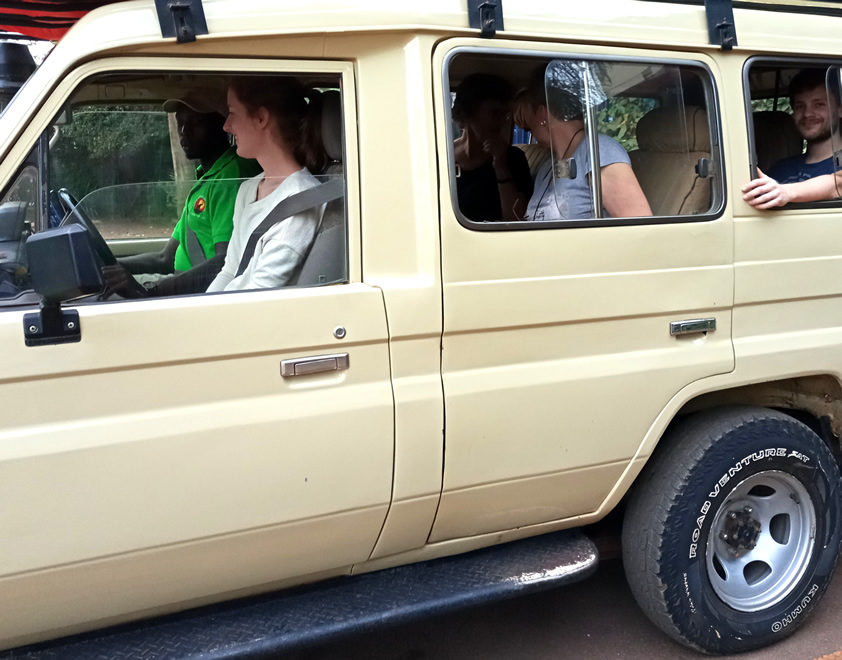
A guided safari is a wildlife holiday in which you travel with a professional driver-guide who handles the driving, navigation and much of the practical organisation throughout your trip.
Instead of concentrating on the road, you can relax, enjoy the scenery, observe wildlife and learn about Uganda’s natural attractions from someone familiar with the destinations.
Your driver-guide usually collects you from Entebbe International Airport or your hotel and accompanies you throughout the safari, depending on the itinerary.
What Does a Guided Safari Include?
Depending on the package you book, a guided safari can include:
-
A private 4×4 safari vehicle.
-
An experienced local driver-guide.
-
Airport transfers.
-
Transportation between national parks.
-
Game drives and wildlife viewing.
-
Assistance with accommodation arrangements.
-
Coordination of gorilla trekking and chimpanzee tracking permits.
-
Advice about local attractions, cultures and wildlife.
-
Assistance with travel arrangements during the safari.
Some activities, including gorilla trekking and chimpanzee tracking, are conducted on foot under the supervision of authorised park rangers. Your private safari driver-guide transports you to the relevant briefing point but does not replace the official trekking team.
Advantages of a Guided Safari in Uganda
-
Professional local knowledge: Your driver-guide understands the destinations, routes, wildlife habitats and local conditions.
-
Better wildlife interpretation: Guides can help identify animals, explain their behaviour and share information about the ecosystems.
-
Less driving stress: You do not have to navigate unfamiliar roads or concentrate on driving throughout the holiday.
-
Better time management: An experienced guide can help organise daily activities and coordinate journeys between parks.
-
Local assistance: Your guide can help with communication, accommodation arrangements and unexpected travel challenges.
-
More relaxing experience: You can concentrate on photography, wildlife viewing and enjoying the scenery.
-
Suitable for first-time visitors: You do not need previous experience driving in Uganda.
Disadvantages of a Guided Safari
-
Higher transport costs: A private guided safari generally costs more than hiring a vehicle without a driver.
-
Less independent control: Your daily schedule is coordinated with your driver-guide and the agreed itinerary.
-
Shared arrangements: If you book a group safari, you may need to accommodate other travellers’ preferences and schedules.
However, a private guided safari still offers considerable flexibility. You can discuss your preferred departure times, activities, accommodation and travel pace with your operator before the trip.
Self-Drive vs Guided Safari in Uganda: Main Differences
The following comparison highlights what to expect from each option.
| Feature | Self-drive safari | Guided safari |
|---|---|---|
| Driving | You drive yourself | Professional driver-guide |
| Navigation | Your responsibility | Handled by your guide |
| Wildlife knowledge | You research independently | Local interpretation and assistance |
| Flexibility | High independence | Flexible within agreed itinerary |
| Privacy | Private vehicle | Private if booked exclusively |
| Travel planning | Mostly your responsibility | Operator assists with arrangements |
| Driving experience | Required | Not required |
| Road challenges | You manage them | Guide handles the driving |
| Wildlife spotting | Independent | Guide assists with searching |
| Best suited for | Experienced independent travellers | First-time visitors and relaxed travellers |
Which option offers better value?
The cheapest option is not necessarily the one that offers the best overall experience.
With self-drive, you may save on driver-guide costs, but you must consider vehicle hire, fuel, insurance, accommodation, park charges, navigation and possible unexpected expenses.
With a guided safari, you pay for the vehicle and professional driving service, but you also benefit from local knowledge, logistical support and a more convenient journey.
The best choice depends on your group size, itinerary, driving experience and the level of assistance you want.
Which Vehicle Is Best for a Uganda Self-Drive Safari?
Choosing the right vehicle is important because Uganda’s safari destinations have different road conditions.
A standard small passenger car may be suitable for some urban journeys, but a reliable 4×4 is strongly recommended for most multi-park safari circuits, especially if you are visiting remote lodges, mountainous areas or forest destinations.
Common vehicle options include:
Toyota Land Cruiser: A popular safari vehicle with good ground clearance, off-road capability and space for passengers and luggage. Some safari versions have pop-up roofs for wildlife viewing.
Toyota Prado: A comfortable 4×4 suitable for road journeys and many safari routes. It is a good option for couples and small groups, depending on the specific model and road conditions.
Toyota RAV4: A smaller and often more economical option for travellers visiting accessible destinations and travelling with limited luggage. However, it is not the best choice for every difficult safari route.
Toyota Hilux Double Cab: A practical 4×4 pickup suitable for travellers who need luggage space and a capable vehicle for longer journeys. The suitability of a particular vehicle depends on its configuration and the route.
When hiring a vehicle, check the tyres, spare wheel, brakes, lights, jack, insurance, emergency equipment and 4×4 system. Confirm whether the rental agreement allows travel into national parks and whether breakdown support is available.
Gorilla Nests Safaris provides car hire and guided transport services for travellers who want to explore Uganda independently or with a professional driver-guide.
Can You Self-Drive in Uganda’s National Parks?
Yes. Self-driving is possible in several of Uganda’s savannah national parks, provided you have the appropriate vehicle, park access and follow Uganda Wildlife Authority regulations.
However, the experience varies depending on the destination.
Murchison Falls National Park: Murchison Falls is a rewarding destination for self-drive travellers. You can explore designated game-drive tracks, look for elephants, giraffes, buffaloes, lions and other wildlife, and enjoy the scenery around the River Nile. You must also plan around the Paraa ferry when crossing between the northern and southern sections of the park.
Queen Elizabeth National Park: Queen Elizabeth offers opportunities for independent game drives in designated areas, including the Kasenyi Plains and Ishasha sector. A 4×4 is useful for some tracks, particularly when road conditions change after rainfall.
Lake Mburo National Park: Lake Mburo is a convenient destination for travellers interested in a shorter self-drive safari. Its wildlife includes zebras, impalas, buffaloes, elands and giraffes. The park also offers boat trips, guided nature walks and other activities.
Kidepo Valley National Park: Kidepo is more remote than many of Uganda’s other national parks. Although it can be explored by self-drive, visitors should be particularly careful with route planning, fuel, vehicle preparation and emergency arrangements.
Important: Forest activities are different from savannah game drives. You can drive yourself to Bwindi, Mgahinga or Kibale, but gorilla trekking and chimpanzee tracking are conducted on foot with authorised guides and park staff. You cannot drive into the forest to find gorillas or chimpanzees.
For more information about Uganda’s safari destinations, explore our Uganda safari packages.
Is Self-Drive Suitable for Gorilla Trekking in Uganda?
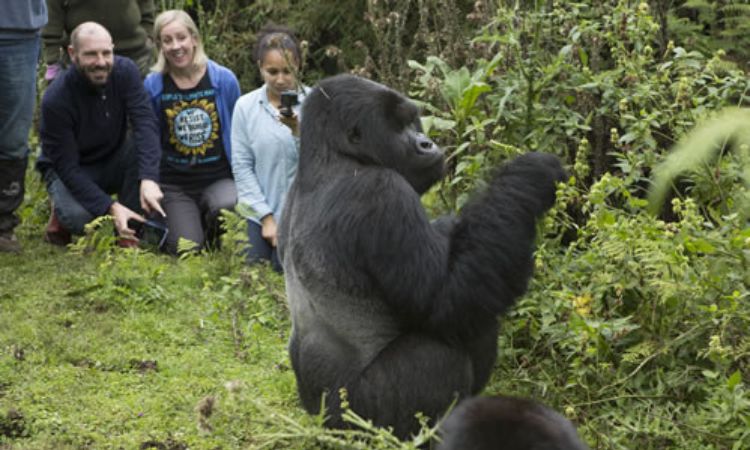
Yes. You can hire a vehicle and drive yourself to Bwindi Impenetrable National Park or Mgahinga Gorilla National Park for gorilla trekking.
However, the actual gorilla trekking experience is guided and regulated by Uganda Wildlife Authority. Independent driving does not mean independent gorilla tracking.
There are several things to consider:
-
You must secure a valid gorilla trekking permit for your preferred date.
-
Your permit determines the trekking location and sector.
-
You must reach the correct park briefing point on time.
-
You will join the authorised ranger-led trekking group.
-
You must follow the instructions of the rangers throughout the trek.
Bwindi has four main trekking sectors: Buhoma, Ruhija, Rushaga and Nkuringo. These sectors are geographically separated, so choosing accommodation in the correct area is important.
For example, if your permit is assigned to Nkuringo, staying in Buhoma may result in a very long morning transfer.
For travellers who have limited experience driving in Uganda, we recommend a private guided transfer to Bwindi. This allows you to arrive comfortably and concentrate on preparing for your gorilla trekking experience.
You can also explore our Uganda gorilla trekking safaris for different travel durations and accommodation options.
Is a Self-Drive or Guided Safari Better in Uganda in December?
December is a popular period for visiting Uganda because it falls within the short dry season. It is suitable for wildlife viewing, gorilla trekking, chimpanzee tracking and exploring different national parks.
However, December conditions can vary between destinations. Rain may still occur, especially in Bwindi, Mgahinga and Kibale, while some savannah routes may be dusty.
Self-Drive in December
A self-drive safari can be rewarding if you are an experienced driver and comfortable navigating Uganda’s roads.
You have the freedom to explore at your own pace, but you should:
-
Hire a reliable 4×4 with good ground clearance.
-
Check road conditions before travelling to remote destinations.
-
Avoid driving at night, particularly on unfamiliar rural roads.
-
Plan fuel stops carefully.
-
Allow extra time for long journeys.
-
Book accommodation and gorilla permits well in advance.
-
Carry offline maps and emergency contacts.
Guided Safari in December
For most international visitors, a guided safari is the more convenient option.
December is a busy holiday period, and a professional driver-guide can help you coordinate park visits, accommodation check-ins, game drives and transfers between destinations.
A guided safari is particularly useful when combining several parks, such as Murchison Falls, Kibale, Queen Elizabeth and Bwindi.
It also means you can enjoy the scenery and wildlife instead of concentrating on driving.
Our recommendation: If this is your first visit to Uganda, especially if you are planning gorilla trekking and a multi-park wildlife safari, we recommend booking a private guided safari. Experienced independent travellers can still enjoy self-drive, provided they plan carefully and understand the responsibilities involved.
How Much Does a Self-Drive vs Guided Safari Cost in Uganda?
There is no single price for either option because safari costs depend on several factors.
A self-drive safari generally involves:
-
4×4 vehicle rental.
-
Fuel.
-
Accommodation.
-
National park entrance fees.
-
Activity and permit fees.
-
Vehicle insurance and any applicable rental extras.
-
Possible parking, ferry and other transport charges.
A guided safari may include:
-
Private safari vehicle.
-
Driver-guide services.
-
Fuel.
-
Airport transfers.
-
Accommodation.
-
Meals.
-
National park entrance fees.
-
Game drives and boat cruises.
-
Gorilla or chimpanzee permits, where included in the quotation.
Always check what is included and excluded before comparing quotations. Some guided safari packages include accommodation and activities, while others quote transport and guiding separately.
For example, a self-drive vehicle rental quotation should not be compared directly with a fully inclusive guided safari package. They cover different services.
The number of travellers also affects the overall cost. A private guided vehicle shared by four people may offer better value per person than the same vehicle booked by one traveller.
If you want to understand the wider budget, read our guide to Uganda safari packages.
Essential Safety Tips for Self-Drive Safaris in Uganda
If you decide to drive yourself, preparation is essential. Uganda’s main highways connect many popular destinations, but rural and national park roads can present different driving conditions.
Keep the following advice in mind:
-
Drive on the left: Uganda follows left-hand traffic, which may require adjustment for visitors from countries that drive on the right.
-
Carry valid documents: Have your valid driving licence and all required rental and vehicle documents.
-
Choose the right vehicle: Use a suitable 4×4 for challenging routes and remote safari destinations.
-
Avoid night driving: Plan to reach your accommodation before dark. Rural roads may have limited lighting, pedestrians, cyclists, animals and unexpected obstacles.
-
Respect wildlife: Keep a safe distance from animals, remain inside your vehicle during game drives except at designated locations, and never feed wildlife.
-
Stay on designated tracks: Do not drive off authorised park roads to approach animals or obtain better photographs.
-
Check fuel levels: Refuel in major towns before entering remote areas.
-
Keep emergency contacts: Save your rental company’s number, accommodation contacts and relevant park assistance details.
-
Check the weather: Rain can change road conditions, particularly in forest and mountainous destinations.
-
Follow park instructions: Observe speed limits, opening hours and all Uganda Wildlife Authority regulations.
For more details about transport arrangements, visit our services page.
Which Safari Should You Choose? Our Recommendation
Your preferred travel style should determine whether you book a self-drive or guided safari.
| Type of traveller | Recommended option |
|---|---|
| First-time visitor to Uganda | Guided safari |
| Experienced African road-trip traveller | Self-drive |
| Couple on a honeymoon | Private guided safari |
| Family travelling with children | Private guided safari |
| Wildlife photographer | Guided safari with a specialist guide |
| Independent traveller on a flexible budget | Self-drive |
| Gorilla trekking visitor unfamiliar with Uganda | Guided safari |
| Traveller visiting several national parks | Private guided safari |
| Experienced 4×4 driver seeking independence | Self-drive |
A private guided safari is particularly attractive for travellers who want to combine several destinations without worrying about driving long distances.
For example, a journey from Entebbe to Murchison Falls, Kibale, Queen Elizabeth and Bwindi involves considerable road travel. Having a professional driver-guide makes the journey more comfortable and allows you to focus on the wildlife experiences.
Can you combine self-drive and guided safari experiences?
Yes. You do not necessarily have to choose one option for your entire holiday.
For example, you could hire a vehicle for independent exploration around Entebbe and Jinja, then arrange a private guided safari for gorilla trekking and visits to remote national parks.
This hybrid approach can be useful for travellers who enjoy driving but prefer professional assistance in destinations where navigation and local knowledge are particularly important.
Why Book Your Uganda Safari with Gorilla Nests Safaris?
Choosing a reliable safari operator is important whether you prefer a self-drive holiday or a fully guided experience.
At Gorilla Nests Safaris, we understand that travellers have different expectations, budgets and levels of driving experience. We therefore provide flexible transport arrangements and tailor-made safari itineraries.
Our services include:
-
Self-drive car hire: Suitable 4×4 vehicles for independent travellers who want to explore Uganda at their own pace.
-
Private guided safaris: Comfortable safari vehicles accompanied by experienced local driver-guides.
-
Gorilla trekking arrangements: Assistance with securing permits and coordinating accommodation in the appropriate trekking sector.
-
Wildlife safaris: Game drives and boat cruises in Uganda’s major national parks.
-
Chimpanzee tracking: Safari arrangements for Kibale Forest and other primate destinations.
-
Accommodation: Budget, mid-range and luxury options.
-
Airport transfers: Pick-up and drop-off arrangements at Entebbe International Airport.
-
Customised itineraries: Safari plans designed around your travel dates, interests and budget.
You can learn more about our car hire and guided transport services or browse our Uganda safari packages.
Frequently Asked Questions About Self-Drive and Guided Safaris in Uganda
Is it safe to self-drive in Uganda?
Self-driving is possible in Uganda, but visitors should understand local road conditions, follow traffic regulations and prepare for long-distance journeys. A suitable 4×4, careful route planning and avoiding night driving are important.
Do I need a 4×4 for a Uganda safari?
A 4×4 is strongly recommended for most multi-park safari itineraries, especially when visiting Bwindi, Mgahinga, remote lodges and some national park tracks. The exact vehicle requirement depends on the route and season.
Can I visit Bwindi Impenetrable National Park without a driver-guide?
Yes. You can drive yourself to Bwindi if you have a suitable vehicle and the necessary arrangements. However, gorilla trekking itself must be conducted with authorised park rangers and trackers.
Can I self-drive in Queen Elizabeth National Park?
Yes. Independent visitors can explore designated game-drive routes, provided they follow park regulations and have the required park access.
Is a guided safari more expensive than self-drive?
A private guided safari generally has higher transport costs because it includes professional driver-guide services. However, the overall difference depends on the group size, vehicle, fuel, accommodation and other inclusions.
Can I hire a vehicle with a driver in Uganda?
Yes. Several safari operators offer 4×4 vehicles with professional drivers. Gorilla Nests Safaris can arrange private guided transport for travellers exploring Uganda.
Can I book a self-drive safari and gorilla trekking together?
Yes. You can arrange your own vehicle and book a gorilla trekking permit in advance. You must still attend the official briefing and trek with authorised rangers.
Is December a good month for a guided safari in Uganda?
Yes. December is generally a favourable safari month because it falls within the short dry season. It is suitable for game drives, gorilla trekking, chimpanzee tracking and boat cruises, although occasional rain remains possible.
Should I book my Uganda safari in advance for December?
Yes. December is a popular holiday period, and gorilla permits, preferred lodges and some transport options can become fully booked. Early reservations give you a better chance of securing your preferred dates.
Visit Uganda This December with Gorilla Nests Safaris
Whether you choose a self-drive adventure or a private guided safari, Uganda offers an incredible holiday experience. You can explore the savannah plains of Queen Elizabeth National Park, discover the spectacular Murchison Falls, encounter chimpanzees in Kibale Forest and come face-to-face with endangered mountain gorillas in Bwindi.
December is an excellent opportunity to experience these attractions during Uganda’s short dry season while enjoying a memorable Christmas or New Year holiday.
At Gorilla Nests Safaris, we make planning your trip easier by offering both independent car hire and professionally guided safari experiences. We can help you choose the right vehicle, organise accommodation, secure gorilla trekking permits and create an itinerary that matches your interests and budget.
If you prefer independence, we can help arrange a suitable self-drive vehicle. If you want a relaxed holiday with local knowledge and professional assistance, our experienced driver-guides can accompany you throughout your journey.
Make this December the time you discover the Pearl of Africa. Book your Uganda safari with Gorilla Nests Safaris and let us help you create an unforgettable African adventure.
Visit Gorilla Nests Safaris to start planning your December holiday.