Entebbe to Bwindi: Drive, Fly or Combine? – Ultimate Guide
Entebbe to Bwindi: Planning a gorilla trekking safari in Uganda? One of the first decisions you need to make is how to travel from Entebbe to Bwindi Impenetrable National Park. You can drive through Uganda’s beautiful countryside, take a domestic flight to a nearby airstrip, or combine road and air travel to create a more flexible safari.
Each option has its advantages. Driving gives you the freedom to explore Uganda along the way, flying saves valuable time, and combining the two can offer an excellent balance between adventure and convenience.
For travellers visiting Uganda primarily to see mountain gorillas, the right transport choice can make a significant difference to the overall experience. Your decision affects how much time you spend travelling, your safari budget, where you stay before trekking, and how easily you can connect Bwindi with other national parks.
In this guide, we explain everything you need to know about travelling from Entebbe to Bwindi, including driving times, flight options, airstrips, costs, luggage restrictions, and practical planning tips.
If you are still planning your wider trip, explore our Uganda safari packages for ideas on combining gorilla trekking with wildlife viewing, chimpanzee tracking, and other memorable experiences.
Where Is Bwindi Impenetrable National Park?
Bwindi Impenetrable National Park is in southwestern Uganda, close to the border with the Democratic Republic of the Congo. It is internationally renowned for its mountain gorillas and is one of the most important destinations for gorilla trekking in Africa.
Unlike destinations reached by a short drive from Uganda’s main international airport, Bwindi lies several hundred kilometres from Entebbe. The journey crosses changing landscapes, including busy towns, rural communities, rolling hills, and the scenic highlands of southwestern Uganda.
The park also has several trekking sectors, including Buhoma, Ruhija, Rushaga, and Nkuringo. Your trekking sector matters because it influences which airstrip is most convenient, how long your final road transfer takes, and where you should book accommodation.
Before choosing transport, confirm your gorilla trekking permit and the sector where your trek will take place.
Learn more about the park and its experiences in our guide to activities in Bwindi Impenetrable National Park.
How Far Is Bwindi from Entebbe?
Bwindi is approximately 460–510 kilometres from Entebbe by road, depending on your destination within the park and the route taken.
Here is a general comparison of the main transport options:
| Travel option | Approximate journey time | Best suited for |
|---|---|---|
| Private road transfer | 8–10 hours, sometimes longer | Travellers who want a scenic journey and greater flexibility |
| Scheduled domestic flight | Around 1–2 hours in the air, depending on the route and stops | Travellers who want to save time |
| Flight plus road transfer | Flight time plus roughly 1–3 hours by road, depending on the airstrip and lodge | Visitors seeking a quicker and more comfortable journey |
| Drive one way and fly the other | One long road journey and one shorter flight-based journey | Travellers who want both a road adventure and time savings |
These are planning estimates rather than guaranteed journey times. Road conditions, weather, traffic, flight schedules, and the location of your lodge can all affect the total travel time.
Remember that flying does not take you directly into the forest. You still need a road transfer from the airstrip to your lodge or trekking area.
Option 1: Driving from Entebbe to Bwindi
Driving is a popular choice for visitors who want to experience more of Uganda beyond the gorillas.
The journey normally takes around 8–10 hours, although it can take longer depending on traffic, stops, road conditions, and the Bwindi sector you are visiting. A private 4×4 safari vehicle with an experienced driver-guide is a practical option for this journey.
What to expect on the drive
Your journey takes you southwest from Entebbe through central and western Uganda towards the highlands surrounding Bwindi.
Depending on your itinerary, you may stop at the Equator crossing in Kayabwe, enjoy lunch along the way, take photographs of the countryside, or visit a cultural attraction.
The scenery gradually changes as you travel farther southwest. You will see rural settlements, cultivated hills, local markets, and increasingly mountainous landscapes as you approach the Bwindi region.
For many travellers, the journey becomes part of the safari rather than simply a transfer between destinations.
Advantages of driving
1. You can enjoy Uganda’s countryside.
A road journey offers opportunities to experience local communities, scenery, and roadside attractions that you would miss when flying.
2. It can be economical for groups.
When several people share a private safari vehicle, the transport cost per person may be lower than purchasing individual domestic flight tickets.
The final comparison depends on the number of travellers, vehicle costs, accommodation requirements, and flight fares.
3. You have more flexibility for stops.
With a private driver-guide, you can arrange suitable breaks for lunch, photography, refreshments, and selected attractions along the route.
4. You can incorporate other destinations.
Driving can make sense if you want to combine Bwindi with other destinations, such as Lake Mburo National Park or Queen Elizabeth National Park.
For example, a longer safari can combine gorilla trekking with wildlife viewing and a boat cruise on the Kazinga Channel.
Explore our gorillas and Queen Elizabeth wildlife safari for an example of how these experiences can be combined.
Disadvantages of driving
The main disadvantage is the amount of time spent on the road.
An 8–10-hour journey can be tiring, especially after a long international flight. Travellers with limited holiday time may prefer to spend more of their trip enjoying Uganda’s wildlife rather than travelling between destinations.
Road journeys can also be affected by traffic, rain, roadworks, and changing road conditions.
If you are planning a short gorilla trekking trip, consider arriving in Uganda a day before the safari begins and arranging your departure carefully. Do not underestimate how tiring a long drive can be before or after a physically demanding trek.
Is driving the best option for you?
Driving is a good choice if you:
- Have enough time for a road journey.
- Enjoy scenic travel and local experiences.
- Are travelling as a group and want to share transport costs.
- Want to visit other destinations along the way.
- Prefer having a dedicated vehicle and driver-guide for your safari.
If you want a compact trip focused mainly on seeing the gorillas, compare the road option with flying before making a final decision.
You can also explore our 3 Days Uganda Gorilla Safari to see how a short gorilla trekking itinerary can be arranged.
Option 2: Flying from Entebbe to Bwindi
Flying is the quickest way to travel from Entebbe to the Bwindi region.
Domestic flights connect Entebbe with Kihihi and Kisoro airstrips. These services use small aircraft, and journey times vary depending on the destination, routing, weather, and any intermediate stops.
After landing, you continue by road to your lodge or trekking sector.
Flying is especially attractive to travellers who have only a few days in Uganda, want to reduce long road transfers, or prefer to spend more of their holiday enjoying the destination.
Which airstrip should you use?
The two main airstrips serving Bwindi are Kihihi and Kisoro.
| Gorilla trekking area | Airstrip to consider | Important note |
|---|---|---|
| Buhoma | Kihihi | Commonly the most convenient airstrip for the northern sector |
| Rushaga | Kisoro | Commonly used for access to the southern sector |
| Nkuringo | Kisoro | Often a convenient choice for the southwestern sector |
| Ruhija | Confirm the best option for your lodge | Road transfer times can be longer, so compare both options before booking |
The best airstrip depends on your permit location, lodge, and available flight schedule. Always confirm the complete transfer plan before paying for flights.
A flight that appears convenient on paper may not be the best choice if it leaves you with a long drive to your accommodation.
How long does the flight take?
The flight itself generally takes around 1–2 hours, depending on the route and whether the aircraft stops at another airstrip.
However, you should plan for the entire journey rather than the time spent in the air alone.
Your schedule needs to account for:
- Travelling to the domestic flight terminal.
- Airline check-in and boarding.
- The flight and any intermediate stops.
- Collecting your luggage.
- Meeting your driver at the airstrip.
- The final road transfer to your lodge.
Confirm the latest timetable with your airline or tour operator because flight schedules can change seasonally.
Advantages of flying
1. You save substantial travel time.
Instead of spending most of a day driving, you can reach the Bwindi region by air and continue to your lodge by road.
This is particularly useful when your holiday is short.
2. It is convenient for short gorilla safaris.
Flying makes it easier to organise a compact itinerary, provided you allow enough time for your arrival, trekking, and return journey.
3. It reduces fatigue.
Travellers who dislike long drives or have difficulty spending many hours in a vehicle may find flying more comfortable.
4. It can improve a luxury safari experience.
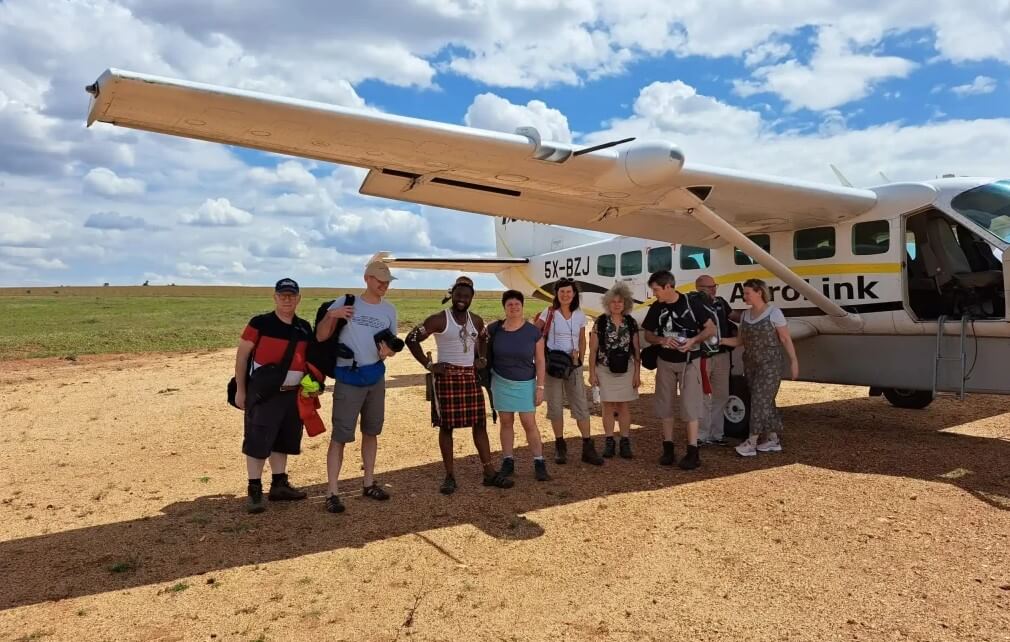
A fly-in safari combines air transfers with lodge accommodation and private ground transfers. It is a good option for travellers who prioritise convenience and want to maximise their time at the destination.
Discover our fly-in Uganda safari options for examples of itineraries that use domestic flights to connect Uganda’s wildlife destinations.
Disadvantages of flying
The main drawback is cost. Domestic flights generally cost more than travelling by road, particularly for families or groups.
Flights also have luggage restrictions, and small aircraft can be affected by poor weather. Flight times and routings may change, so it is important to leave enough flexibility in your itinerary.
You will also need a road transfer between the airstrip and your accommodation.
What is the luggage allowance?
Small aircraft serving safari destinations have limited luggage capacity. For example, AeroLink’s published booking conditions specify a standard allowance of 15 kilograms per passenger, including hand luggage, in soft-sided bags.
Allowances and excess-baggage arrangements may differ between operators, aircraft, and services. Confirm the exact rules for your booking before travelling.
To make the journey easier:
- Pack in a soft-sided travel bag rather than a rigid suitcase.
- Keep your essential medication and important documents accessible.
- Ask your operator whether excess luggage can be stored in Entebbe or transported separately by road.
- Check whether camera equipment counts towards your allowance.
For more practical advice, read our gorilla trekking packing list.
Is flying the best option for you?
Flying is ideal if you:
- Have limited time in Uganda.
- Want to minimise long road journeys.
- Are planning a short gorilla trekking safari.
- Prefer a more convenient or luxury travel experience.
- Are combining Bwindi with other destinations using domestic flights.
For travellers who want to experience the country along the way, however, a road journey or a combination of road and air may be more rewarding.
Option 3: Combine Driving and Flying
For many travellers, combining road transport and domestic flights offers the best balance.
You do not have to choose between experiencing Uganda’s countryside and saving time. You can drive in one direction and fly in the other, or use flights for the longer transfers while travelling by road between nearby destinations.
This approach can help you create a more varied itinerary without spending too much of your holiday on the road.
Choice A: Drive to Bwindi and fly back
This option works well for travellers who want to enjoy Uganda’s scenery on the way to Bwindi but would rather avoid another full day of driving after the trek.
Your journey might look like this:
Day 1: Entebbe to Bwindi
Travel by road with your driver-guide. Depending on your route and schedule, you can stop at selected attractions and enjoy the changing scenery along the way.
Day 2: Gorilla trekking
Attend the trekking briefing, enter the forest with the park’s guides and trackers, and spend time observing a habituated mountain gorilla family.
Day 3: Fly back to Entebbe
Transfer to the appropriate airstrip and take your booked domestic flight, subject to the available schedule.
This is an example rather than a fixed itinerary. You may need additional nights depending on your arrival time, trekking sector, flight availability, and international departure schedule.
Who should choose this option?
It suits travellers who enjoy road trips, want to see more of Uganda, and would appreciate a quicker return journey.
Choice B: Fly to Bwindi and drive back
Flying to Bwindi and returning by road is another useful option.
It allows you to reach the gorilla region quickly at the start of your holiday, when saving time may be especially important. After trekking, you can return to Entebbe by road and include selected stops along the way.
A road return can also make sense if you are travelling with a private vehicle that will continue with you to other destinations.
However, remember that a long return drive immediately after trekking can be tiring. If you choose this arrangement, discuss the itinerary with your operator and consider whether an overnight stop would make the journey more comfortable.
Choice C: Fly to Bwindi and drive to another national park
This arrangement is particularly attractive for travellers who want to combine gorilla trekking with a classic wildlife safari.
For example, you could fly from Entebbe to the Bwindi region, trek the mountain gorillas, and then travel by road to Queen Elizabeth National Park.
There, you can enjoy game drives across the savannah and a boat cruise along the Kazinga Channel, where hippos, elephants, waterbirds, and other wildlife may be seen.
After your wildlife activities, you can continue your safari according to your itinerary.
Our 6 Days Gorillas and Queen Elizabeth Wildlife Safari offers an example of combining these destinations.
Choice D: Fly both ways and use road transfers locally
If your priority is comfort and saving time, flying in and out of Bwindi may be the most suitable arrangement.
Your tour operator can organise airport transfers, domestic flights, lodge transfers, gorilla permits, and other activities into one itinerary.
This is particularly useful for visitors who want to focus on the experience rather than coordinate several transport arrangements independently.
You can explore our 4 Days Luxury Fly-In Bwindi Gorilla Safari as a starting point for planning this type of trip.
Driving vs Flying vs Combining: Which Is Better?
There is no single best option for every traveller. Your choice should depend on your available time, budget, trekking sector, and wider safari plans.
| Factor | Driving | Flying | Combining |
|---|---|---|---|
| Time required | Highest | Lowest overall travel time | Moderate, depending on the route |
| Transport budget | Often lower for groups | Usually higher | Falls between the options, depending on arrangements |
| Scenic road experiences | Excellent | Limited during the transfer | Enjoy some road scenery |
| Comfort | Depends on vehicle and journey length | Less time on the road, but small aircraft have restrictions | A useful balance |
| Short gorilla trip | Possible but travel-intensive | Often the most convenient | Very practical |
| Multi-park safari | Good for overland itineraries | Useful for connecting distant destinations | Flexible for mixed itineraries |
| Luggage flexibility | Generally greater | Limited by aircraft rules | Requires planning |
| Best for | Road-trip enthusiasts and groups | Time-conscious travellers | Travellers seeking flexibility |
Our recommendation: If you have only three or four days for a gorilla safari, flying is often the most practical option. If you have a longer holiday and enjoy exploring Uganda, driving can be rewarding. If you want both scenic travel and convenience, consider driving one way and flying the other.
How Much Does It Cost to Travel from Entebbe to Bwindi?
Your total transport cost depends on the number of travellers, the vehicle or flight selected, the dates, and whether you are booking a private safari or a package.
Rather than comparing only the ticket price with the cost of a vehicle, consider the total cost of each option.
The cost of driving
A road transfer may include:
- A private safari vehicle.
- Fuel.
- Driver-guide services.
- Any applicable driver accommodation or overnight arrangements.
- Additional accommodation if the itinerary requires an overnight stop.
- Meals and optional attractions not already included in your package.
For a group sharing one vehicle, the cost per person can be attractive.
The cost of flying
A fly-in itinerary may include:
- Domestic flight tickets.
- Transfers between the airstrip and lodge.
- Airport or airstrip handling arrangements where applicable.
- Accommodation.
- Gorilla trekking permits.
- Meals and other safari activities.
Flight fares vary by operator, travel date, route, and availability. Charter flights are priced differently from scheduled services.
Which option offers better value?
Flying is more expensive in direct transport costs in many cases, but it saves time that you might otherwise spend travelling.
Driving can be better value for groups, particularly when the vehicle is shared and the road journey forms part of a longer safari.
A combined itinerary can reduce some of the time spent on the road without requiring flights for every transfer.
To compare your options, request a quote that shows what is included in each arrangement. Our Uganda safari packages guide explains common package components and different safari styles.
How Many Days Do You Need for a Bwindi Gorilla Safari?
The ideal duration depends on how you plan to travel and what else you want to experience.
Three days: A short gorilla trekking trip
A three-day safari may work for travellers with limited time, particularly when transport is carefully organised. A road-based itinerary is possible, but it involves substantial driving and requires realistic expectations about the time available.
Flying can make a short trip more practical, provided flights, transfers, accommodation, and permits align with your trekking date.
Explore our 3 Days Uganda Gorilla Safari for an example of a compact gorilla trekking itinerary.
Four days: A more relaxed gorilla experience
Four days can provide more flexibility around travel and trekking.
A fly-in arrangement can leave you with more time to relax at your lodge, enjoy the surrounding area, and prepare for the trek.
If you choose to drive, consider whether you need additional nights to avoid rushing the journey.
Five to seven days: Gorillas and wildlife
With five to seven days, you have more opportunities to combine gorilla trekking with other experiences.
Depending on your route, you could visit Queen Elizabeth National Park, enjoy game drives, take a boat cruise, or include chimpanzee tracking in Kibale Forest.
A combination of road transfers and flights may help you manage the distances between destinations.
Browse our gorillas and Queen Elizabeth safari for inspiration.
Should You Fly or Drive on the Day of Your Gorilla Trek?
The safest approach is to reach your lodge at least the day before your gorilla trek.
Gorilla trekking normally starts with an early-morning briefing. You must be at the correct meeting point at the required time, and your permit will be for a specific date and trekking location.
Flying on the morning of your trek is risky because a delay or cancellation could cause you to miss the briefing. A long road journey on the same morning is not a realistic plan.
Instead, arrange your transport so that you have time to check in, rest, and prepare for the following day.
Before confirming your itinerary, check:
- The date and sector stated on your gorilla trekking permit.
- The location of your lodge.
- The road transfer time from the airstrip.
- Your flight schedule or estimated road journey.
- The time required to reach the trekking briefing point.
If you are planning your first gorilla encounter, our gorilla trekking safari information can help you understand how a trekking day fits into a short safari.
What Should You Know Before Booking Your Transport?
Choosing the right mode of transport is only part of the planning process. A successful trip also depends on coordinating the permit, accommodation, transfers, and return journey.
1. Secure your gorilla trekking permit
Permits are limited, and availability depends on the date and trekking sector. Confirm your permit before finalising non-refundable travel arrangements wherever possible.
Read our guide to Bwindi gorilla permit costs and booking tips for more information.
2. Match your flight to your trekking sector
Do not book an airstrip based solely on the flight duration. Check the location of your trekking sector and the road journey to your lodge.
A well-planned transfer can make the difference between a smooth arrival and several unnecessary hours on the road.
3. Check domestic flight baggage rules
Small aircraft have strict luggage allowances. Confirm the applicable weight limit, bag type, and excess-baggage policy with your airline before departure.
4. Leave enough time before your international flight
If you are flying back from Bwindi on the same day as your international departure, allow a generous buffer for domestic flight changes and onward airport procedures.
For greater peace of mind, consider spending a night near Entebbe before your international flight home, especially if missing that flight would cause major disruption.
5. Choose accommodation based on the trekking sector
Bwindi is a large forest, and accommodation in one sector may be inconvenient for a permit issued in another.
Confirm the exact lodge location rather than relying only on the general description that it is near Bwindi.
6. Plan for weather and changing conditions
Rain can affect road conditions and flight operations. Build some flexibility into your plans, particularly during wetter months.
A well-designed itinerary should allow you to enjoy your safari without relying on every transfer running perfectly to the minute.
What Should You Pack for the Journey?
Your packing list will depend partly on whether you are driving or flying.
If you are driving, you generally have more flexibility with luggage, although you should still pack sensibly and keep essential items accessible.
If you are flying, follow the airline’s baggage restrictions and use a suitable soft-sided bag.
For the gorilla trek itself, consider packing:
- Sturdy hiking boots with good grip.
- Long trousers and a long-sleeved shirt.
- A waterproof jacket.
- Gardening or trekking gloves.
- Insect repellent.
- Drinking water and light snacks for before or after the trek.
- A small daypack.
- A camera and spare batteries.
- Personal medication and important travel documents.
Weather in the forest can change quickly, and trails may be muddy or slippery. Your clothing should be comfortable, protective, and suitable for walking on uneven terrain.
For a more detailed checklist, read our gorilla trekking packing list.
Can You Combine Bwindi with Other Uganda Destinations?
Yes. One of the best ways to plan your trip is to consider Bwindi as part of a wider Uganda safari.
Bwindi and Queen Elizabeth National Park
Combine gorilla trekking with game drives and a boat cruise on the Kazinga Channel. This option gives you a contrast between Bwindi’s forest environment and Queen Elizabeth’s savannah and wetlands.
See our 6 Days Gorillas and Queen Elizabeth Wildlife Safari.
Bwindi and Kibale Forest
Kibale is famous for chimpanzee tracking. Combining it with Bwindi lets you experience two of Uganda’s most remarkable primate encounters.
Your transport arrangement will depend on your starting point, the sequence of destinations, and how many days you have available.
Bwindi and other national parks
Longer itineraries can include additional wildlife destinations. Driving is useful when you want to explore the countryside and connect parks overland, while flights can help reduce travel time on selected legs.
For more ideas, browse our Uganda safari packages.
Frequently Asked Questions
1. How long does it take to drive from Entebbe to Bwindi?
The drive generally takes around 8–10 hours, depending on your trekking sector, route, traffic, weather, road conditions, and stops along the way.
2. Can I fly directly from Entebbe to Bwindi?
There are domestic flights from Entebbe to Kihihi and Kisoro airstrips, which serve different parts of the Bwindi region. You then continue by road to your lodge. There is no airport inside the forest that takes you directly to the gorilla trekking trail.
3. Which is cheaper, driving or flying?
Driving is often more economical in direct transport costs, particularly for groups sharing a vehicle. Flying is generally more expensive but saves time. The best value depends on group size, itinerary, accommodation, and how much you value the time saved.
4. Which airstrip should I use for Buhoma?
Kihihi is commonly the most convenient airstrip for Buhoma. Confirm the location of your lodge and the available flight schedule before booking.
5. Which airstrip should I use for Rushaga or Nkuringo?
Kisoro is commonly used for Rushaga and Nkuringo. Your tour operator should confirm the most suitable route based on your permit and lodge.
6. Can I drive to Bwindi and fly back to Entebbe?
Yes. This is a useful option for travellers who want to experience the countryside on the way to Bwindi but avoid a second long drive after trekking. Flight availability and lodge transfers must be arranged in advance.
7. Is a fly-in gorilla safari worth the extra cost?
It can be, especially if you have limited time, want to avoid long road journeys, or prefer a more convenient safari. If you have a longer holiday or are travelling as a group, driving may offer better value.
8. Should I fly to Bwindi on the morning of my trek?
It is best to arrive at your lodge the day before trekking. Flight delays can happen, and you do not want to risk missing the early-morning briefing.
9. Can I combine a flight to Bwindi with a road safari?
Yes. You can fly to the gorilla trekking region and continue by road to other destinations, such as Queen Elizabeth National Park. You can also drive to Bwindi and fly back to Entebbe.
10. How early should I book flights and accommodation?
Book as early as practical, especially during popular travel periods. Coordinate your permit, accommodation, and transport together so that your flights and road transfers match your trekking date.
Final Verdict: Drive, Fly, or Combine?
The best way to travel from Entebbe to Bwindi depends on the kind of safari you want.
Choose driving if you have time to enjoy Uganda’s countryside, want the flexibility of a private road journey, or are travelling with a group.
Choose flying if you want to minimise travel time, are planning a short gorilla trekking trip, or prefer a more convenient fly-in experience.
Choose a combination if you want to enjoy the scenery on one leg while saving time on the other. For many travellers, this is an excellent compromise between adventure, flexibility, and convenience.
Whatever option you choose, coordinate your transport with your gorilla permit, trekking sector, accommodation, and international flight schedule. Good planning allows you to spend less time worrying about logistics and more time enjoying Uganda’s extraordinary landscapes and wildlife.
Plan Your Bwindi Gorilla Safari with Gorilla Nests Safaris
At Gorilla Nests Safaris, we help travellers plan Uganda safaris around their available time, preferred accommodation, interests, and budget.
Whether you prefer a scenic road journey, a convenient fly-in safari, or a combination of both, your itinerary can be arranged around the gorilla trekking sector and other destinations you want to experience.
Explore our Uganda safari packages or discover our fly-in Uganda safaris to start planning your trip.
Contact Gorilla Nests Safaris to request a personalised itinerary and compare the driving, flying, and combined options for your travel dates.