How Is Wildlife Viewing in Uganda? A Complete Guide 2026
Wildlife viewing in Uganda is excellent but different in character from the classic East African safari: instead of one park delivering everything, Uganda splits its wildlife across specialized ecosystems, rainforest primates in the west, savanna game in the north and southwest, and wetland birding almost everywhere, so a well-planned circuit gives you more variety per day than Kenya or Tanzania’s single vast plains. You won’t find the sheer volume of a Serengeti wildebeest herd, but you will find mountain gorillas, tree-climbing lions, and over 1,000 bird species within driving distance of each other, at national park entrance fees and gorilla permits well below Rwanda’s.
Here’s what to actually expect, park by park and species by species.

Uganda Wildlife Viewing at a Glance
| Mammal species | Over 340 |
| Bird species | Over 1,000, more than Kenya and Tanzania combined |
| Primate species | 20+, the highest concentration in Africa |
| Mountain gorillas | About half the world’s roughly 1,063 remaining |
| Chimpanzees | Over 5,000, with 1,500+ in Kibale Forest alone |
| Tree-climbing lions | One of only two confirmed populations in East Africa (Ishasha and Tanzania’s Lake Manyara) |
What Makes Uganda’s Wildlife Viewing Different
Kenya and Tanzania are built around vast, open savanna where you can see enormous herds from a single vehicle. Uganda is smaller and more forested, so its wildlife viewing works differently:
- Primates are the headline act. No other country combines mountain gorilla trekking with chimpanzee tracking as accessibly as Uganda.
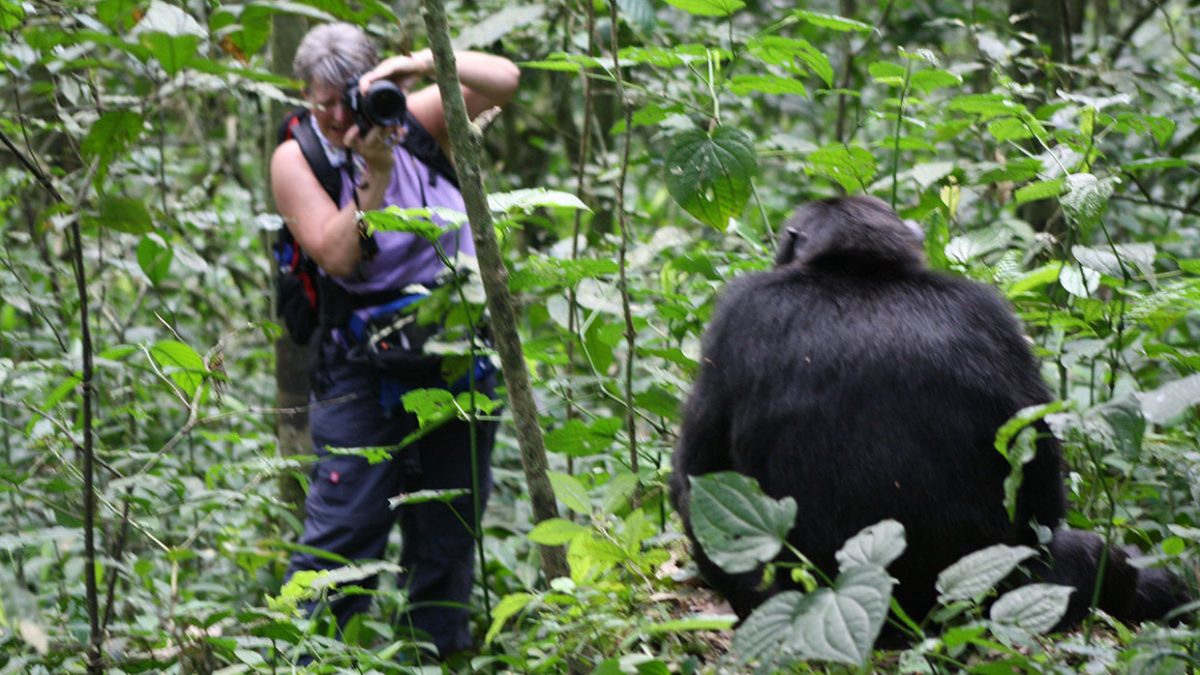
- You view on foot as often as by vehicle. Gorilla and chimp trekking are walking experiences through forest, not vehicle-based game drives, which changes the pace and intimacy of the encounter.
- Water-based viewing is exceptional. Boat cruises on the Kazinga Channel and the Nile at Murchison Falls concentrate hippos, elephants, buffalo, crocodiles, and birds along the banks in a way vehicle-only parks can’t match.
- Big cat sightings are good but not guaranteed the way lions are in the Serengeti. Uganda rewards patience and a good guide over sheer numbers.
Primates: Uganda’s Strongest Suit
Mountain gorillas. Bwindi Impenetrable National Park has an outstanding trek success rate, and once you’re with a habituated family, sightings are close and prolonged, typically a full hour at close range, not a fleeting glimpse. See silverback gorilla tours and the deeper gorilla habituation experience, which extends viewing to a full day.
Chimpanzees. Kibale Forest holds East Africa’s highest chimp density, over 1,500 individuals, giving Uganda some of the continent’s best chimp-tracking odds. See chimpanzee tracking Uganda and chimpanzee permit costs.
Golden monkeys. Found only around the Virunga volcanoes in Mgahinga, an easy add-on to gorilla trekking in the far southwest.
Other primates. Black-and-white colobus, red-tailed monkeys, l’Hoest’s monkeys, and baboons are common sightings on almost any forest walk, adding up to Uganda’s 20-plus primate species, the highest concentration anywhere in Africa.
Savanna Wildlife: Where to See the Big Game
Queen Elizabeth National Park delivers Uganda’s most varied savanna viewing: elephants, buffalo, Ugandan kob, warthogs, hyenas, and the park’s signature draw, tree-climbing lions in the Ishasha sector, a behavior seen in very few lion populations worldwide. The Kazinga Channel boat cruise is arguably the single best wildlife-viewing activity in the country, with hippo pods, elephants drinking at the shoreline, and over 600 bird species along one stretch of water. See the 2 Days, 3 Days, and 4 Days Queen Elizabeth safaris.
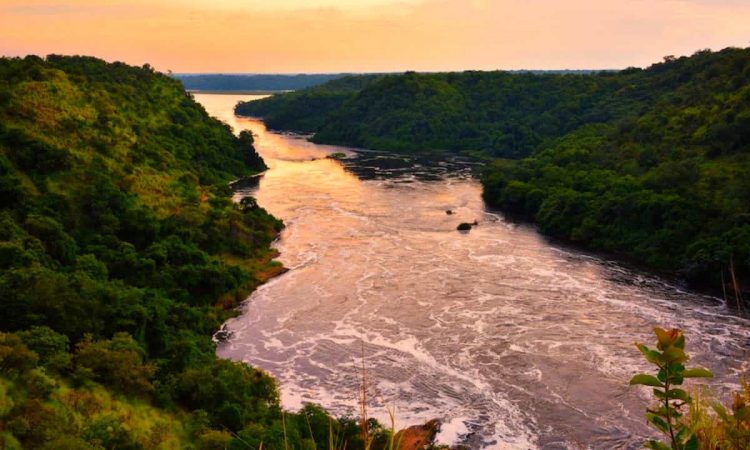
Murchison Falls National Park, Uganda’s largest, is the best bet for classic Big Four game drives (elephant, buffalo, lion, leopard; rhinos require a separate stop, see below), plus giraffes and a genuinely spectacular setting where the entire Nile is squeezed through a 7-metre gap. A launch cruise to the base of the falls adds crocodile and hippo sightings on top of the drive. See Murchison Falls facts and the 2 Days and 3 Days Murchison Falls safaris.
Lake Mburo National Park is Uganda’s most underrated wildlife park for a specific reason: it’s one of the only parks in the country where walking and cycling safaris are permitted, putting you on foot among zebra, impala, and eland rather than viewing exclusively from a vehicle. See the 3 Days Lake Mburo Safari.
Rhino Tracking: Uganda’s One Exception
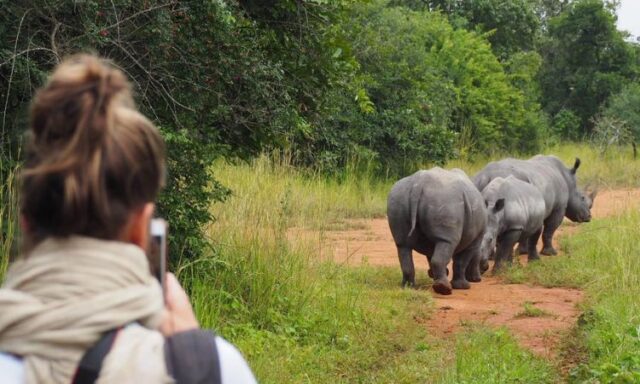
Rhinos were hunted to extinction in the wild in Uganda by the 1980s. They exist today only at Ziwa Rhino Sanctuary, a dedicated reintroduction site north of Kampala, where walking tracking on foot gets you remarkably close. It’s not a national park sighting, but it’s currently the only way to see rhinos in Uganda. See our 1 Day Rhino Tracking Safari.
Birding: Uganda’s Underrated Strength
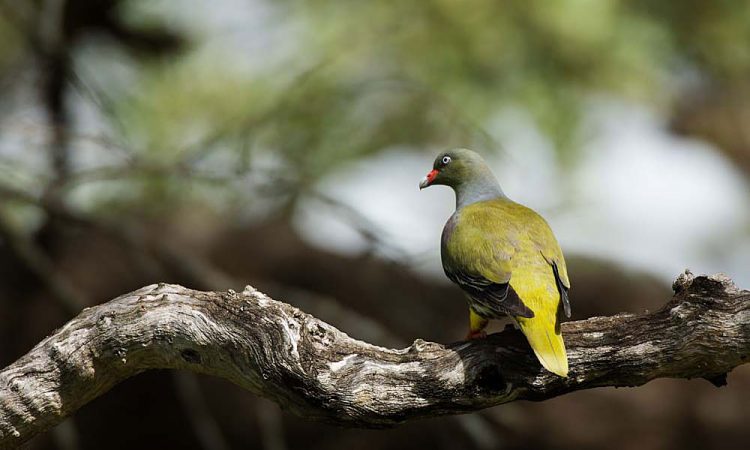
With over 1,000 recorded species, more than Kenya and Tanzania combined, Uganda is one of Africa’s premier birding destinations, and you don’t need to be a dedicated birder to appreciate it.
The signature sighting is the shoebill stork, a bizarre, prehistoric-looking bird best found in the papyrus swamps of Mabamba Bay, a short trip from Entebbe. Serious birders build entire circuits around it, see birding tours in Uganda and the dedicated 7 Days Birding in Uganda Safari.
Wildlife Viewing Methods in Uganda
| Method | Best for | Where |
|---|---|---|
| Forest trekking (on foot) | Gorillas, chimpanzees, golden monkeys | Bwindi, Kibale, Mgahinga |
| Vehicle game drives | Big game, predators | Murchison Falls, Queen Elizabeth |
| Boat cruises | Hippos, elephants, crocodiles, waterbirds | Kazinga Channel, Nile at Murchison Falls |
| Walking and cycling safaris | Plains game, close-up birding | Lake Mburo |
| Guided rhino tracking on foot | Southern white rhinos | Ziwa Rhino Sanctuary |
Most well-built Uganda itineraries combine at least three of these methods, which is part of why viewing feels more varied here than in a single-ecosystem park elsewhere.
Park-by-Park: What You’ll Actually See
| Park | Signature wildlife | Viewing style |
|---|---|---|
| Bwindi Impenetrable NP | Mountain gorillas | Forest trekking |
| Kibale Forest NP | Chimpanzees, 12 other primates | Forest trekking |
| Queen Elizabeth NP | Tree-climbing lions, hippos, elephants | Game drives + boat cruise |
| Murchison Falls NP | Elephants, giraffes, lions, the falls itself | Game drives + boat cruise |
| Lake Mburo NP | Zebra, impala, eland, hippos | Walking, cycling, boat |
| Mgahinga Gorilla NP | Golden monkeys, gorillas | Forest trekking |
| Mabamba Bay | Shoebill stork | Canoe/boat birding |
| Ziwa Rhino Sanctuary | Southern white rhino | Walking tracking |
When Wildlife Viewing Is Best
Uganda’s forest wildlife (gorillas, chimps) is visible year-round, since trekking happens regardless of season. Savanna viewing sharpens in the dry months:
- June to September and December to February: driest conditions, easier terrain, and peak season, so gorilla permits should be booked 3 to 6 months ahead.
- March to May and October to November: wetter, lusher, fewer crowds, and lower lodge rates, with muddier trails as the tradeoff.
How Uganda’s Wildlife Viewing Compares to Kenya and Tanzania
If you want the sheer scale of the wildebeest migration or endless open plains dense with predators, Kenya’s Masai Mara or Tanzania’s Serengeti still win on volume. Uganda’s edge is variety and intimacy: gorilla and chimp trekking you simply can’t do in either country at the same accessibility, tree-climbing lions found almost nowhere else, and boat-based wildlife viewing that rivals anything on the continent.
Many travelers solve this by combining both: see our 7 Days Uganda–Kenya and 7 Days Uganda and Tanzania itineraries, or the full 15 Days Ultimate East Africa circuit.
How Is Wildlife Viewing in Uganda FAQs
Is Uganda good for wildlife viewing? Yes, especially for primates: it’s one of the best places on Earth for mountain gorillas and chimpanzees, plus strong savanna and birding viewing, though it doesn’t match Kenya or Tanzania for sheer herd size.
Can you see the Big Five in Uganda? Four of the five (elephant, buffalo, lion, leopard) are viewable in Murchison Falls and Queen Elizabeth National Parks. Rhinos exist only at the dedicated Ziwa Rhino Sanctuary, not in the wild parks.
What is the best park in Uganda for wildlife? It depends what you want: Bwindi for gorillas, Kibale for chimpanzees, Queen Elizabeth for tree-climbing lions and the Kazinga Channel, and Murchison Falls for classic big-game drives.
Are gorilla and chimp trekking guaranteed sightings? Trek success rates are high with experienced guides, since trackers monitor known family groups daily, but wildlife trekking is never 100% guaranteed. Treks can take anywhere from 1 to 8 hours depending on where the group is ranging.
Is Uganda better than Kenya for a safari? They’re different, not directly comparable: Uganda wins on primates and variety, Kenya wins on the scale of savanna and migration viewing. Many travelers combine both.
What is the best time for wildlife viewing in Uganda? June to September and December to February for the driest conditions; the wetter shoulder months (March–May, October–November) still offer good viewing with fewer crowds.
Plan Your Uganda Wildlife Safari
Ready to see it for yourself? Browse all Uganda safari packages, read about us, or contact our team to build an itinerary around the wildlife you most want to see.