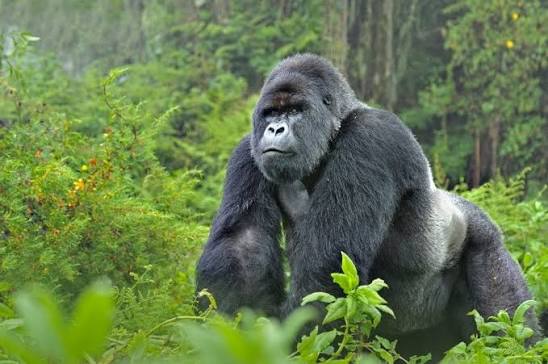
What is Special About a Mountain Gorilla Nose
Discover what makes the mountain gorilla nose unique — from noseprint identification to communication and high-altitude adaptation. Plan your gorilla safari today.
Mountain gorillas (Gorilla beringei beringei) are among Africa’s most remarkable primates, and their distinctive noses are far more fascinating than most visitors realize.
When you embark on a Uganda gorilla trekking experience or join a Rwanda gorilla safari, you’ll gain an appreciation for how these majestic animals use their noses for survival, identification, and social connection in the cloud forests of Central Africa.
The mountain gorilla nose is not simply a breathing organ—it’s a biological marvel that reveals the complexity of these endangered primates and the incredible ways they’ve adapted to life in the Bwindi National Park and Virunga mountain ranges.
The Unique Anatomy of the Mountain Gorilla Nose
The mountain gorilla nose is distinctly different from human noses in several striking ways. Rather than projecting outward like ours, the mountain gorilla’s nose features a broad, flattened profile with large, oval-shaped nostrils that are perfectly adapted for the cool, humid environment of their high-altitude habitat.
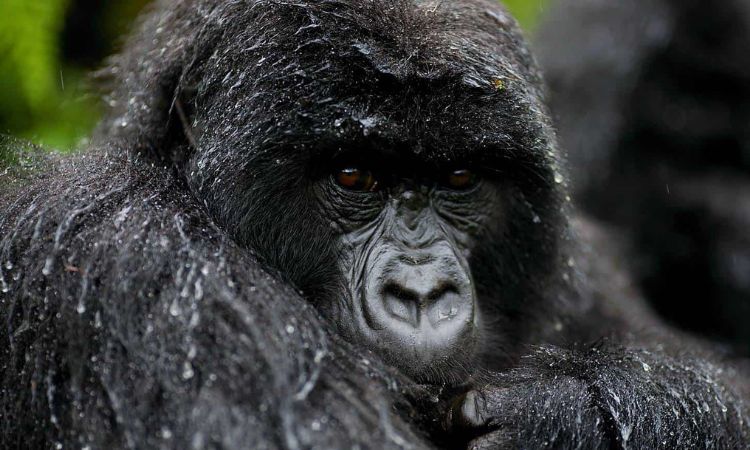
The nose consists of flexible cartilage and thick soft tissue, covered in dark, slightly wrinkled skin that gives each gorilla an unmistakable facial character. This robust nasal structure is essential for the mountain gorilla physical characteristics that make them such impressive creatures to observe during gorilla tourism.
Inside the nasal cavity, specialized mucous membranes line the passages, warming and humidifying the cool mountain air before it reaches the lungs—a critical adaptation for gorillas living at elevations between 2,200 and 4,300 meters (7,200 to 14,100 feet).
This physiological feature prevents the shock of cold air from damaging the respiratory system, making it essential for an animal weighing up to 430 pounds that spends its entire day foraging and moving through challenging terrain.
The nasal passages are equipped with olfactory receptors, though mountain gorillas rely far less on smell than on vision and hearing. This makes the mountain gorilla behavior and how they navigate their environment particularly interesting to researchers studying gorilla habitat conservation.
The Mountain Gorilla Noseprint: Nature’s Unique Fingerprint
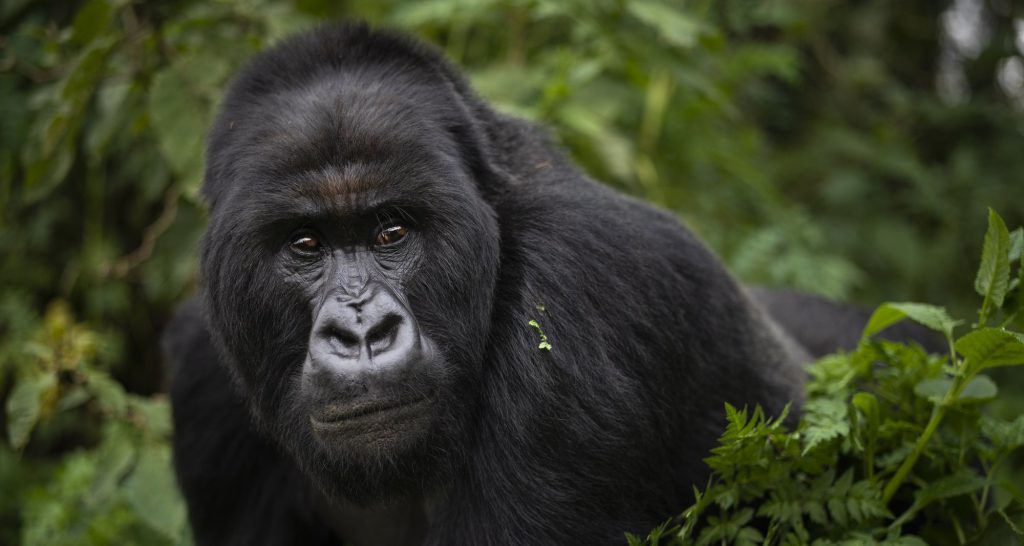
Perhaps the most extraordinary feature of the mountain gorilla nose is something called the noseprint—an absolutely unique pattern of ridges, creases, wrinkles, and shapes around each gorilla’s nostrils that remains consistent throughout its entire life. Think of it as nature’s version of a human fingerprint, but even more distinctive.
Each gorilla’s noseprint is completely individual. One gorilla might have a deep crease running above its left nostril, while another has symmetrical ridge patterns or distinctive folds that create a one-of-a-kind facial signature. Conservationists at the Dian Fossey Gorilla Fund and other research organizations have developed an entire scientific system around this reality.
The noseprint identification technique has become absolutely critical for mountain gorilla conservation efforts across the region.
Field researchers spend countless hours observing gorillas at safe distances, capturing high-resolution photographic images of their faces specifically to document and catalog these unique noseprints.
By maintaining detailed databases of individual noseprints, scientists can track the same gorilla family groups over many years, monitor birth rates and population growth in the wild, detect health issues through behavioral changes, study gorilla family structure and social dynamics, and ensure the safety and well-being of these endangered animals.
This non-invasive identification method has revolutionized how we understand mountain gorilla populations and has been instrumental in improving conservation outcomes across Uganda, Rwanda, and the Democratic Republic of Congo.
Communication and Social Intelligence: The Nose’s Hidden Role
The mountain gorilla nose plays a far more complex role in communication than most people realize. While gorillas are famous for their chest-beating displays and vocalizations—deep grunts, hoots, and roars—the nose contributes to what scientists call olfactory communication, a subtle but powerful form of information exchange.
Gorillas produce distinctive scents through specialized glands located near the nose and distributed across their bodies. Though these odors aren’t easily perceptible to human visitors during gorilla trekking experiences, they carry crucial information within gorilla families about identity, reproductive status, emotional state, and social rank.
A dominant silverback gorilla—the leader and protector of the family group—uses scent signals to assert dominance and attract potential mates.
The large nostrils and sensitive nasal passages of mountain gorillas allow them to detect these chemical cues with remarkable precision, facilitating complex social interactions and maintaining the cohesion of the group.
Additionally, the nasal cavity acts as a resonance chamber for vocalizations. When a silverback emits a powerful hoot, roar, or territorial call, the nose amplifies the sound, giving it a deeper, more resonant quality that can carry through dense forest vegetation.
This amplification is particularly important for silverback gorillas, whose vocalizations must reach group members across challenging terrain and warn rival males away from their territory.
The nose, therefore, is not just a sensory organ—it’s an integral tool for maintaining social bonds, establishing hierarchy, and preserving group cohesion within mountain gorilla families.
High-Altitude Adaptations: The Mountain Gorilla Nose in Its Environment
The mountain gorilla nose represents a masterpiece of evolutionary adaptation to one of Earth’s most challenging environments. The cool, misty montane forests where these gorillas live require specialized respiratory capabilities that humans don’t possess.
At elevations ranging from 2,200 to 4,300 meters, the air is thinner, colder, and more humid than in lowland forests. The broad nostrils and spacious nasal passages of mountain gorillas allow for rapid oxygen intake—essential for such massive primates (adult males weighing 195 kg) that spend the entire day foraging, climbing, and moving through rugged mountain terrain.
The nasal membranes don’t just filter air; they actively warm inhaled air through their rich blood supply, preventing cold air from shocking the sensitive lung tissue.
This thermoregulation function is absolutely critical in the chilly, mist-shrouded environments of the Virunga Massif and Bwindi Impenetrable National Park, where temperatures can drop significantly, especially at dawn and dusk.
The nose also serves as an efficient filtration system. As mountain gorillas feed on fibrous vegetation—leaves, stems, bark, and woody plants—the nasal passages filter out dust and plant particles that would otherwise irritate their respiratory tract.
This filtering capability is essential when you consider that these animals spend 60-70% of their waking hours feeding on vegetation in the forest.
Interestingly, the mountain gorilla’s reliance on smell is less pronounced than in other primate species. Their herbivorous diet—consisting primarily of easily identifiable plants—doesn’t require acute scent detection for locating food.
However, the nose remains essential for detecting subtle environmental cues like the presence of predators or rival gorilla groups, making mountain gorilla tracking possible for experienced guides during safari outings.
Understanding Mountain Gorilla Health Through Nasal Signs
The health status of a mountain gorilla’s nose can provide invaluable insights into its overall well-being and the health of the entire population. Respiratory infections represent a significant threat to gorillas, particularly because of their genetic similarity to humans—they can contract human diseases like pneumonia, colds, and flu.
When a gorilla develops a respiratory infection, the early signs often appear in the nose: congestion, discharge, or difficulty breathing. Conservationists and veterinarians monitor these signs carefully during routine health assessments, as diseases that appear minor in humans can be absolutely devastating in small, genetically interconnected gorilla populations in the wild.
The reality of gorilla tourism and habitat encroachment has created an unfortunate reality: disease transmission between humans and gorillas is now a serious conservation concern.
A simple cold virus from a human visitor can lead to severe respiratory illness in a gorilla, potentially spreading through the family group with serious consequences.
This is why responsible gorilla safari operators enforce strict health protocols: maintaining a minimum distance of 7 meters between visitors and gorillas, requiring visitors to wear face masks, screening tourists for respiratory symptoms before trekking, limiting the number of visitors allowed near gorilla families per day, and ensuring guides understand disease transmission risks.
When you book a gorilla safari with an ethical operator, these precautions protect not just individual gorillas, but the survival of the entire species.
The Broader Conservation Story: Why the Mountain Gorilla Nose Matters
The mountain gorilla nose, while seemingly a small anatomical feature, represents something far more significant: the fragility and resilience of an endangered species fighting for survival.
With fewer than 1,100 mountain gorillas remaining in the wild—primarily in Rwanda, Uganda, and the Democratic Republic of Congo—every biological detail becomes critical to their survival.
The noseprint identification system has become a cornerstone of modern conservation efforts. By maintaining photographic catalogs and databases of individual noseprints, researchers have been able to track specific individuals and family groups over decades, creating an unprecedented understanding of mountain gorilla population dynamics and trends.
Habitat loss, poaching, and human-wildlife conflict continue to threaten these magnificent animals. Deforestation in critical areas like Bwindi and the Virunga Mountains directly impacts air quality in gorilla habitats, increasing dust and pollutants that irritate nasal passages and compromise respiratory health.
Conservation initiatives led by organizations like the International Gorilla Conservation Programme (IGCP) work tirelessly to protect gorilla habitats, enforce anti-poaching measures, and ensure that mountain gorillas have access to clean air and abundant food resources that support their respiratory and overall health.
When you choose to visit mountain gorillas through sustainable gorilla tourism programs, you directly support these conservation efforts through tourism revenues that fund protection work.
Why Visit Mountain Gorillas? The Unforgettable Experience Awaits
Understanding the complexity of the mountain gorilla nose is just one reason to experience these remarkable animals in person. A gorilla trekking adventure in Uganda or a Rwanda gorilla safari offers far more than just wildlife viewing—it offers a transformative connection to nature and an opportunity to support critical conservation work.
When you trek to find a mountain gorilla family in their natural habitat, you’ll witness these animals’ intelligence, social bonds, and gentle nature firsthand. You’ll watch silverbacks protect their families, observe young gorillas playing and learning, and gain a profound appreciation for their complex personalities and individual identities—marked uniquely by those extraordinary noseprints.
Every gorilla you encounter has a documented history, a personality recognized by researchers, and a family structure as complex as any human society. This level of individual connection is something you simply cannot experience in a zoo or through photographs.
Moreover, your gorilla safari contributes directly to conservation. Tourism revenue funds anti-poaching patrols, habitat protection, veterinary care for sick or injured gorillas, and community education programs that reduce human-gorilla conflict. By choosing to visit with a responsible operator, you become part of the solution to gorilla conservation.
Plan Your Mountain Gorilla Adventure Today
The mountain gorilla nose tells a remarkable story of adaptation, intelligence, and survival. But reading about these incredible primates cannot compare to experiencing them in person, in the misty forests where they’ve lived for millennia.
Whether you’re interested in Uganda gorilla permits and trekking in Bwindi Impenetrable National Park or planning a Volcanoes National Park gorilla experience in Rwanda, we can help you arrange the adventure of a lifetime.
Our expert guides have spent years studying mountain gorilla behavior and ecology. They understand the nuances of gorilla family dynamics, they know how to track families through challenging terrain, and they’re committed to ensuring your experience is both unforgettable and sustainable.
Contact us today to discuss your mountain gorilla safari itinerary. We offer flexible packages for different budgets, schedule your gorilla trek at the perfect time for optimal wildlife viewing, and ensure every aspect of your journey supports gorilla conservation.
The mountain gorillas of Central Africa are waiting to share their world with you. Their remarkable noseprints are nature’s way of reminding us that every individual matters—and that protecting these endangered primates is one of the most meaningful conservation priorities of our generation.
Related Pages
Explore these related topics to deepen your understanding of mountain gorillas and plan your perfect safari:
- Gorilla Trekking in Uganda: Your Complete Guide
- Bwindi Impenetrable National Park: Uganda’s Gorilla Capital
- Rwanda Gorilla Safari: Volcanoes National Park Experience
- Mountain Gorilla Facts: What You Need to Know Before Your Trek
- Understanding Gorilla Permits: Costs and Regulations
- Best Time to Visit Mountain Gorillas: Season Guide
- All-Inclusive Gorilla Safari Packages
- How Tourism Funds Gorilla Conservation
Ready to discover what makes mountain gorillas special? Contact our team today to book your unforgettable gorilla safari experience and become part of the solution to their conservation.