
Baby Chimpanzee: Facts, Growth, Diet and Where to See One
A baby chimpanzee is born after a pregnancy of about 8 months and weighs about 1.5–2 kg (3–4 lb) at birth. It clings to its mother’s belly for the first few months, then rides on her back.
It drinks her milk for about 4–5 years and stays close to her until it is around 8–10 years old. Mother chimpanzees usually have just one baby at a time, about every five to six years, so every baby chimp is precious to its community.
Baby chimpanzees are among the most playful and curious animals in the forest. Like human children, they learn almost everything, from what to eat to how to use tools, by watching their mothers and playing with other young chimps.
This guide explains how baby chimpanzees are born, grow, eat, play and learn, the threats they face, and where you can see a mother and baby chimp on a chimpanzee tracking safari in Uganda.
Baby Chimpanzee Facts at a Glance
| Fact | Details |
| Name | Infant (baby); juvenile (young) |
| Pregnancy length | About 8 months (around 230–240 days) |
| Weight at birth | About 1.5–2 kg (3–4 lb) |
| Babies per birth | Usually one; twins are rare |
| Nursing | About 4–5 years |
| Rides on mother’s back | From about 5–6 months old |
| Stays close to mother | Until about 8–10 years old |
| Gap between births | About 5–6 years |
| Adult at | About 13–16 years |
| Lifespan | About 30–40 years in the wild; longer in sanctuaries |
How Are Baby Chimpanzees Born?
Female chimpanzees become mothers for the first time at about 13–14 years old in the wild. After a pregnancy of about eight months, the mother usually gives birth alone, often in a tree nest or a quiet spot in the forest.
Newborn chimps are small and helpless, with pinkish faces, big ears and thin dark hair. They can grip their mother’s fur tightly from the moment they are born.
Chimpanzees breed throughout the year, so babies can be born in any month. Learn how chimpanzees find mates in chimpanzee mating rituals.
Baby Chimpanzee Growth Stages
| Age | Stage | What happens |
| 0–5 months | Newborn | Clings to mother’s belly, drinks milk, sleeps in her nest |
| 5 months–2 years | Infant | Rides on mother’s back, tastes soft fruit, takes first steps |
| 2–4 years | Older infant | Walks and climbs, plays with others, starts copying tool use |
| 4–5 years | Weaning | Stops nursing, eats solid food, still travels with mother |
| 5–8 years | Juvenile | More independent, plays more, may help with younger siblings |
| 8–13 years | Adolescent | Spends more time away from mother; females may join a new community |
| 13–16 years | Adult | Fully grown; females have their first baby |
The Bond Between Mother and Baby Chimpanzee
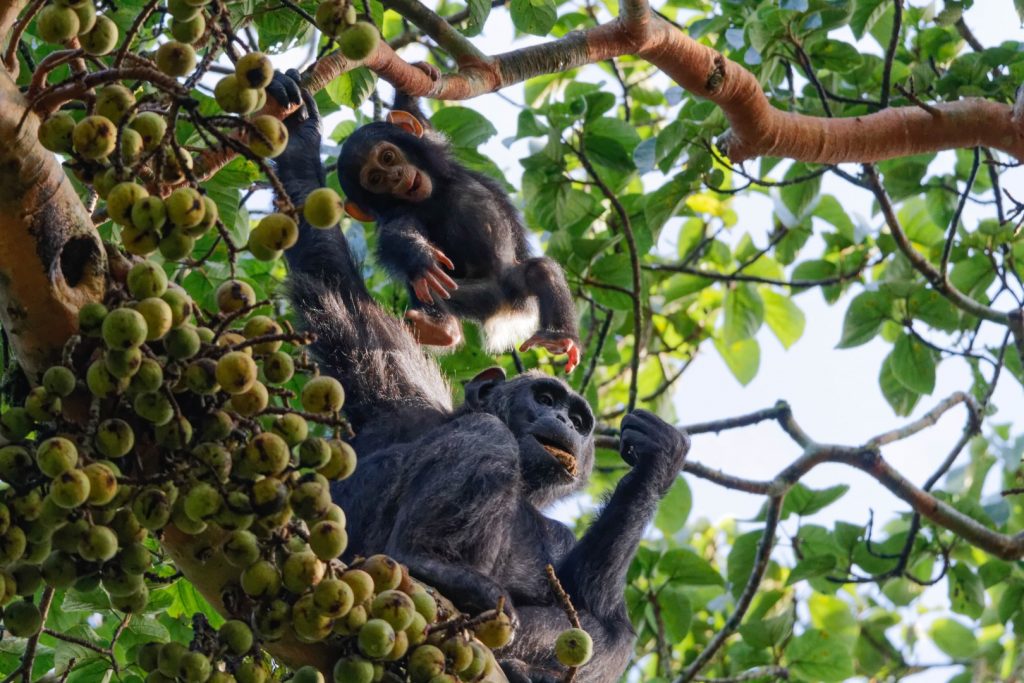
The bond between a chimpanzee mother and her baby is one of the strongest in the animal world. For years, the mother carries, feeds, grooms, protects and teaches her baby, and they sleep together in the same nest every night until the next baby arrives.
- Carrying:Newborns cling to the mother’s belly. From about five or six months, babies ride “jockey-style” on her back as she travels.
- Grooming:Mothers groom their babies often, keeping them clean and strengthening their bond.
- Protection:Mothers keep babies away from danger, including other chimps, as adult males sometimes kill infants that are not their own.
- Lifelong ties:Many chimps stay close to their mothers into adulthood, especially sons, who remain in the same community.
Older siblings, often sisters, help by carrying, playing with and grooming the new baby.
What Do Baby Chimpanzees Eat?
Baby chimpanzees drink their mother’s milk for about four to five years. From a few months old, they begin tasting soft fruit, leaves and other foods their mother eats, often taking food from her mouth or hands. By watching her, they learn which fruits are ripe, which leaves are safe and where to find food through the seasons.
Weaning, when the mother stops nursing, can be a difficult time, and young chimps often throw tantrums to get milk. After weaning, they eat the same diet as adults: mostly fruit, with leaves, insects, honey and occasionally meat.
How Baby Chimpanzees Learn
Baby chimps are not born knowing how to survive. They learn by watching and copying, much like human children.
- Tool use:Young chimps watch their mothers fish for termites or crack nuts and practise for years before they master it.
- Communication:They learn the calls, facial expressions and gestures chimps use to communicate, including the famous “pant-hoot”.
- Social rules:They learn who is dominant, who are allies and how to make friends through grooming and play.
- Nest building:By around three years old, young chimps practise building their own sleeping nests, though they still sleep with their mother.
Do Baby Chimpanzees Play?
Yes. Play is one of a baby chimpanzee’s main activities. Young chimps wrestle, chase, tickle each other, swing from branches and play with sticks and leaves. During play, they make a relaxed “play face” with an open mouth and make soft panting sounds, much like human laughter.
Play builds strength and coordination, and teaches the social skills they will need as adults. Watching young chimps play is often the highlight of a Kibale Forest chimpanzee tour.
What Does a Baby Chimpanzee Look Like?
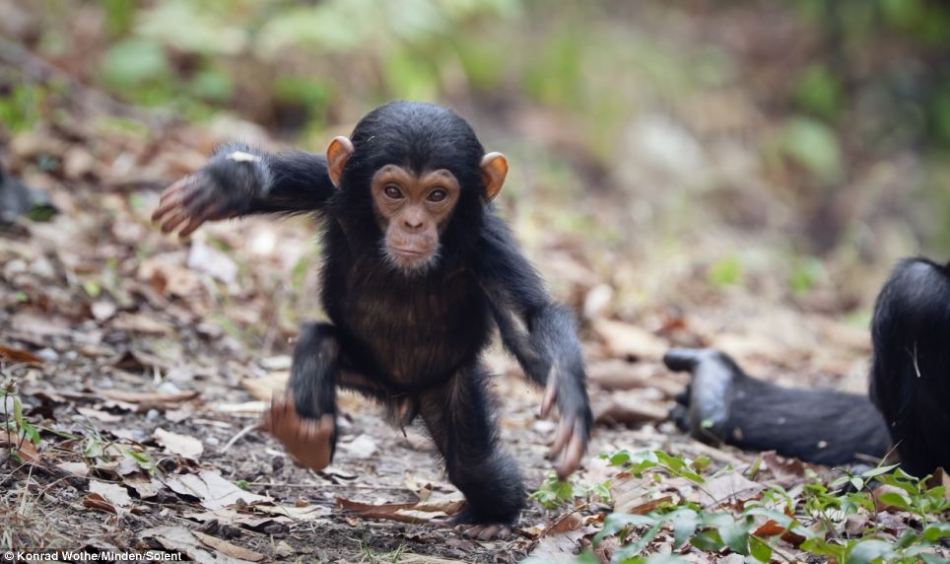
Baby chimpanzees have pale, pinkish faces, hands and feet, which darken as they grow. They also have a small white tuft of hair on their rump, a signal that tells adults they are still young and should be treated gently.
The white tuft usually disappears by the time they are about four or five years old. As they get older, the young chimps are treated more like adults.
How Big Is a Baby Chimpanzee?
At birth, a baby chimp weighs about 1.5–2 kg (3–4 lb), less than most human babies. By weaning age it weighs about 10–15 kg. Adults grow to about 40–60 kg (88–132 lb) for males and 30–50 kg for females.
Threats to Baby Chimpanzees
Chimpanzees are an Endangered species, and their babies face serious dangers.
- Illegal pet trade:Poachers capture baby chimps to sell as pets or for entertainment, often killing the mother and other family members who try to protect the baby.
- Bushmeat hunting:Adult chimps are hunted for meat, leaving babies orphaned.
- Snares:Wire snares set for antelopes can injure or kill young chimps.
- Habitat loss:Forest clearing reduces food and shelter.
- Disease:Chimps can catch human illnesses, which are especially dangerous for babies.
- Infanticide:Occasionally, adult males from the same or rival communities kill infants.
Because mothers have a baby only every five to six years, losing babies slows the recovery of chimpanzee populations.
Orphaned Baby Chimpanzees and Sanctuaries
Rescued orphan chimps are cared for in sanctuaries, where keepers feed them, comfort them and teach them to live with other chimps. Ngamba Island Chimpanzee Sanctuary on Lake Victoria cares for more than 50 rescued chimpanzees, many of them saved as orphaned babies. Visitors can watch the chimps at feeding time and learn about their rescue stories on a 1 Day Ngamba Island Chimpanzee Tour.
Where to See Baby Chimpanzees in the Wild
Uganda is one of the best place in Africa to see wild mother and baby chimpanzees. With a chimpanzee permit, you spend one hour with a habituated chimp community, often watching mothers carrying and nursing babies and young chimps playing in the trees.
- Kibale Forest National Park:About 1,500 chimpanzees and the highest sighting rates in Uganda. Book a 3 Days Kibale National Park Safari and stay at Primate Lodge Kibale.
- Budongo Forest:Habituated chimps near Murchison Falls. See the 3 Days Budongo Forest Chimpanzee Safari.
- Kyambura Gorge:A dramatic forest gorge in Queen Elizabeth National Park. See the 3 Days Kyambura Gorge Chimpanzee Safari.
- Kalinzu Forest:A budget-friendly chimp tracking option. See the 3 Days Kalinzu Forest Primate Safari.
- Nyungwe Forest, Rwanda:See the 2 Day Nyungwe Forest Safari.
Check the chimpanzee permit costs in Uganda before you book. Permits sell out in the busy season.
Tips for Watching Baby Chimps
- Keep at least 8 metres away and follow your ranger’s instructions.
- Never try to touch or feed a baby chimp. Mothers are very protective.
- Turn off your camera flash and speak quietly.
- Don’t go trekking if you have a cold or flu, as babies are very vulnerable to human diseases.
FAQs: Baby Chimpanzees
What is a baby chimpanzee called? An infant. Young chimps that have stopped nursing are called juveniles.
How long is a chimpanzee pregnant? About eight months, or around 230–240 days.
How much does a baby chimpanzee weigh? About 1.5–2 kg (3–4 lb) at birth.
How long do baby chimpanzees stay with their mothers? They nurse for about 4–5 years and stay close to their mother until about 8–10 years old. Many keep close ties for life.
How many babies do chimpanzees have? Usually one at a time, about every 5–6 years, so a female may raise only a few babies in her lifetime.
Why do baby chimps have a white tail tuft? The white tuft on their rump signals that they are young, so adults are more tolerant of them. It disappears at about 4–5 years old.
Can you keep a baby chimpanzee as a pet? No. Chimpanzees are endangered and wild animals, and keeping them as pets is illegal in most countries. Adult chimps are many times stronger than humans and can be very dangerous.
Conclusion: The Remarkable Childhood of a Baby Chimpanzee
A baby chimpanzee’s childhood is long, playful and full of learning. It spends years riding on its mother’s back, nursing and copying her every move, before becoming an independent adult. Because mothers raise only one baby every few years, each baby chimp matters for the future of this endangered species.
See mother and baby chimpanzees in the wild: Book a chimpanzee safari in Uganda with Gorilla Nests Safaris. Try our 2 days chimpanzee safari in Uganda, combine chimps and gorillas on the 4 Days Gorillas and Kibale Chimpanzees or 7 Days Uganda Primate Safari, or browse all Uganda primate safaris. Call +256 758 097 093, email info@gorillanestssafaris.com or contact us to plan your trip.