
What Do Ostriches Eat in the Wild & in Captivity
What do ostriches eat: Ostriches eat mostly plants, including grasses, leaves, seeds, flowers, roots, fruit and succulents, supplemented with insects such as locusts and grasshoppers and, occasionally, small animals like lizards and rodents, and they swallow pebbles and sand to grind their food because they have no teeth.
That makes the ostrich an omnivore with a plant-heavy diet, perfectly suited to the dry savanna and semi-arid plains of Africa where it lives. In East Africa you can watch ostriches feed in the wild in Uganda’s Kidepo Valley National Park and in Kenya and Tanzania’s best-known game parks, which is why an ostrich diet is as much a safari question as a biology one.
This guide explains exactly what ostriches eat in the wild and in captivity, why they swallow stones, whether they drink water, what baby ostriches eat, and where to see ostriches in East Africa, with practical safari tips at the end.
What Do Ostriches Eat? The Ostrich Diet at a Glance
| Food Type | Examples | Role in the Diet |
|---|---|---|
| Plants (the bulk of the diet) | Grasses, leaves, shoots, roots, seeds, flowers, fruit, succulents | The main source of food and moisture |
| Insects | Locusts, grasshoppers, beetles | A protein boost, especially when insects are abundant |
| Small animals | Lizards, frogs, small rodents | Occasional, eaten when available |
| Grit and pebbles | Sand, small stones (gastroliths) | Not food: used in the gizzard to grind plant matter |
| Prepared feed (captivity only) | Pelleted or grain-based rations, greens, hay | Replaces foraging for farmed and zoo ostriches |
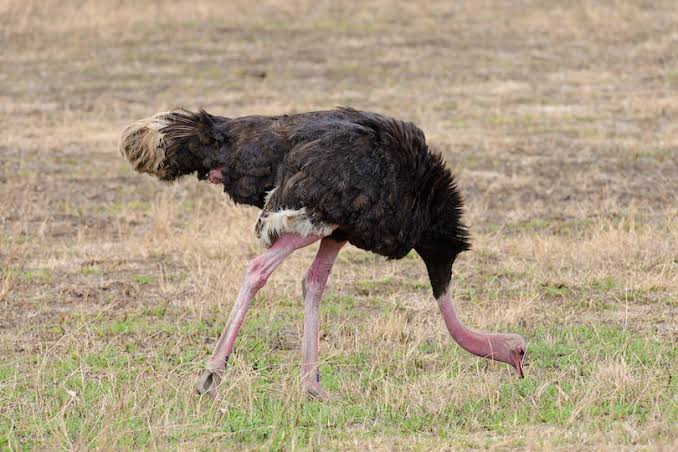
Ostriches are not fussy, but they are selective grazers: they peck at the most nutritious parts of plants, such as young shoots, seeds and flowers, and move constantly across open country in search of the best food.
What Do Ostriches Eat in the Wild?
In the wild, an ostrich’s diet depends on what its habitat offers, and the savanna offers plenty.
Plants. The foundation of the ostrich diet is vegetation. Ostriches eat leafy greens, grasses, roots, seeds, flowers, fruit and succulent plants, picking food with their flat, wide beaks and long, flexible necks. Their height lets them reach shoots, seed heads and low-hanging leaves that smaller grazers miss.
Insects. Ostriches also snap up insects, especially grasshoppers and locusts, which provide protein. They will gather wherever insects swarm, and a patch of insects can be a welcome change from dry grass.
Small animals. Ostriches are not hunters, but they will occasionally eat lizards, frogs and small rodents when they come across them. Animal food is a small part of what they eat, but it helps in lean seasons.
Seasonal changes. In the rains, fresh grass, flowers and insects are abundant. In the dry season, ostriches rely more on seeds, tough plants, roots and whatever they can find, and they cover large areas to do so. This is one reason ostriches are so mobile and usually seen in open, drier country.
Why Do Ostriches Swallow Stones?
Ostriches have no teeth, so they cannot chew. Instead, they swallow sand and small pebbles, called gastroliths, which collect in the muscular gizzard, a part of the stomach. As the gizzard contracts, the stones grind tough plant material into pieces small enough to digest. The pebbles are not digested; they stay in the gizzard and are replaced over time.
So when you see an ostrich pecking at gravel on a game drive, it is not eating by mistake. It is topping up the grinding stones it needs to break down its food. Ostriches also have a very long digestive tract, which helps them extract nutrients from fibrous plants.
Do Ostriches Drink Water?
Ostriches can go for days without drinking, because they get much of the moisture they need from the plants they eat, including roots, succulents and fresh leaves.
That is a key reason they thrive in arid and semi-arid habitats where water is scarce. When water is available, however, ostriches do drink, sometimes in large amounts, and they will visit waterholes in the dry season. So the picture is not that ostriches never drink, but that they are very efficient at going without.
Do Ostriches Eat Meat?
Ostriches are omnivores, so they do eat some animal food, but meat is a minor part of their diet. Their usual animal prey is insects, with the occasional lizard, frog or small rodent. Plants make up the majority of what an ostrich eats, which is why it is better described as a plant-eater that also eats animals than as a meat-eater.
What Do Baby Ostriches Eat?
Ostrich chicks start foraging for themselves very early. Within days of hatching, they follow the adults and peck at the same kinds of food: tender shoots and leaves, seeds, and insects, which are especially useful for growth.
They also begin to pick up the small pebbles that will help them digest plant food as they grow. Chicks stay close to their parents, who lead them to good feeding areas and watch for predators, and the young birds shift to a more adult, plant-heavy diet as they mature.
What Do Ostriches Eat in Captivity? Farmed and Zoo Ostrich Diet
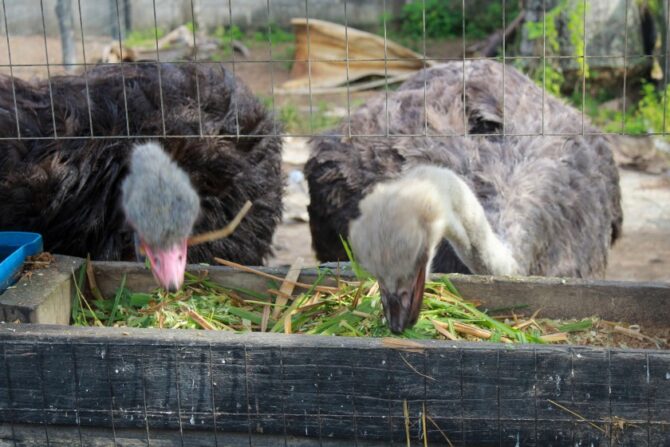
Ostriches kept on farms and in zoos eat a managed version of the wild diet. On commercial ostrich farms, birds are usually given a balanced, commercially formulated feed, typically a pelleted or grain-based ration, designed to mimic what they would naturally eat in the wild, often alongside greens, hay or pasture to supply the fibre their long digestive tract needs.
Feed is adjusted for age and purpose, so breeding birds, growing birds and chicks are fed differently, and chicks in particular are given a specialised starter feed rather than adult rations.
Several things stay the same in captivity:
- Mostly plant-based food. Even with prepared feed, the ostrich diet in captivity remains built around plant material, with added protein and minerals to support growth, bone strength and eggshell quality.
- Grit. Captive ostriches still need small stones or coarse grit in the gizzard to grind food, just like wild birds.
- Fresh water. Birds in captivity have constant access to clean water, which is easier to provide than in the wild.
- Fibre. Because ostriches are built to digest fibrous plants, a diet that is too rich or too low in fibre can cause digestive problems, which is why captive rations are formulated carefully.
Exact feeds and quantities vary by farm, age, season and purpose, so anyone keeping ostriches should follow veterinary or nutritional advice rather than a general guide.
The difference from the wild is variety: a wild ostrich forages across a wide area and picks its own mix of grasses, seeds, flowers, insects and the occasional small animal, while a captive ostrich eats a more uniform, prepared ration.
A note for safari travellers: wild ostriches should never be fed. Feeding wildlife changes its behaviour, can make animals unwell and is discouraged in every East African park. Enjoy watching them forage naturally, as described in the sections above and below.
The Ostrich Diet in East Africa
Ostriches live in many parts of Africa, but East Africa has its own distinctive forms:
- The Masai ostrich is a red-necked subspecies found in East Africa, including Kenya, Tanzania and Uganda. You can recognise breeding males by their reddish-pink necks and legs.
- The Somali ostrich has a blue-grey neck and occurs in northern Kenya and the Horn of Africa. Many authorities treat it as a separate species, and it is one of the special wildlife sightings in Kenya’s Samburu region.
Both feed on the plants and insects of East Africa’s savanna: grasses and herbs after the rains, seeds and shoots in the dry season, and locusts and other insects when they are abundant.
Watching them forage across open plains, often alongside zebra, antelope and giraffe, is one of the classic East African safari scenes, and it’s easiest to see in the early morning and late afternoon, when ostriches are most active.
Where to See Ostriches in East Africa
Wondering where ostriches live in the first place? Our guide to where ostriches live covers their habitat, range and subspecies, while the table below shows the best places to watch them feed.
If you are wondering where to see ostriches in East Africa feeding in the wild, these are the best places to go:
| Place | Country | Why Go |
|---|---|---|
| Kidepo Valley National Park | Uganda | The best-known place to see ostriches in Uganda, in a remote, dramatic savanna park in the far north-east |
| Karamoja game reserves, including Pian Upe | Uganda | Dry savanna country where ostriches are also reported |
| Maasai Mara National Reserve | Kenya | Open plains with ostriches alongside the Big Five and the migration |
| Amboseli National Park | Kenya | Flat, open country with Kilimanjaro views, good for spotting ostriches |
| Samburu National Reserve | Kenya | Home to the Somali ostrich, part of the region’s “Special Five” |
| Tsavo National Parks | Kenya | Vast, dry savanna with ostriches in open areas |
| Serengeti National Park | Tanzania | Endless plains where ostriches are a common sight |
| Tarangire and Ngorongoro Crater | Tanzania | Good ostrich viewing in open, dry-country habitat |
Ostriches are most reliably seen in the open, drier parks of Kenya and Tanzania, while Uganda’s Kidepo Valley offers a more remote, uncrowded experience. Because Kidepo is far from Uganda’s southwestern gorilla forests, it suits travellers with more time.
Tips for Watching Ostriches on Safari
- Go early or late. Ostriches are most active in the cooler hours, and the light is best for photography.
- Bring binoculars. You will often see ostriches at a distance on open plains.
- Stay in the vehicle. Ostriches can be unpredictable and powerful, so keep your distance and follow your guide’s advice.
- Watch for feeding behaviour. Look for pecking at the ground, stretching to reach seed heads, and gravel-swallowing.
- Look for chicks. In the breeding season, you may see adults leading small groups of chicks across the grass.
Combine Ostriches With Gorillas, Chimpanzees and Big Game
East Africa is best experienced as a combination. A trip that includes ostrich viewing on the plains of Kenya or Tanzania can easily include mountain gorillas, chimpanzees and Uganda’s big-game parks:
- Pair Uganda’s gorillas with Kenya’s plains on our 7 Days Uganda-Kenya Safari.
- Add Tanzania’s Serengeti with our 7 Days Uganda and Tanzania Safari.
- Do all three countries on the 15 Days Kenya, Tanzania and Uganda combination.
- Focus on Kenya’s savanna with the 4 Days Masai Mara Safari or the 4 Days Amboseli and Lake Nakuru Safari.
- Explore Tanzania’s plains on the 3 Day Serengeti Safari.
- Bird enthusiasts will enjoy birdwatching in Uganda and the 15 Days East Africa Birding Safari.
For wildlife you can see on every Uganda trip, see Lake Mburo, Murchison Falls, Queen Elizabeth National Park and the Kazinga Channel. To plan the right lodges for a remote park like Kidepo, read our guide to the best safari lodges in Uganda, and for what you can see across the border, see our guides to Kenya wildlife animals and a family safari in Kenya.
Frequently Asked Questions About the Ostrich Diet
What do ostriches eat? Mostly plants, including grasses, leaves, seeds, flowers, roots, fruit and succulents, plus insects such as locusts and grasshoppers and, occasionally, small animals like lizards and rodents.
What do ostriches eat in the wild? Whatever the savanna offers: fresh grass, shoots, seeds and flowers after the rains, tougher plants and roots in the dry season, and insects when they swarm. They also swallow pebbles to help digest it.
Are ostriches herbivores or omnivores? Omnivores, though plants make up most of the diet. They eat insects and occasionally small animals as well.
Why do ostriches swallow stones? They have no teeth, so stones in the gizzard grind tough plant material into digestible pieces.
Do ostriches eat meat? Only a little. They may eat lizards, frogs or small rodents when they find them, but meat is a minor part of the diet.
Do ostriches drink water? Yes, when it’s available, but they can go for days without drinking because they get moisture from the plants they eat.
What do baby ostriches eat? Chicks forage almost immediately, pecking at tender plants, seeds and insects, and they begin swallowing small pebbles to help digest food.
What do ostriches eat in captivity? Farmed and zoo ostriches usually eat a balanced, commercially formulated feed that mimics the wild diet, often with greens, hay or pasture for fibre, plus grit for the gizzard and constant access to water. Chicks get a specialised starter feed.
Where can I see ostriches in East Africa? Uganda’s Kidepo Valley National Park, Kenya’s Maasai Mara, Amboseli, Samburu and Tsavo, and Tanzania’s Serengeti, Tarangire and Ngorongoro Crater are among the best places.
What is the difference between the Masai ostrich and the Somali ostrich? The Masai ostrich is a red-necked subspecies found across East Africa, while the Somali ostrich has a blue-grey neck and lives in northern Kenya and the Horn of Africa, and is treated as a separate species by many authorities.
Do ostriches really bury their heads in the sand? No. That is a myth. When an ostrich lowers its head to the ground, it is usually feeding, picking up pebbles or tending its nest.
See Ostriches in East Africa With Us
Reading about the ostrich diet is one thing. Watching a tall, long-legged ostrich stride across golden grass at sunrise, pecking at seeds, snapping up insects and swallowing grit exactly as described above, is something else entirely, and East Africa is the best place on Earth to do it.
The best places to see ostriches are close at hand: Kidepo Valley National Park in Uganda for a remote, uncrowded savanna safari, Maasai Mara, Amboseli, Samburu and Tsavo in Kenya, and Serengeti, Tarangire and Ngorongoro Crater in Tanzania.
Better still, you do not have to choose just one: with Gorilla Nests Safaris, you can watch ostriches on the plains, then trek mountain gorillas in Bwindi, track chimpanzees in Kibale and cruise the Kazinga Channel, all on one carefully planned trip.
We design every itinerary around the wildlife you most want to see, with experienced guides, comfortable lodges and no stress. Browse our Uganda safari packages, read about us, or contact our team today and tell us you want to see ostriches in East Africa, and we will build the journey for you.