
What Do Rhinos Eat? Diet, Feeding Habits & Favorite Foods
What Do Rhinos Eat: Rhinos are herbivores that eat grasses, leaves, fruits, and shrubs. Despite their massive size—some weighing over 2,500 kg—they survive entirely on plants, and their diet varies significantly depending on the species and habitat.
These gentle giants play a vital role in shaping ecosystems as megaherbivores. White rhinos act like living lawnmowers on African savannas, while black rhinos prune bushes and trees.
Understanding the rhino diet reveals fascinating adaptations and highlights why protecting their habitats is essential for their survival.
What Do Rhinos Eat: Main Diet Breakdown
All five rhino species (white, black, Indian/greater one-horned, Javan, and Sumatran) are strict herbivores. They consume:
- Grass — the staple for many species, especially grazers.
- Leaves and twigs — preferred by browsers.
- Fruits and berries — for variety and moisture.
- Bark and branches — stripped using strong lips and teeth.
- Shrubs, herbs, and succulents — including thorny plants.
- Aquatic plants — in wetland habitats.
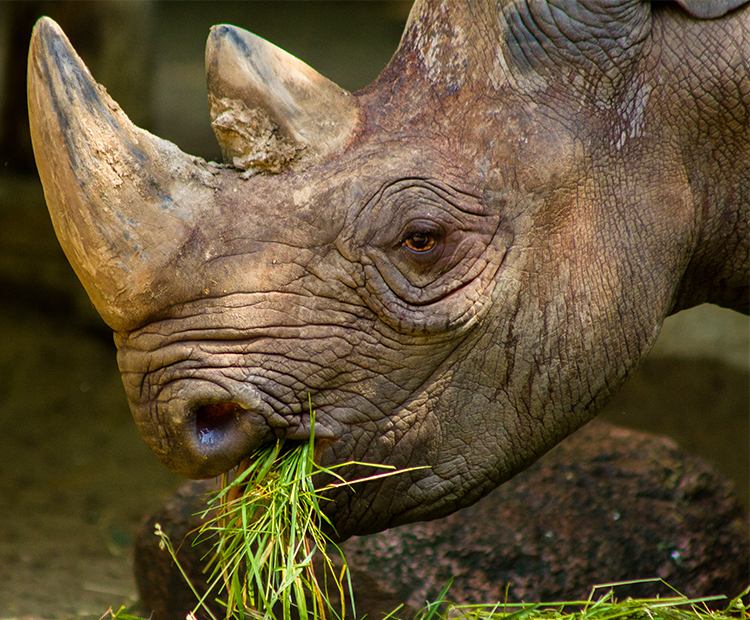
Rhinos do not eat meat. Their digestive systems process large volumes of fibrous plant material through hindgut fermentation, similar to horses.
White rhinos (grazers) focus on short grasses, cropping them close to the ground. Black rhinos (browsers) target leaves, shoots, and branches from bushes and trees. Indian rhinos act as mixed feeders, grazing on tall grasses while also eating fruits, leaves, and aquatic plants.
Diet by Species
Rhino diets reflect evolutionary adaptations to their environments.
Grazers
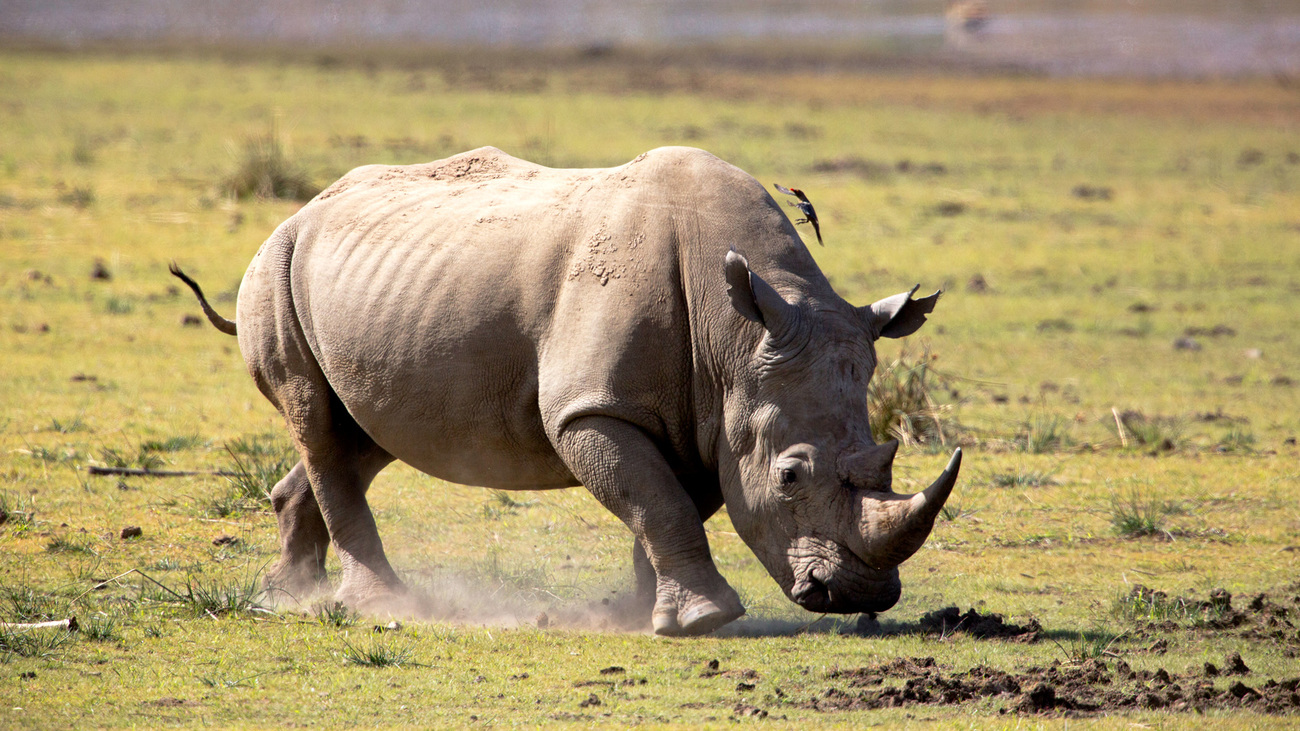
- White Rhino (Ceratotherium simum): Primarily eats short grasses in open savannas. They use wide, square lips to graze efficiently, sometimes consuming herbs or small shrubs when grass is scarce. White rhinos spend up to half their day feeding.
Browsers
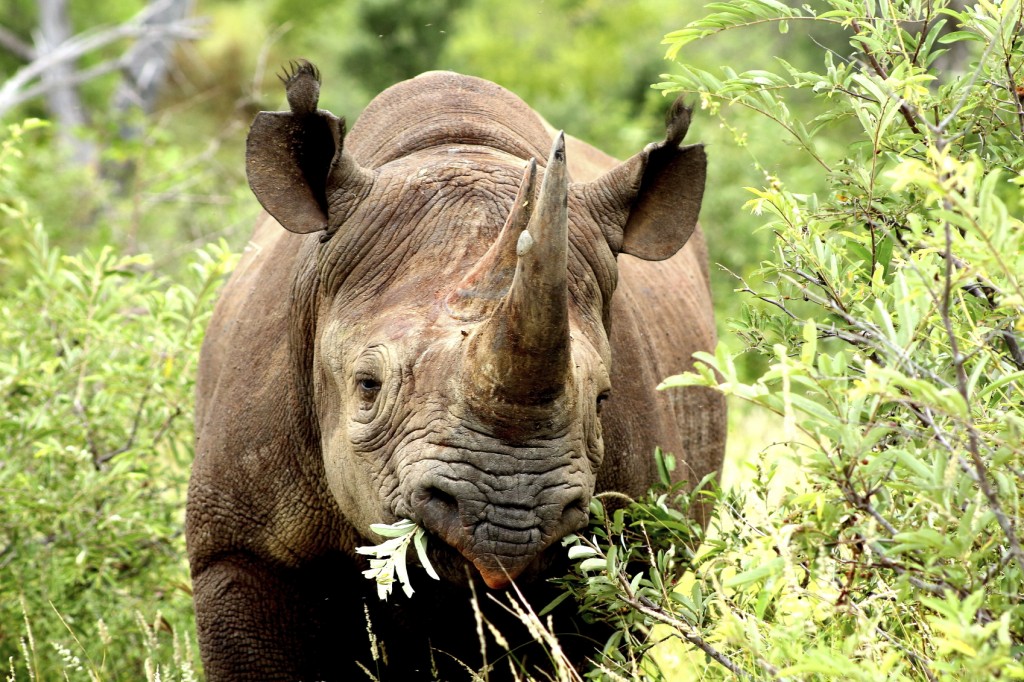
- Black Rhino (Diceros bicornis): Feeds on leaves, twigs, branches, thorny bushes, fruits, and succulents. About 40% of their diet may include grass, but they prefer woody vegetation. Their selective browsing helps maintain plant diversity.
Asian Rhinos (Mixed Feeders)
- Indian/Greater One-Horned Rhino (Rhinoceros unicornis): Mainly grazes on tall grasses (e.g., reeds and bamboo) but also consumes leaves, twigs, fruits, flowers, and aquatic plants. They follow established paths through tall grass and occasionally eat cultivated crops near habitats.
- Javan and Sumatran Rhinos: Primarily browsers in dense forests, eating leaves, fruits, twigs, and shoots from a wide variety of plants.
Comparison Table of Rhino Species and Diets
|
Species |
Diet Type |
Primary Foods |
Key Adaptations |
Habitat Focus |
|
White Rhino |
Grazer |
Short grasses, some herbs |
Wide square lips |
Savannas, grasslands |
|
Black Rhino |
Browser |
Leaves, twigs, shrubs, fruits, ~40% grass |
Prehensile pointed lip |
Bushlands, woodlands |
|
Indian Rhino |
Mixed/Grazer |
Tall grasses, aquatic plants, fruits, leaves |
Semi-prehensile lip |
Grasslands, wetlands |
|
Javan Rhino |
Browser |
Leaves, shoots, fruits |
Prehensile lip |
Dense tropical forests |
|
Sumatran Rhino |
Browser |
Leaves, fruits, twigs, bark |
Prehensile lip |
Montane forests |
This table highlights how black vs white rhino diet differences reduce competition in shared African landscapes.
How Habitat Affects Rhino Diet
(Including What Rhinos Eat in the Savanna)
Habitat strongly influences available food:
- Savannas — White rhinos thrive here, grazing on abundant short grasses. In places like Kruger National Park (South Africa), they maintain grasslands by cropping vegetation, promoting new growth for other herbivores.
- Forests and bushlands — Black rhinos browse on leaves and shrubs in thicker vegetation.
- Wetlands and floodplains — Indian rhinos in Kaziranga National Park (India) eat tall grasses, reeds, and aquatic plants while wallowing in water.
In the savanna, white rhinos focus on grasses, obtaining some moisture from succulent plants during dry periods. Asian species near rivers supplement with water plants.
What do rhinos eat and drink? They get most hydration from food, especially moist grasses or fruits, but drink water regularly—often daily or every few days. Rhinos visit waterholes or rivers, sometimes drinking 50–100 liters at once. They also wallow in mud for cooling and skin protection.
Feeding Behavior & Adaptations
Rhinos have specialized mouth structures:
- White rhinos: Wide, square lips function like a lawnmower for grazing short grass close to the ground.
- Black rhinos: Prehensile (grasping) upper lip, pointed like a hook, pulls leaves and twigs—even thorny ones—from bushes and trees.
- Asian rhinos: Semi-prehensile lips help grasp tall grass stems or browse.
All species have strong molars for grinding tough, fibrous plants. They lack upper front teeth in some cases, relying on lips to manipulate food.
Feeding occurs mostly in cooler hours (early morning and late afternoon/evening) to avoid midday heat. Rhinos are selective yet opportunistic, choosing nutritious plants while adapting to seasonal changes.
How Much Do Rhinos Eat a Day?
Adult rhinos consume large quantities to sustain their massive bodies:
- White rhinos: Up to 50–60 kg (110–132 lbs) of grass per day, sometimes more.
- Black rhinos: Around 30 kg (66 lbs) of mixed vegetation daily.
- Indian rhinos: Roughly 1% of body weight, equating to 20–50+ kg depending on size.
They spend many hours (up to 12 or more) grazing or browsing daily. Intake varies with body size, activity, season, and reproductive status (e.g., lactating females eat more). In zoos or sanctuaries, diets include grass hay, alfalfa, browse (branches/leaves), pellets, and produce to mimic wild nutrition.
How much do rhinos eat per day? Typically 1–2.5% of body weight in dry matter, translating to 30–120+ pounds of fresh vegetation.
What Do Rhinos Eat at the Zoo?
In captivity, rhinos receive balanced diets mimicking the wild:
- Grass hay and alfalfa as staples.
- Fresh browse (branches and leaves) for black and Asian species.
- Herbivore pellets supplemented with vitamins (e.g., Vitamin E for black rhinos).
- Fruits, vegetables, and occasional produce.
Zookeepers provide browse to encourage natural feeding behaviors and prevent boredom.
Rhinos in Uganda: A Local Perspective
Uganda once lost its wild rhinos to poaching and conflict in the 1980s, but conservation efforts brought them back. Ziwa Rhino Sanctuary (also known as Ziwa Rhino and Wildlife Ranch) in Nakasongola district is the only place in Uganda where you can see white rhinos in a semi-wild setting.
Introduced in 2005 with six southern white rhinos, the population has grown to around 40–48 through successful breeding. The sanctuary’s mix of savanna, woodland, and swamps provides ideal grazing habitat.
Visitors can track rhinos on foot with rangers, observing them feeding on grasses in their natural environment—often from just 6–7 meters away under supervision.
At Ziwa, white rhinos graze on available grasses and vegetation, similar to Kruger or other savanna parks. This sanctuary supports rhino conservation in Africa and offers unique wildlife experiences alongside Uganda’s famous gorilla trekking.
For those interested in seeing rhinos in Uganda, contact Gorilla Nests Safaris to arrange safe, guided visits combined with other primate or wildlife adventures.
Threats to Rhino Food Sources
Rhino diets face serious challenges:
- Habitat loss — Agriculture, logging, and human settlement reduce grazing and browsing areas.
- Climate change — Alters rainfall patterns, affecting grass growth and water availability.
- Human encroachment — Leads to fragmentation, invasive species (e.g., palms outcompeting native plants), and conflict.
- Poaching — Indirectly pressures populations, making recovery harder in degraded habitats.
These threats reduce food quality and quantity, stressing already vulnerable populations.
Conservation & Diet Protection
Protecting rhino diets requires safeguarding habitats. Organizations like the World Wildlife Fund (WWF) work on anti-poaching, habitat restoration, community engagement, and removing invasives to restore native food plants.
Success stories include population increases in protected areas through translocation and security. Parks like Kaziranga, Kruger, and Ziwa demonstrate that well-managed habitats support healthy rhino diets and breeding.
Conservation actions:
- Anti-poaching patrols and technology (cameras, drones).
- Habitat restoration and corridor creation.
- Community-based tourism that provides economic incentives for protection.
- Captive breeding and reintroduction programs.
By visiting sanctuaries like Ziwa responsibly, tourists contribute to these efforts.
Fascinating Rhino Diet Facts
- White rhinos can produce up to 50 pounds of dung daily, dispersing seeds and fertilizing soil.
- Black rhinos may eat from dozens of plant species, showing high selectivity.
- Rhinos shape landscapes: Grazing prevents bush encroachment; browsing maintains open areas.
- Current populations: Southern white rhinos number in the tens of thousands (least concern but still protected); black rhinos remain critically endangered; Asian species are highly threatened with tiny populations.
FAQ: Common Questions About What do rhinos eat
Do rhinos eat meat?
No. Rhinos are 100% herbivores and cannot digest meat.
What is a rhino’s favorite food?
It depends on the species. White rhinos favor fresh short grasses; black rhinos prefer tender leaves and shoots from bushes; Indian rhinos enjoy tall grasses and aquatic plants.
How much do rhinos eat per day?
Adults eat 30–120+ pounds (14–55+ kg) daily, depending on species and size—roughly 1–2.5% of body weight.
Do rhinos eat trees?
Not whole trees, but they strip bark, twigs, and leaves from trees and shrubs, especially black and Asian browsers.
What do rhinos eat in the savanna?
Mainly grasses for white rhinos, with some herbs; black rhinos add browse from scattered bushes.
What do rhinos eat in Afrikaans?
Renosters is herbivore diëte: gras, blare, takkies, vrugte en struike.
For more on rhino habitats or lifespans, explore related conservation resources from WWF or local sanctuaries.
Experience Rhinos in Uganda
See these magnificent animals in their natural habitat at Ziwa Rhino Sanctuary. Book your rhino tracking adventure with Gorilla Nests Safaris for an unforgettable, conservation-focused safari combining rhinos, wildlife, and Uganda’s rich biodiversity.
Protecting rhino diets means protecting entire ecosystems. By supporting ethical tourism and conservation, we ensure these ancient herbivores continue grazing and browsing for generations.