

Do Snakes Have Bones: Surprising Facts You didn’t Know
Do Snakes Have Bones: Yes, snakes have bones. They are vertebrates with a highly specialized snake skeleton consisting of a skull, hundreds of vertebrae forming a flexible spine, and numerous ribs. Despite their legless, fluid appearance, this structure grants them remarkable strength and adaptability.
“Despite having no legs, snakes have one of the most flexible skeletons in the animal kingdom.” This unique snake anatomy explained allows them to thrive in diverse environments, from dense forests to arid deserts.
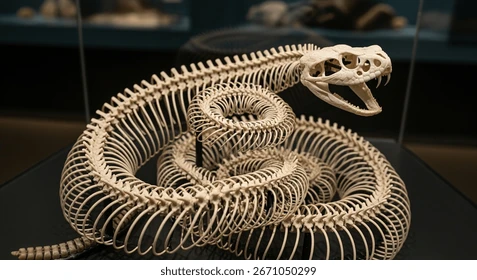
Snake Skeleton Explained
Snakes belong to the class Reptilia and are vertebrates, meaning they possess an internal bony framework (endoskeleton) rather than an exoskeleton like insects or arachnids.
The core of a snake skeleton is an elongated vertebral column, or spine, made up of many small bones called vertebrae. These connect in a way that provides both stability and exceptional flexibility.
Most vertebrae (except the first few near the head and those in the tail) attach to a pair of ribs. These ribs protect internal organs and assist in movement by anchoring powerful muscles.
Snakes lack limb girdles (shoulder or pelvic structures for legs), so their body is essentially a long tube supported by this spinal framework.
Tiny vestigial remnants of hind limbs appear in some species like pythons and boas as pelvic spurs, but these do not function for locomotion.
The vertebrae articulate at multiple points—often five or more per joint—including ball-and-socket connections and unique snake-specific features like zygosphenes and zygantra.
These prevent excessive twisting while allowing lateral and vertical bending. This design makes the snake skeleton far more elongated and mobile than that of most other vertebrates.
Snakes do have spines—a long, flexible one that runs the length of their body. They do not have legs, having lost them evolutionarily millions of years ago, which streamlined their form for burrowing, swimming, and hunting in tight spaces.
How Many Bones Does a Snake Have?
The number varies by species and body length, but most snakes have 200–400 vertebrae. Each body (precaudal) vertebra typically connects to a pair of ribs, contributing to a total bone count that often exceeds humans’ 206 bones.
Some sources note that large pythons can reach up to 600 vertebrae in extreme cases, leading to skeletons with 1,000+ individual bones when counting all ribs and skull elements.
For comparison:
- A shorter viper might have around 180–200 vertebrae.
- Longer species like mambas or pythons push toward 400 or more in the body region, plus 10–205 in the tail.
This high count directly supports their elongated shape. Snakes do have lungs (usually one dominant right lung, with the left reduced or absent to fit the narrow body), a brain protected inside a solidly ossified braincase, and no cartilage-only skeleton—more on that below.
How Their Bones Help Them Move
The snake skeleton excels at converting muscle power into motion without limbs. Snakes employ several locomotion methods tied directly to their flexible vertebrae and free-moving ribs:
- Lateral undulation (slithering): The most common. The body forms S-shaped waves; each curve pushes against ground irregularities or water resistance. Muscles contract sequentially along the spine, with ribs providing leverage.
- Sidewinding: Used on loose sand or slippery surfaces. The snake lifts sections of its body, creating static contact points while moving sideways. Only a few parts touch the ground at once, minimizing slip.
- Concertina movement: The snake anchors its head and tail, bunches the body into loops, then extends forward—like an accordion. Useful in tight spaces or climbing.
- Rectilinear (straight-line) progression: Heavy-bodied snakes like pythons use subtle rib and scale movements to glide forward almost invisibly, ideal for stalking prey.
- Climbing and swimming: Arboreal species use their spine for gripping branches; aquatic ones undulate like eels, aided by a sometimes flattened tail.
These movements rely on the spine’s many joints and independent rib action. Without this bony flexibility, snakes could not achieve such diverse locomotion.
Special Adaptations: Jaw & Skull
One of the most fascinating aspects of snake anatomy explained is the skull and jaw. Unlike rigid mammalian skulls, a snake’s skull has loosely connected bones with multiple hinges and elastic ligaments.
The lower jaw (mandibles) splits into two halves joined only by a stretchy ligament at the front, allowing them to spread wide. Upper jaw bones (maxilla, palatine, pterygoid) move independently.
This “pterygoid walk” lets snakes literally “walk” their jaws over prey, swallowing animals much larger than their head—sometimes whole deer or antelope for large pythons.
Snakes do not dislocate their jaws; the flexibility comes from extra joints and ligaments. Sharp, curved teeth point backward to prevent escape. This adaptation pairs perfectly with their snake skeleton, enabling massive meals that fuel their slow metabolism.
Do Snakes Have Bones or Cartilage?
Do snakes have bones or cartilage? Snakes have bones—not primarily cartilage. Their skeleton is fully ossified (bony), though some joints feature cartilage for added flexibility.
This distinguishes them from sharks or rays, which rely more on cartilage. The vertebrae and ribs are true bones, providing rigidity where needed while the many joints ensure suppleness. Snakes are not invertebrates and definitely do not have an exoskeleton.
Types of Snakes & Structural Differences
Bone count and structure vary slightly across species:
- Pythons and boas: Often more vertebrae (up to 600 i n some), plus vestigial pelvic bones and spurs. These heavy constrictors have robust ribs for powerful squeezing.
- Cobras and other elapids: Generally fewer vertebrae than giant constrictors but still hundreds. Their lighter build suits faster strikes and venom delivery. King cobra skeletons show the classic elongated spine with protective ribs.
Arboreal snakes tend toward slender, highly flexible spines; burrowing species have compact, reinforced skulls. Despite differences, all share the core snake skeleton traits of no limbs and extreme vertebral multiplication.
Common Myths About Snake Bones
Several misconceptions persist:
- “Snakes have no bones”
- : False. Their flexibility comes from hundreds of bones and joints, not absence of structure.
- “Snakes are like worms”
- : Worms are invertebrates with no backbone or true skeleton. Snakes are vertebrates with a complex snake skeleton, brain, lungs, and internal organs.
- Other myths include snakes “unhinging” jaws (they don’t) or having soft, boneless bodies (they’re supported by bone).
These myths arise because snakes move so fluidly, but their bony framework is essential.
Quick Snake Facts
- Number of bones: Often 200–600+ vertebrae plus ribs, totaling far more individual bones than humans (206).
- Comparison: Humans have 33 vertebrae; snakes commonly have 200–400.
- Longest snakes: Reticulated pythons or anacondas can exceed 20–30 feet, with proportionally massive skeletons.
- Snakes do have brains (protected in a sturdy braincase) and do have lungs (asymmetrical for body shape).
- They lack external ears or eyelids but compensate with other senses.
Compared to other reptiles like lizards, snakes have lost limbs but retained (and exaggerated) regional vertebral specialization.

Best Places to See Snakes in Uganda, Kenya, or Tanzania
East Africa offers incredible opportunities to observe the living wonders of snake anatomy explained in both wild habitats and dedicated centers.
In Uganda, head to Uganda Reptile Village (also known as Entebbe Reptile Village) near Entebbe for safe, up-close encounters with species like gaboon vipers, cobras, mambas, and African rock pythons—perfect for learning without risk.
For wild sightings, explore Bwindi Impenetrable National Park (famous for gorillas but home to over 14 snake species, including green tree snakes and rock pythons in its forests and swamps), Queen Elizabeth National Park (especially Maramagambo Forest’s bat cave for pythons), Murchison Falls National Park, and Lake Mburo National Park. Guided herping tours in forests and along the Nile can reveal shy species like forest cobras and rhinoceros vipers.
In Kenya, visit the Nairobi Snake Park at the National Museums for educational displays of local reptiles, or the renowned Watamu Snake Farm (formerly Bio-Ken) on the coast, which houses one of East Africa’s largest collections including black mambas and spitting cobras, with guided safaris into nearby habitats.
Other prime spots include Lake Baringo and Kakamega Forest for expert-led snake safaris targeting puff adders, green bush vipers, and more in diverse ecosystems from wetlands to rainforests.
In Tanzania, the Meserani Snake Park near Arusha is a top highlight, featuring dozens of species like black mambas, green mambas, Egyptian cobras, and puff adders, with hands-on experiences under expert guidance.
In the wild, scan the savannahs and riverine areas of Serengeti National Park, Tarangire National Park (noted for rock pythons near swamps), Lake Manyara National Park, and Selous Game Reserve for natural encounters with pythons and other reptiles.
These destinations combine the thrill of seeing the snake skeleton in action—whether slithering through grass or coiled in trees—with safety and education.
FAQs
Do snakes have bones or cartilage?
Snakes have a bony skeleton with true vertebrae and ribs, though flexible cartilage aids some joints. They are not cartilage-based like certain fish.
How many bones are in a snake?
It varies, but most have 200–400 vertebrae with associated ribs, often resulting in hundreds to over 1,000 bones total depending on size and species.
Do snakes have a skull?
Yes, a complex, multi-jointed skull that allows wide gape for swallowing large prey.
Can snakes break their bones?
Yes, though their flexible design makes fractures less common than in rigid skeletons. Injuries can occur from trauma, and healing relies on their ectothermic metabolism.
Do snakes have spines?
Absolutely—a long, flexible spine of many vertebrae.
Do snakes have legs?
No, they are limbless, though some retain tiny vestigial hind-limb remnants.
Do snakes have lungs?
Yes, typically one functional lung (right) with the left reduced.
Do snakes have brains?
Yes, a well-developed brain inside the skull.
Do snakes have exoskeletons?
No, they have an endoskeleton (internal bones) covered by scales.
Conclusion: Experience Snakes Up Close on Your East African Adventure
Understanding the snake skeleton reveals these creatures not as scary myths but as evolutionary masterpieces—flexible, powerful, and essential to their ecosystems.
Whether you’re fascinated by how their hundreds of bones enable sidewinding across sand or swallowing prey whole thanks to a kinetic skull, seeing them in real life transforms knowledge into unforgettable memories.
If you’re planning a trip to Uganda, Kenya, or Tanzania, don’t miss the chance to witness these remarkable reptiles responsibly. Combine thrilling wildlife encounters with cultural and natural wonders across East Africa.
Book your safari with Gorilla Nests Safaris today—experts in Uganda’s premier experiences, including gorilla trekking in Bwindi alongside optional reptile highlights.
Our knowledgeable guides ensure safe, insightful visits to the best snake spots while prioritizing conservation and your comfort.
From Entebbe Reptile Village to forest trails rich in biodiversity, we’ll help you explore the hidden side of East Africa’s wildlife.
Contact Gorilla Nests Safaris now to craft your personalized adventure and get closer than ever to the flexible, fascinating world of snakes.