

How Much Vegetation Does a Silverback Gorilla Eat? Full Breakdown of the Silverback Gorilla Diet
One of the most common questions travelers ask before a gorilla trek is exactly how much vegetation a silverback gorilla eats in a single day — and the answer is genuinely staggering for an animal that survives almost entirely on plants.
A mature silverback gorilla diet can involve consuming as much as 18 to 30 kg (40–66 lbs) of vegetation daily, making the silverback one of the most voracious herbivores on the planet relative to its own body weight.
This guide breaks down exactly what a silverback eats, how much food a gorilla needs each day to sustain its enormous frame, and how this feeding behavior shapes the entire rhythm of life inside a wild gorilla family — the same behavior you’ll witness firsthand on a Uganda gorilla trekking safari.
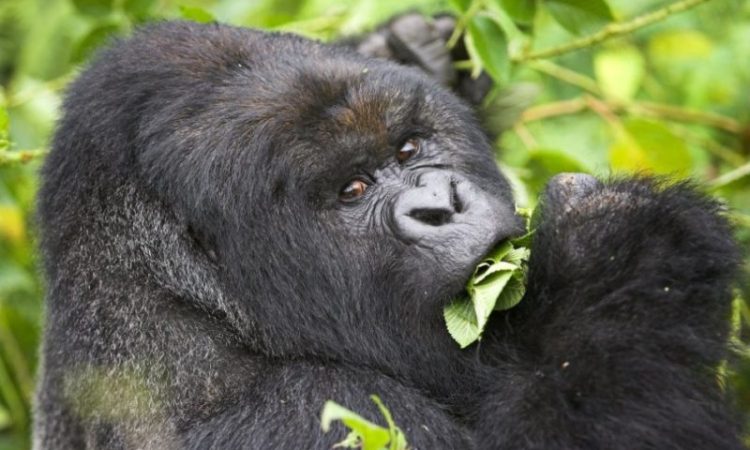
How Much Does a Silverback Gorilla Eat Per Day?
The short answer: a silverback can eat up to 30 kg (66 lbs) of food daily to sustain its massive frame, which can weigh over 400 pounds (180 kg) or more. That’s a genuinely enormous quantity of raw vegetation for one animal to process every single day, and it explains why gorilla families spend such a large share of their waking hours doing nothing but foraging.
To put that silverback gorilla food intake in perspective, a large adult male may spend six to eight hours a day feeding, moving slowly through the forest while stripping leaves, pulling stems, and peeling bark as he goes.
Unlike predators that eat in short, intense bursts, a silverback’s feeding pattern is a slow, near-constant grazing rhythm — which is exactly why gorilla families rarely move far from a good feeding patch once they’ve found one.
What Do Silverback Gorillas Actually Eat?
The silverback gorilla diet is overwhelmingly herbivorous, tailored precisely to the specific rainforest and montane habitat each gorilla population calls home. The main components include:
- Leaves and stems — by far the bulk of the diet, especially from plants like wild celery and thistles, which form the staple of the mountain gorilla diet in the misty forests of the Virunga Mountains and Bwindi.
- Bamboo shoots — a genuine favorite among mountain gorillas, particularly in bamboo-zone forests where fresh shoots are seasonally abundant.
- Fruits — seasonal fruits such as berries provide an important sugar boost, though they make up a smaller share of a mountain gorilla’s diet compared to lowland gorilla populations.
- Bark and pith — tougher, fibrous plant material that mountain gorillas rely on heavily, especially at higher altitudes where softer vegetation is scarcer.
- Insects — an occasional protein supplement, with gorillas opportunistically eating ants or termites, though this makes up only a tiny fraction of overall intake.
Mountain gorillas consume noticeably more fibrous plants than their lowland relatives, a direct adaptation to their high-altitude habitat. Western lowland gorillas, by contrast, enjoy a far more fruit-heavy diet thanks to the richer lowland forest environment they inhabit — one of the clearest dietary differences between the two subspecies.
Why Do Silverback Gorillas Eat So Much Vegetation?
A silverback’s sheer size drives its enormous daily food requirement. Supporting a body that can weigh over 400 pounds, stand more than 5.5 feet tall, and generate strength roughly six to ten times that of an average human male takes an extraordinary amount of caloric intake — and because plant matter is far less calorie-dense than meat, gorillas simply have to eat much greater volumes of it to meet their energy needs.
This is also why gorilla families rarely travel far in a single day. A mountain gorilla family typically roams across just 5–30 km² of forest, moving daily in search of fresh vegetation rather than covering vast distances, since the dense, misty montane forests of the Virunga Mountains and Bwindi Impenetrable Forest provide more than enough food within a relatively compact home range.
How Silverback Feeding Habits Shape the Forest Ecosystem
The sheer volume of vegetation a silverback gorilla eats doesn’t just sustain the animal itself — it actively shapes the forest around it. By dispersing seeds through their waste as they move through the forest, silverbacks play a genuine role in forest regeneration, spreading plant species across their home range and helping maintain the broader biodiversity of their mountain gorilla habitat.
Conservationists consistently point to this seed-dispersal role as one of the many reasons protecting gorilla populations also protects the wider ecosystem they inhabit.
Do Gorillas Drink Water, or Get It All From Their Diet?
Remarkably, gorillas obtain most of their hydration directly from the moisture content of the leaves, stems, and fruit they eat, meaning they rarely need to drink standing water even in the driest stretches of the year.
This is one of several adaptations that let mountain gorillas thrive in the cool, misty mountain gorilla habitat of the Virunga Massif and Bwindi, where their diet of wild celery, nettles, and bamboo provides both nutrition and hydration in a single mouthful.
Silverback Diet vs. the Rest of the Gorilla Family
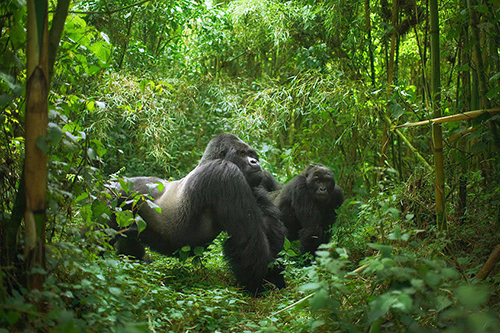
While a dominant silverback’s sheer size means he needs the largest volume of food in the group, the same core gorilla diet — leaves, stems, bamboo shoots, fruit, and the occasional insect — applies across the whole family, from blackbacks down to infants slowly transitioning off nursing.
The silverback’s role, however, extends beyond simply eating: he typically leads the group to the best feeding sites each day, drawing on an intimate knowledge of the territory built over years as the group’s dominant male — one of many responsibilities that come with his position as leader, alongside protecting the family and mediating internal disputes.
See This Feeding Behavior Firsthand on a Gorilla Trek
Reading about the silverback gorilla diet is one thing — watching a 400-pound silverback calmly strip wild celery stalks just meters away is another experience entirely, and it’s one of the most memorable parts of any Uganda gorilla safari.
Trekkers visiting the habituated gorilla families of Bwindi Impenetrable National Park routinely spend a full hour watching exactly this kind of unhurried, near-constant feeding behavior, often just a few meters from the family group.
For more on the anatomy and behavior behind this feeding pattern, our guides on silverback gorilla facts and the silverback gorilla’s strength, size, and life in the wild go deeper into everything from bite force to social structure.
If you’re curious about other aspects of gorilla biology shaped by their diet and habitat, our features on the mountain gorilla’s nose and why gorillas build a new nest every night both connect back to the same herbivorous lifestyle driving everything from their nesting choices to their sensory adaptations.
FAQ: Silverback Gorilla Diet and Feeding Habits
How much vegetation does a silverback gorilla eat per day? Up to 18–30 kg (40–66 lbs) of vegetation daily, depending on the individual’s size and the availability of food in its territory.
What is the main food source for mountain gorillas? Leaves and stems make up the bulk of the diet, particularly wild celery and thistles, supplemented by bamboo shoots, fruit, bark, and occasional insects.
Do gorillas need to drink water? Rarely — most of their hydration comes directly from the moisture in the leaves and stems they eat.
How many hours a day does a silverback spend eating? Often six to eight hours a day, given the sheer volume of low-calorie plant matter required to sustain their body size.
Do all gorillas eat the same diet as the silverback? Yes, the whole family shares the same core diet of leaves, stems, bamboo, and fruit, though the dominant silverback typically requires the largest daily volume due to his size.
Related Gorilla Facts & Uganda Safari Guides
- Silverback Gorilla: Strength, Size, Facts, and Life in the Wild
- 20 Amazing Silverback Gorilla Facts
- Mountain Gorilla Habitat
- Where Do Mountain Gorillas Live?
- Why Do Gorillas Build a Nest Every Night?
- The Mountain Gorilla Nose
- What Angers a Gorilla?
- Bwindi Gorilla Families: Full Guide
- 2 Days Uganda Gorilla Safari Itinerary
- Best Safari Lodges in Uganda