
What Eats a Snake? Top 5 Predators of Snakes Explained
What Eats a Snake: Snakes rank among the most effective predators in many ecosystems, yet they also serve as prey for a diverse array of animals. Birds, mammals, reptiles, and even other snakes regularly hunt and consume them.
Despite their fearsome reputation, venomous or not, snakes face constant pressure from specialized hunters equipped with speed, power, resistance, or clever tactics.
This dynamic highlights snakes’ central position in the food chain—as both controllers of pests like rodents and insects, and as a vital food source for higher-level predators.
What eats a snake – Main Predators of Snakes
Predators fall into clear categories, each with unique adaptations for tackling slippery, often dangerous prey.
Birds
Birds of prey dominate snake predation thanks to sharp eyesight, powerful talons, and the advantage of attacking from above.
- Eagles and hawks (including red-tailed hawks and snake eagles) spot snakes from high perches or while soaring, then swoop down to grab them with talons. Eagles often crush the snake or drop it from height to kill it.
- Owls (great horned owl, barred owl, and others) hunt at night or dusk, using silent flight and strong grips to take smaller or medium snakes.
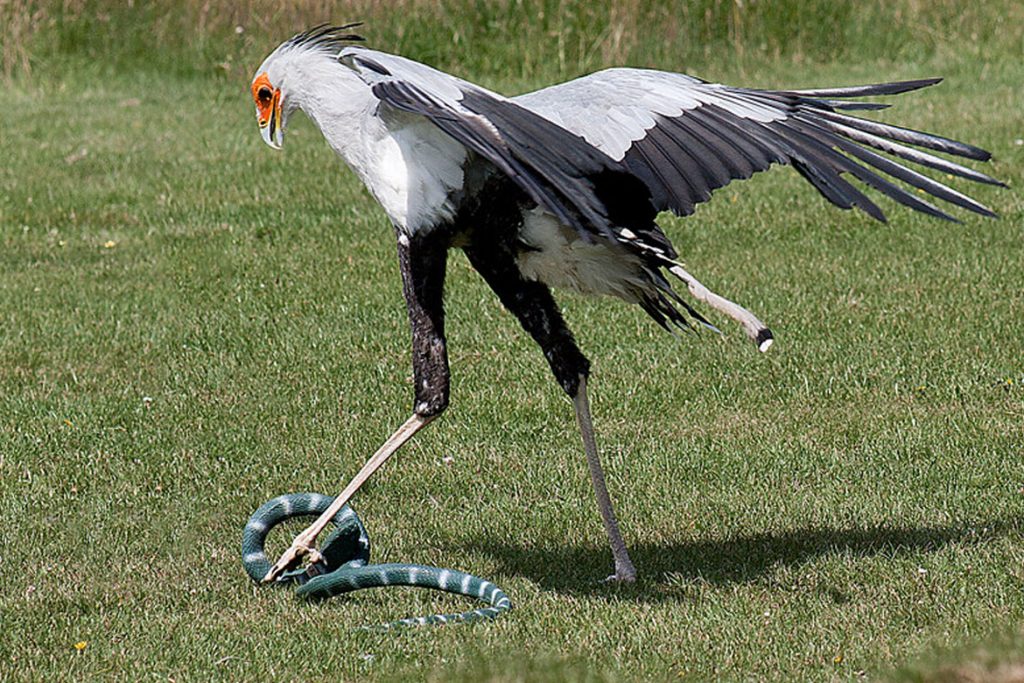
- Secretary bird (Africa’s iconic snake killer) stomps venomous snakes like cobras, mambas, and puff adders with powerful legs and sharp claws. A single stomp can deliver force equal to five times the bird’s body weight, targeting the head for a quick kill before eating.
Mammals
Several mammals actively hunt snakes, including venomous ones.
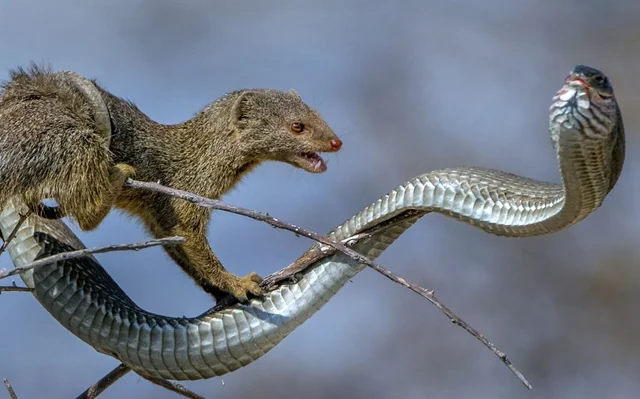
- Mongooses stand out as fearless specialists. They dodge strikes with incredible speed and agility, then deliver precise bites to the snake’s head or neck to crush the skull or sever the spine. Many species have partial resistance to neurotoxins via specialized acetylcholine receptors, though they aren’t fully immune—repeated bites or certain venoms can still harm them. They frequently tackle cobras.
- Other mammals include foxes, bobcats, wolverines, honey badgers, hedgehogs, raccoons, coyotes, and even feral pigs or wild cats. Wolverines and honey badgers use toughness and thick skin; bobcats rely on quick pounces and powerful bites. Hedgehogs eat venomous prey thanks to their spiny protection and tolerance.
Reptiles
Larger reptiles prey on snakes too.
- Monitor lizards hunt and consume snakes.
- Crocodiles and caimans opportunistically eat them near water.
- Other snakes represent a major threat (more on this below).
Snake Predators by Habitat
Predator types shift with the environment, influencing snake survival strategies.
- Forests and woodlands — Dense cover favors ambush hunters like wild cats (bobcats, leopards), larger snakes, and some birds. Canopy or understory provides hiding spots, but climbing or ground-foraging mammals and raptors still pose risks.
- Grasslands and savannas — Open spaces benefit birds of prey and ground hunters. Mongooses thrive here, as do secretary birds in African savannas. Stomping and aerial attacks work well in low vegetation.
- Deserts — Hawks, roadrunners, and larger reptiles dominate. Heat and sparse cover make snakes more visible to sharp-eyed birds, while burrowing or nocturnal mammals add pressure. Some predators exploit snakes basking or moving between cover.
How Animals Kill Snakes
Methods vary by predator:
- Crushing or biting — Mammals like mongooses, bobcats, and wolverines target the head or neck to disable the snake quickly, avoiding fangs.
- Pecking, stomping, or dropping — Birds use talons to grip and crush, or (like secretary birds) deliver rapid, high-force stomps to the head. Some drop snakes from height.
- Overpowering with size/speed — Larger predators like crocodiles or big cats simply overpower smaller snakes.
Many predators avoid the venom glands or strike zones, focusing on immobilization first.
Why Some Animals Can Eat Snakes Safely
Success often stems from:
- Venom resistance or tolerance — Mongooses and kingsnakes have adaptations (e.g., modified receptors or immunity to certain venoms) that reduce effects, though it’s not absolute.
- Speed and agility — Quick reflexes let mongooses dance around strikes.
- Physical protections — Thick skin (honey badgers), spines (hedgehogs), or size advantage.
- Hunting techniques — Aerial attacks, group behavior, or precise targeting minimize risk.
Even resistant animals can die from bad bites, but their adaptations tip the odds in frequent encounters.
Do Snakes Eat Other Snakes?
Yes—many species engage in ophiophagy (snake-eating), and some are highly specialized.
- King cobras earn their name (genus Ophiophagus means “snake-eater”). They primarily hunt other snakes, including venomous ones like kraits and smaller cobras, and occasionally practice cannibalism (larger individuals eating smaller or rival king cobras).
- Kingsnakes (non-venomous) famously eat rattlesnakes and copperheads, aided by immunity to pit viper venom.
- Cannibalism occurs across many species, sometimes for food, territory, or mating competition. It plays a role in structuring snake communities.
Snake’s Role in the Food Chain
Snakes function as mesopredators—mid-level players that are both hunters and hunted. As predators, they control populations of rodents, insects, frogs, lizards, and birds, providing natural pest control that benefits agriculture and reduces disease spread (e.g., rodents carrying pathogens).
As prey, they transfer energy upward to birds of prey, mammals, and larger reptiles. Removing snakes can cause rodent booms, crop damage, and ripple effects for their own predators. They also contribute to biodiversity in subtle ways, such as occasional seed dispersal.
Threats from Humans
Beyond natural predators, snakes face significant human-driven pressures:
- Habitat destruction and fragmentation from deforestation, agriculture, and urban development reduces available space and increases vulnerability.
- Direct persecution — Many people kill snakes out of fear or misunderstanding, or through events like rattlesnake roundups.
- Hunting and trade for meat, skins, traditional medicine, or the pet trade further depletes populations.
- Road mortality and invasive species add to the toll.
These factors disrupt ecosystems where snakes help maintain balance.
Top 10 Snake Predators (Notable Examples)
- Mongoose — Agile, partially resistant specialist.
- Secretary Bird — Stomping powerhouse of African grasslands.
- King Cobra — Master snake-eater (including cannibals).
- Red-tailed Hawk / Other Raptors — Aerial experts.
- Kingsnake — Immune to certain venoms.
- Wolverine — Tough, opportunistic fighter.
- Bobcat — Quick and fearless.
- Honey Badger — Relentless with thick skin.
- Great Horned Owl — Nocturnal talon power.
- Hedgehog — Spiny tolerance for venomous prey.
FAQ – What eats a snake
What animal kills snakes the most?
Birds of prey (hawks, eagles, owls) and mongooses rank among the most frequent and effective in many regions, alongside other snakes.
Do birds eat snakes?
Yes—many raptors and ground birds like secretary birds regularly consume snakes, often targeting venomous species.
Can a mongoose kill a cobra?
Yes, often. Their speed, targeting of the head, and partial venom resistance give them a strong advantage in classic confrontations, though outcomes aren’t guaranteed every time.
Do snakes eat each other?
Absolutely. Ophiophagous species like king cobras and kingsnakes specialize in it, and cannibalism occurs in various snakes.
What kills snakes in the wild besides predators?
Habitat loss, roads, disease, and human persecution pose major non-predator threats.
Snakes embody the balance of nature: formidable hunters that remain integral links in complex food webs. Protecting their habitats supports healthier ecosystems for everyone.
For more on snake diets or specific habitats, explore related wildlife resources from trusted sources like national parks or conservation organizations.