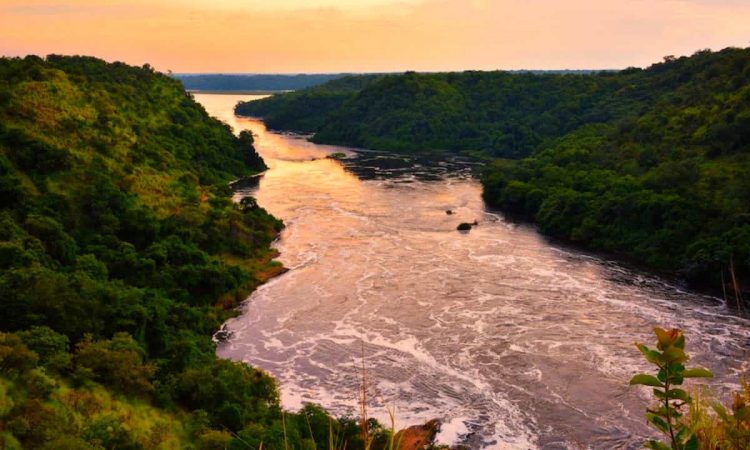

Where Do Bonobos Live? Habitat, Range & Location in Africa Explained
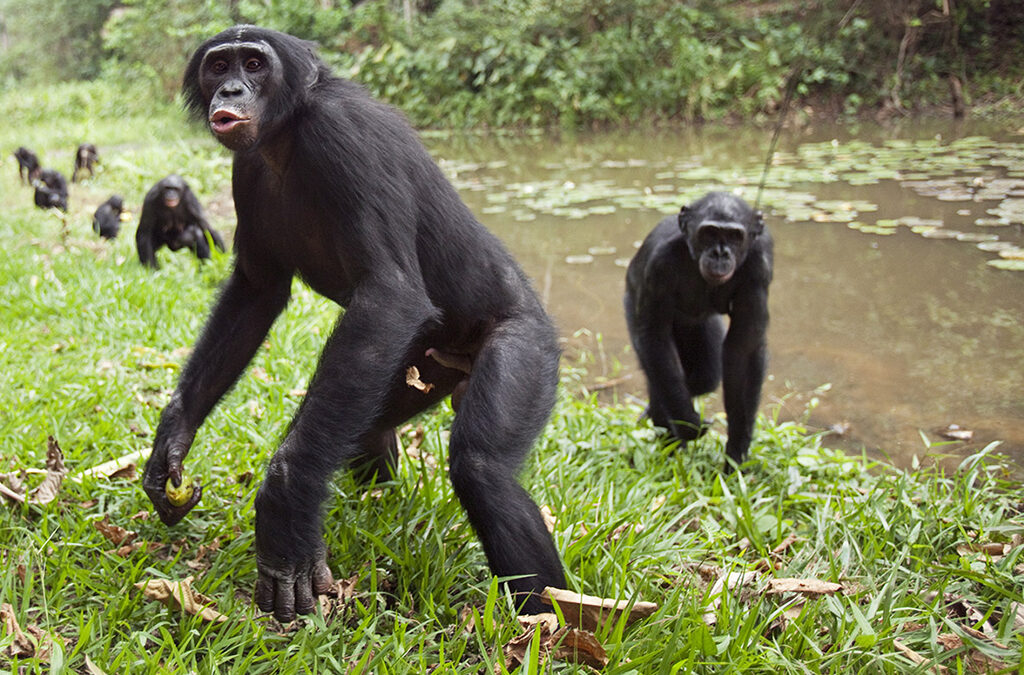
Where Do Bonobos Live: Bonobos live only in the tropical rainforests of the Democratic Republic of the Congo in Central Africa. The bonobo (Pan paniscus), also known as the pygmy chimpanzee or sometimes referred to as a bonobo monkey (though technically an ape), is endemic to this region and nowhere else in the world.
Exact Location of Bonobos
Bonobos are found exclusively south of the Congo River in the vast Congo Basin rainforest. Their range is bounded by the Congo River to the north and west, the Lualaba River to the east, and the Kasai/Sankuru river systems to the south.
This creates a relatively limited and discontinuous distribution compared to other great apes like chimpanzees, which have a much broader range north of the river.
The Congo Basin’s dense, equatorial forests provide the perfect isolated environment for bonobos, covering parts of central DRC provinces such as Équateur, Tshuapa, and others.
Their habitat spans lowland areas, but the overall range is patchy due to rivers, human activity, and varying forest quality.
Bonobo Habitat
Bonobos inhabit primarily tropical lowland rainforests, including both primary (undisturbed) and secondary (regrowth) forests. These forests feature dense vegetation, extremely high rainfall (often over 2,000 mm annually), consistently warm temperatures (around 25–30°C year-round), and rich biodiversity with thousands of plant species.
The habitat includes multilayered canopies that offer ample tree cover for shelter, nesting, and foraging. Bonobos build fresh nests high in trees each night for sleeping.
They also venture into swamp forests, wading through waist-deep water, and mosaic areas blending forest with savanna patches where they may feed on grasses.
The abundant food supply—from fruiting trees to herbaceous plants—supports their lifestyle, with the forest’s humidity and shade providing ideal conditions for these primates.
Why Bonobos Live Only in This Region
The Congo River acts as a major natural geographic barrier, preventing bonobos from crossing northward where common chimpanzees dominate. This isolation, likely occurring around 1.5–2 million years ago, led to speciation and evolutionary divergence.
The Congo Basin’s suitable climate—warm, wet, and stable—combined with plentiful food resources like fruits and vegetation, makes it an ideal niche.
Outside this area, conditions are less favorable, with drier savannas or unsuitable forests lacking the density and resources bonobos need.
Protected Areas Where Bonobos Live
Significant populations persist in protected areas, which are crucial for survival. Salonga National Park, Africa’s largest tropical rainforest reserve, harbors an estimated 12,000–18,000 bonobos (one of the highest densities) and protects vast intact lowland forest.
Other key sites include the Lomako-Yokokala Reserve (home to around 1,000 bonobos), Kokolopori Bonobo Reserve (1,000–1,800), and community reserves like Ekolo ya Bonobo. These areas offer some protection from threats, though enforcement remains challenging.
Do Bonobos Live Outside DR Congo?
No, bonobos are endemic to the Democratic Republic of Congo and are not found in any other country. They do not occur in neighboring nations like Uganda, Rwanda, or elsewhere in Africa.
Bonobos in the Wild vs Captivity
The vast majority of bonobos live in the wild within their limited DRC range. A smaller number exist in captivity, including sanctuaries in the DRC (such as Lola ya Bonobo) for rescued or orphaned individuals, and some zoos worldwide for conservation and research.
Habitat Threats
Bonobos face severe threats from deforestation, human encroachment, logging, agriculture, and habitat destruction driven by population growth and resource extraction.
Poaching for bushmeat is a major issue, exacerbated by civil unrest. Organizations like the World Wildlife Fund (WWF) and others work on conservation, but only a fraction of their range is protected, and populations continue to decline.
What Do Bonobos Eat?
Bonobos are omnivorous frugivores, with fruit comprising over 50% of their diet when available (favorites include velvet tamarind from Dialium trees).
They supplement with terrestrial herbaceous vegetation (leaves, pith, stems—about 30%), seeds, flowers, bark, mushrooms, honey, eggs, insect larvae, earthworms, and rarely small mammals or meat. Their plant-heavy diet aids seed dispersal in the forest ecosystem.
Why Are Bonobos Endangered and How Many Are Left?
Bonobos are classified as Endangered by the IUCN due to habitat loss, poaching, slow reproduction (one offspring every 4–5 years), and civil instability.
Population estimates vary, but range from 10,000–50,000 individuals in the wild, with many sources suggesting 15,000–20,000 or fewer. Numbers are declining, and accurate counts are difficult due to the remote habitat.
Do Bonobos Attack Humans?
Bonobos are generally less aggressive toward humans than chimpanzees, with no recorded fatal attacks. However, they can exhibit aggression (pushing, hitting, biting) in wild or captive settings, often in male-male conflicts or food defense. Serious but non-fatal injuries to humans have occurred rarely, typically in close encounters.
Can Tourists See Bonobos?
Tourism opportunities are limited due to the remote, unstable location in DRC. Viewing is mostly through conservation projects or research sites, not widespread safaris.
FAQ about Where Do Bonobos Live
Where are bonobos found?
Bonobos are found only in the tropical rainforests south of the Congo River in the Democratic Republic of the Congo.
Do bonobos live outside DR Congo?
No, they are endemic to the DRC and not found elsewhere.
What type of habitat do bonobos live in?
They live in dense tropical lowland rainforests, including primary, secondary, swamp, and mosaic forests with high rainfall and abundant vegetation.
Why do bonobos live only in one country?
The Congo River serves as a natural barrier isolating them, combined with the unique suitable climate, food, and forest conditions in the Congo Basin.
Are bonobos found in Uganda or Rwanda?
No, bonobos are not found in Uganda, Rwanda, or any country outside the DRC.