

Kenya National Parks Guide: Best Parks for Wildlife Safaris in Kenya
Kenya National Parks Guide: Kenya stands as one of Africa’s premier safari destinations, renowned worldwide for its incredible biodiversity, stunning landscapes, and unparalleled wildlife viewing opportunities.
Home to over 23 national parks managed by the Kenya Wildlife Service (KWS), along with numerous national reserves and conservancies that together protect about 8% of the country’s landmass, Kenya offers a diverse array of ecosystems—from vast savannas and dramatic rift valleys to alpine moorlands and alkaline lakes.
Travelers flock to Kenya for the chance to witness the iconic Big Five (African elephant, lion, leopard, buffalo, and rhinoceros) in their natural habitats, experience the dramatic Great Wildebeest Migration, and enjoy activities ranging from game drives to hot air balloon rides.
Whether you’re seeking the classic plains game of the south or the unique northern species, Kenya’s safari parks deliver unforgettable adventures that blend raw wilderness with cultural encounters, particularly with Maasai communities.
Most Popular National Parks in Kenya
Kenya’s national parks vary in size, wildlife, and accessibility, but these stand out as the most visited and celebrated for safaris.
Maasai Mara National Reserve
Located in southwestern Kenya, bordering Tanzania’s Serengeti, the Maasai Mara spans about 1,510 square kilometers and is part of the larger Mara ecosystem.
Wildlife here includes the Big Five, massive herds of wildebeest and zebra, cheetahs, hyenas, and over 470 bird species.
Best time to visit: July to October for peak dry season wildlife concentrations and the Great Migration.
Unique attractions: Dramatic river crossings during the migration, hot air balloon safaris over the plains, and cultural visits to Maasai villages.
Amboseli National Park
Situated in southern Kenya near the Tanzania border, at the base of Mount Kilimanjaro.
Famous for its large elephant herds (often over 1,000), lions, cheetahs, and giraffes, with excellent birdwatching around swamps.
Best time to visit: Dry season (June to October and January to February) for clear views of Kilimanjaro and concentrated animals at waterholes.
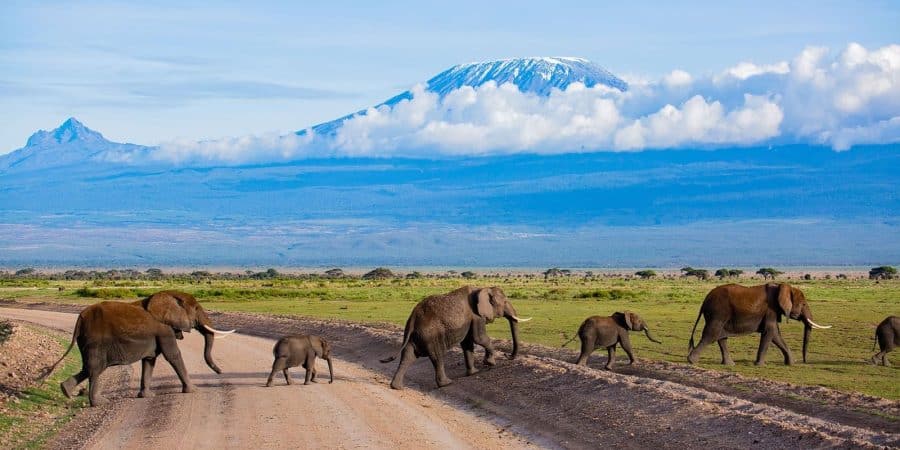
Unique attractions: Iconic vistas of elephants against the snow-capped Kilimanjaro backdrop, walking safaris, and community conservancy experiences.
Tsavo National Park (East and West)
One of Africa’s largest protected areas, covering over 20,000 square kilometers in southeastern Kenya.
Tsavo East features red-dust plains with elephants, lions, and oryx; Tsavo West offers volcanic landscapes, black rhinos, and underground springs.
Best time to visit: Dry season (June to October) for easier spotting; wet season for lush scenery.
Unique attractions: The famous man-eating lions of Tsavo history, Yatta Plateau (world’s longest lava flow), and Mzima Springs for underwater viewing.
Lake Nakuru National Park
In the Rift Valley, centered around the alkaline Lake Nakuru.
Renowned for massive flamingo flocks (sometimes millions), rhinos, lions, leopards, and white rhinos.
Best time to visit: Dry season (June to October) for flamingo concentrations; variable for bird migrations.
Unique attractions: Flamingo spectacle turning the lake pink, tree-climbing lions, and baboon cliffs.
Samburu National Reserve
In northern Kenya, along the Ewaso Ng’iro River.
Home to unique northern species like Grevy’s zebra, reticulated giraffe, Somali ostrich, and beisa oryx, plus the Big Five.
Best time to visit: Dry season (June to October) for river-dependent wildlife gatherings.
Unique attractions: Samburu cultural interactions, scenic riverine forests, and fewer crowds for a more intimate safari.
Aberdare National Park
In the central highlands, part of the Aberdare Range.
Features black rhinos, bongo antelopes, elephants, and leopards in dense forests and moorlands.
Best time to visit: Dry season for better access and wildlife viewing.
Unique attractions: Tree hotels like Treetops for overnight viewing, waterfalls, and hiking trails.
Best Wildlife to See in Kenya National Parks
Kenya’s parks are a haven for wildlife enthusiasts, offering sightings of some of Africa’s most sought-after animals. The Big Five safari experience is a highlight:
- African Elephant — Massive herds in Amboseli and Tsavo.
- Lion — Prides in the Mara and Nakuru, including tree-climbing lions.
- Leopard — Elusive but often spotted in Samburu and Aberdare.
- Cheetah — Speedy hunters in open plains like the Mara.
- Rhinoceros — Black rhinos in Tsavo West and white rhinos in Nakuru.
Other stars include giraffes (various subspecies), zebras, hippos, crocodiles, and diverse antelopes. Birdwatchers revel in over 1,000 species, from flamingos to eagles.
Best Time to Visit Kenya National Parks
Kenya has two main seasons influencing safari experiences:
Dry Season (June – October) — Prime time for most parks. Animals congregate around water sources, vegetation thins for better visibility, and roads are accessible. This is peak for the Great Migration and general game viewing.
Wet Season (March – May, with short rains November – December) — Landscapes turn lush and green, birdwatching peaks with migrants, and fewer crowds mean lower prices. However, some roads become muddy, and animals disperse.
The Great Wildebeest Migration
One of the world’s greatest wildlife spectacles, the Great Wildebeest Migration involves over 1.5 million wildebeest, plus zebras and gazelles, moving in a circular route between Tanzania’s Serengeti and Kenya’s Maasai Mara.
In Kenya, the herds arrive in the Mara around July to October, with dramatic Mara River crossings featuring crocodile ambushes and thrilling chaos. Best months: July to October, peaking in August-September for crossings. This event draws photographers and adventurers for its raw drama and scale.
Lesser-Known National Parks in Kenya
For those seeking off-the-beaten-path experiences, these offer unique adventures with fewer visitors.
Meru National Park
Northeastern Kenya, restored after past poaching issues.
Wildlife includes Big Five, reticulated giraffes, and hippo pools.
Unique activities: Fishing, boat safaris on rivers, and Elsa’s Grave (from Born Free).
Mount Kenya National Park
Central Kenya, encompassing Africa’s second-highest peak.
Home to elephants, hyenas, and rare bongos in alpine zones.
Unique activities: Hiking and climbing to Point Lenana, birdwatching, and moorland treks.
Hell’s Gate National Park
Rift Valley near Naivasha.
Features geothermal geysers, cliffs, and wildlife like buffalo and giraffes.
Unique activities: Cycling, hiking gorges, rock climbing, and birdwatching—ideal for active travelers.
Activities in Kenya National Parks
Kenya offers varied safari experiences:
- Game drives — Morning and evening in open vehicles for optimal sightings.
- Hot air balloon safaris — Magical dawn flights over the Mara.
- Walking safaris — Guided treks in parks like Hell’s Gate or Samburu.
- Bird watching — Prime in Nakuru and Aberdare.
- Photography tours — Specialized for capturing migration or big cats.
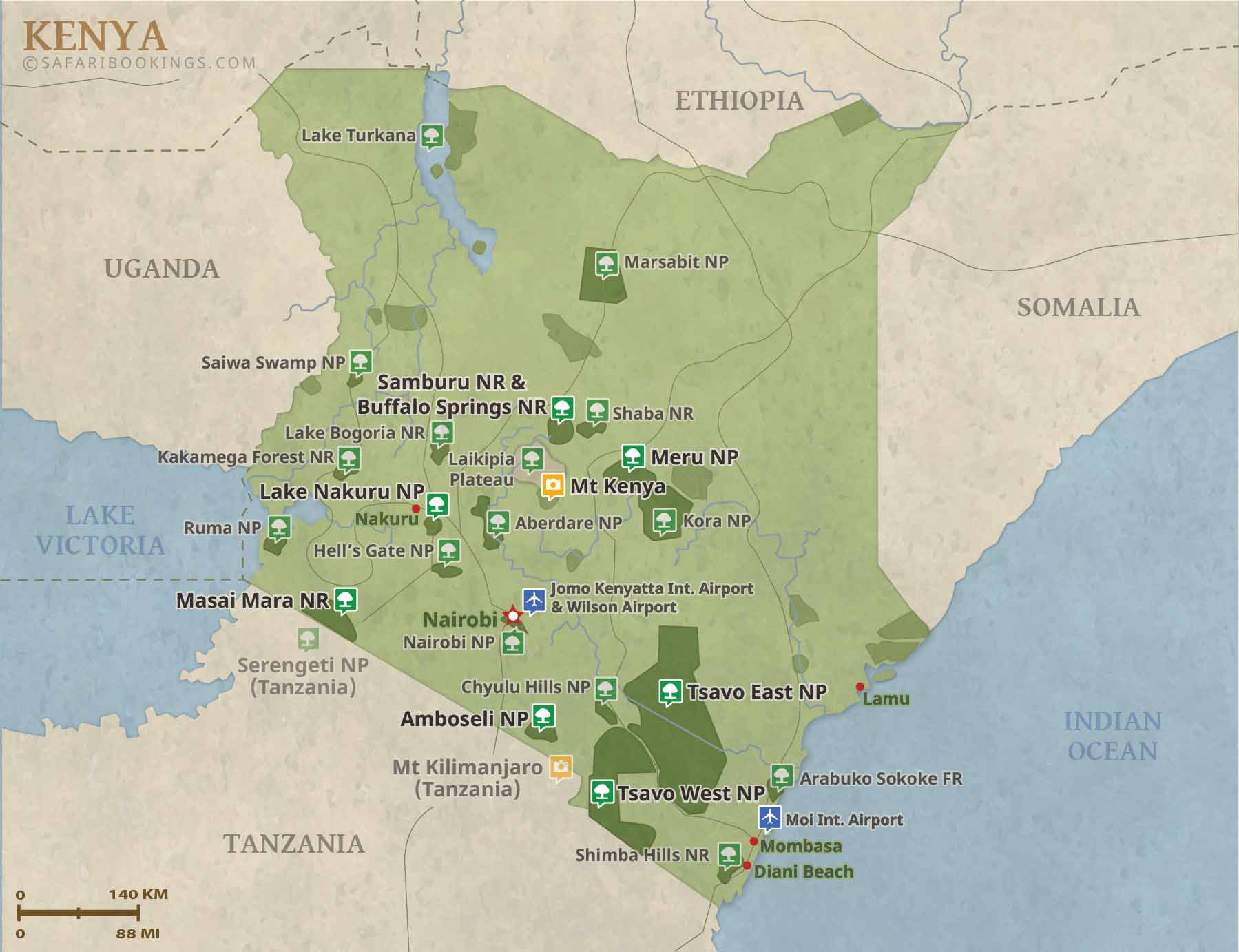
Map of Kenya National Parks
Kenya’s parks are spread across regions:
- Southern Kenya — Maasai Mara, Amboseli, Tsavo.
- Rift Valley — Lake Nakuru, Hell’s Gate, Aberdare.
- Central Kenya — Mount Kenya, Nairobi National Park (near capital).
- Northern Kenya — Samburu, Meru.
Best National Parks for First-Time Visitors
Beginners should prioritize accessible, wildlife-rich parks:
- Maasai Mara National Reserve — Iconic Big Five, migration drama, and easy logistics.
- Amboseli National Park — Stunning views, elephants, and short drives from Nairobi.
These offer high success rates for sightings and comfortable accommodations.
Accommodation Options
Options suit all budgets:
- Luxury lodges — Exclusive like Mara Plains Camp or Elewana properties.
- Tented camps — Mobile or permanent, offering authentic bush immersion.
- Budget campsites — Public sites for self-drive or overland travelers.
Many border private conservancies for exclusive access and night drives.
Kenya Safari Travel Tips
- Book safaris early, especially for peak season.
- Travel with an experienced guide for safety and insights.
- Pack binoculars, camera, neutral clothing, sunscreen, hat, and insect repellent.
- Respect wildlife distances and park rules.
- Consider travel insurance and malaria precautions.
For more, check related guides: Kenya safari packages, Maasai Mara safaris, Best time to visit Kenya,
FAQ –Kenya National Parks Guide
How many national parks are in Kenya?
Kenya has about 23 national parks (plus reserves and sanctuaries), protecting diverse ecosystems.
Which is the best national park in Kenya?
The Maasai Mara often tops lists for its wildlife density and the Great Migration, but preferences vary—Amboseli for scenery, Samburu for unique species.
What animals can you see in Kenya national parks?
The Big Five, plus giraffes, zebras, cheetahs, hippos, crocodiles, and over 1,000 bird species.
When is the best time for a Kenya safari?
Dry season (June–October) for optimal viewing; July–October for the migration.
Kenya’s national parks deliver world-class safaris blending adventure, conservation, and natural beauty. Plan your trip to experience this iconic African destination!