

Bigodi Wetland Sanctuary: Birding, Primates, Prices & Complete Visitor Guide
Bigodi Wetland Sanctuary is one of Uganda’s most rewarding wildlife destinations — a lush, papyrus-fringed wetland teeming with birds, primates, and biodiversity, run entirely by the local community.
Located just 6 km from Kibale National Park in western Uganda, Bigodi is the perfect companion to chimpanzee trekking and stands on its own as a world-class birding and nature experience. If you are planning a Uganda safari and have not yet heard of the Bigodi Swamp Walk, this guide will change that.
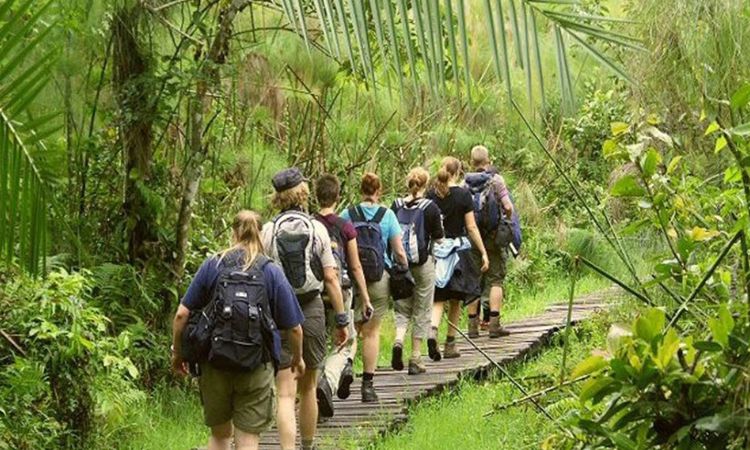
Despite sitting beside one of Africa’s most celebrated primate forests, Bigodi Wetland Sanctuary remains wonderfully uncrowded — a place where you walk at your own pace, guided by knowledgeable community naturalists, through a living ecosystem of over 200 bird species, eight primate species, and hundreds of butterflies.
For birders, it is one of the finest wetland birding sites in East Africa. For families and curious travelers, it is a warm, authentic window into Ugandan community conservation at its most inspiring.
This complete Bigodi visitor guide covers everything you need to know before you go: location and how to get there, what to expect on the swamp walk, wildlife and bird highlights, entrance fees, what to pack, where to stay, and how to combine Bigodi with chimpanzee trekking and other western Uganda experiences.
Location and How to Get to Bigodi Wetland Sanctuary
Bigodi Wetland Sanctuary is located in Kamwenge District, western Uganda, approximately 6 km south of the main Kibale National Park chimpanzee trekking gate at Kanyanchu. The nearest major town is Fort Portal — Uganda’s ‘Tourism City’ — which lies approximately 36 km to the northwest.
Distance from Kampala
Bigodi is approximately 340 km from Kampala, Uganda’s capital. The drive takes 5 to 6 hours via the Fort Portal highway, passing through the tea estates of Mubende and the crater lake landscapes of the Ndali-Kasenda area.
The road is mostly tarmac and in good condition for the majority of the journey, though the final stretch to Bigodi village may be unpaved depending on recent road improvements.
Road Directions
| From Kampala | Take the Kampala–Fort Portal highway (A109 / B2). Pass through Mubende, Kyenjojo, and Fort Portal. From Fort Portal, take the Kamwenge road south toward Kibale NP. Bigodi village is 6 km past the Kanyanchu ranger station. |
| From Fort Portal | Approx. 36 km south on the Kamwenge road. Follow signs for Kibale National Park and continue 6 km past Kanyanchu. Well-marked. |
| By public transport | Take a bus or taxi from Kampala to Fort Portal (5–6 hrs), then a boda-boda (motorcycle taxi) or special hire to Bigodi. |
| Best vehicle | Standard saloon car can reach Bigodi in dry season. 4WD recommended in wet season. |
Most visitors combine Bigodi with a Kibale National Park chimpanzee trekking experience, which departs from the Kanyanchu visitor centre just 6 km away. This makes a single overnight stay in the area sufficient to do both activities — chimp tracking in the morning and the Bigodi Swamp Walk in the afternoon.
The Bigodi Swamp Walk: What to Expect
The Bigodi Swamp Walk is the signature experience of Bigodi Wetland Sanctuary and one of the most distinctive guided nature walks in Uganda. Unlike a conventional game drive or forest trek, the Bigodi walk takes you on foot through a genuine papyrus wetland — a mosaic of swamp forest, fig trees, elephant grass, and open water channels — in the company of a trained local community guide.
Duration and Distance
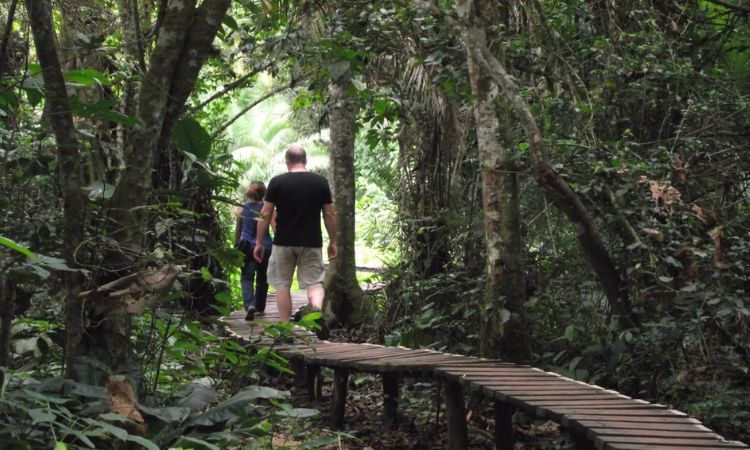
The standard Bigodi Swamp Walk takes approximately 2 to 3 hours and covers around 4 to 5 km of gentle terrain along well-maintained trails and elevated boardwalk sections.
The pace is leisurely — you stop frequently to observe birds, primates, and insects — making it accessible to most fitness levels including older travelers and families with children aged 8 and above.
What Makes It Unique: A Community-Run Conservation Project
Bigodi Wetland Sanctuary is not a government park or a commercial wildlife operation. It is a community-run conservation project established in 1992 by the Kibale Association for Rural and Environmental Development (KAFRED) — a local community organization that recognized the wetland’s ecological and tourism value and organized to protect and benefit from it.
Every guide who leads you through the swamp is a trained member of the local community. Every entrance fee you pay goes directly into community development — school fees, medical support, conservation education, and infrastructure for Bigodi village.
When you walk through Bigodi, you are not just watching birds: you are funding a community that has chosen conservation over cultivation, and doing so with remarkable success for over three decades.
This community ownership model gives the Bigodi experience a warmth and authenticity that is hard to find in large commercial parks. Your guide will share personal stories, point out medicinal plants used by local healers, explain the history of the wetland, and make the experience feel genuinely personal rather than packaged.
The Trail Experience
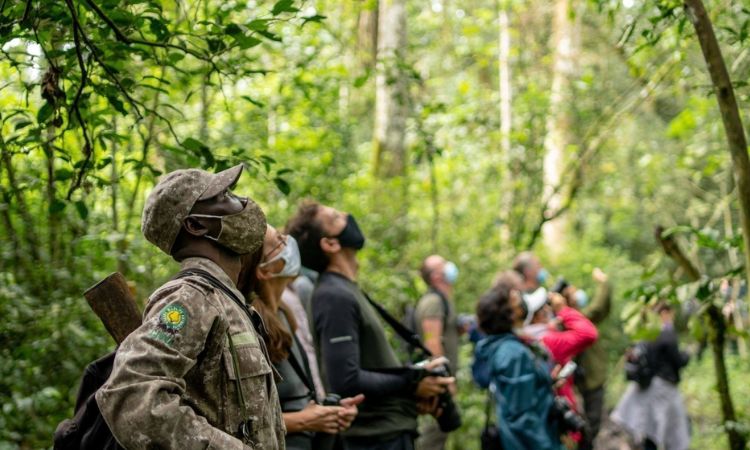
The trail begins at the KAFRED community centre in Bigodi village, where you register, meet your guide, and receive a brief orientation. From there the path winds into the wetland through papyrus stands, beneath enormous fig trees draped with epiphytes, and along channels where kingfishers dart and monitor lizards bask.
The sound environment alone — the calls of turacos, the shrieking of colobus monkeys overhead, the hum of insects — is worth the visit. Most walks end back at the community centre where visitors can browse the craft shop, share a glass of local banana beer (enguli or omuramba), and speak with local artisans.
Wildlife at Bigodi Wetland Sanctuary: Birds, Primates and More
Birds of Bigodi: 200+ Species
Bigodi Wetland Sanctuary is one of the finest birding sites in Uganda and ranks among the top wetland birding destinations in all of East Africa.
Over 200 bird species have been recorded within the sanctuary, making it a must-visit site for twitchers, listers, and wildlife photographers.
The combination of papyrus wetland, swamp forest, and cultivated forest edge creates exceptional habitat diversity that supports an extraordinary range of species.
Key Bird Species to Look For
- Great Blue Turaco (Corythaeola cristata) — the undisputed star of Bigodi. The world’s largest turaco, electric blue, green, and yellow, commonly seen flying between fig trees. One of Uganda’s most photographed birds.
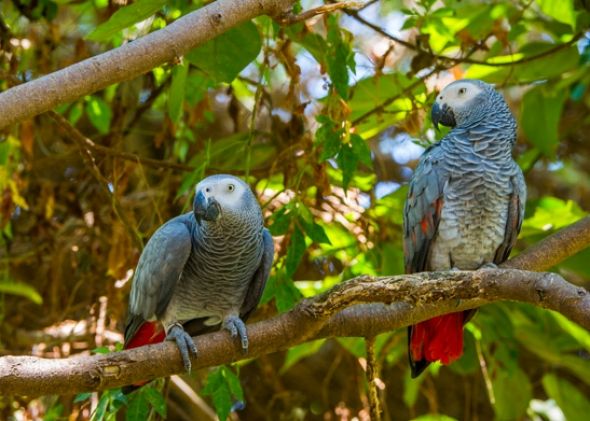
- African Grey Parrot (Psittacus erithacus) — increasingly rare across Africa due to trapping pressure, but reliably seen at Bigodi. Flocks pass over at dusk.
- Black-and-White Casqued Hornbill — the dramatic, prehistoric-looking hornbill of western Uganda’s forests. Often heard before seen.
- Crowned Hornbill — a frequently seen forest hornbill with a striking yellow bill and red orbital ring.
- African Pygmy Kingfisher — a jewel of the undergrowth, brilliantly colored in orange, violet, and blue.
- Malachite Kingfisher — brilliant turquoise and orange, perched over every open water channel in the swamp.
- Grey-headed Kingfisher — commonly seen on exposed perches over the wetland trail.
- Yellow-billed Oxpecker — often encountered near the wetland edge where buffalo occasionally graze.
- Black-and-White Weaver, Slender-billed Weaver, and Northern Brown-throated Weaver — multiple weaver species breed in the papyrus.
- Papyrus Gonolek — a papyrus specialist and near-threatened species rarely seen outside quality papyrus wetlands.
- Blue-breasted Bee-eater — nesting in the sandy banks around the wetland margin.
- Nahan’s Francolin — a Vulnerable forest species found in the forest patches adjacent to the swamp.
- African Fish Eagle — heard and seen overhead, hunting the open channels.
- Palm-nut Vulture — often perched in raffia palms at the swamp edge.
- Little Greenbul, Yellow-whiskered Greenbul — active in the canopy of swamp forest.
Primates of Bigodi: Eight Species
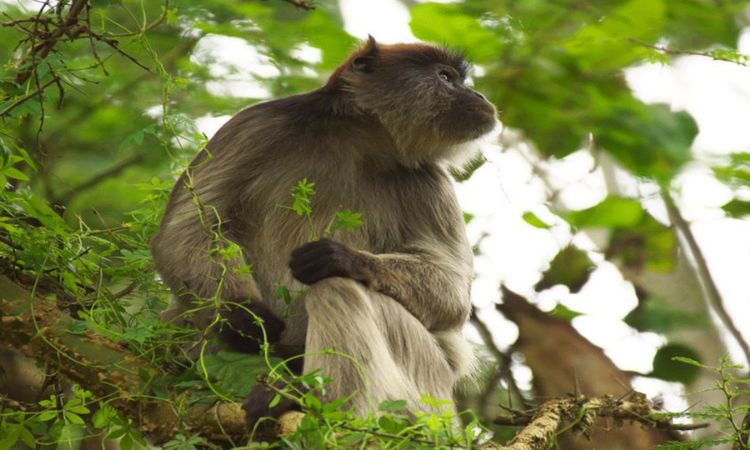
One of the most remarkable features of Bigodi Wetland Sanctuary is the density and diversity of primates found within the wetland and adjacent forest patches. Eight primate species have been recorded — making it one of the highest primate diversities of any community-managed site in Uganda.
- Red Colobus Monkey (Piliocolobus tephrosceles) — Uganda’s endemic red colobus, found in large and noisy troops in the swamp forest canopy. This is the same species that draws researchers to Kibale — seeing them here, for a fraction of the park entry cost, is one of Bigodi’s greatest draws.
- Black-and-White Colobus Monkey (Colobus guereza) — striking in their cloaks of black and white, these colobus monkeys are commonly encountered leaping through the fig trees of the swamp.
- Red-tailed Monkey (Cercopithecus ascanius) — perhaps the most commonly seen monkey at Bigodi; small, active, and distinctive with a white nose patch and reddish tail.
- L’Hoest’s Monkey (Allochrocebus lhoesti) — a shy, ground-foraging monkey of the forest undergrowth, dark in coloring with a white bib. Bigodi is one of the more reliable sites for this secretive species in Uganda.
- Grey-cheeked Mangabey (Lophocebus albigena) — a large, arboreal monkey of the forest canopy, recognized by its loud gobbling call often heard across the wetland.
- Olive Baboon (Papio anubis) — encountered at the wetland edge, often in large troops.
- Vervet Monkey (Chlorocebus pygerythrus) — common in the trees around the village edge.
- Chimpanzee (Pan troglodytes) — not habituated at Bigodi and therefore not reliably seen, but chimpanzees are known to enter the sanctuary, particularly from adjacent Kibale. Occasional sightings are reported.
Other Wildlife
Beyond birds and primates, Bigodi Wetland Sanctuary supports a rich community of other animals that reward attentive walkers.
- Butterflies: Over 130 butterfly species have been recorded, including the spectacular African Giant Swallowtail and numerous forest species. The diversity of butterfly life makes Bigodi a draw for entomologists and photographers.
- Reptiles: Monitor lizards (Nile monitor) are commonly seen basking along the water channels. Crocodiles are occasionally reported in the larger wetland areas. Chameleons and forest skinks are found along the trail.
- Sitatunga (Tragelaphus spekii): This semi-aquatic forest antelope is occasionally sighted in the deeper papyrus areas — a bonus wildlife encounter for fortunate visitors.
- African Buffalo: Small buffalo herds sometimes move through the sanctuary, particularly in the early morning hours.
The Bigodi Cultural and Community Experience
What makes Bigodi genuinely different from Uganda’s national parks is its human dimension. The sanctuary was created by local people to protect a resource they valued, and visiting it means engaging with that community in a meaningful way.
Community Tourism Initiative
KAFRED — the Kibale Association for Rural and Environmental Development — was founded by Bigodi villagers in 1992 when community members recognized that the wetland was being degraded by farming, charcoal burning, and papyrus harvesting.
Rather than waiting for government intervention, they organized themselves, established the sanctuary, trained guides, and opened the wetland to tourism.
Today KAFRED channels all tourism revenue into community projects including school bursaries for local children, a community health fund, environmental education programs, and infrastructure for the village.
The result is a community that genuinely values its wetland — not as an abstract conservation concept, but as a tangible source of income and pride. That ethos permeates every interaction at Bigodi, from the enthusiasm of the guides to the welcome you receive at the community centre.
Local Guides
All walks are guided by trained community naturalists who have grown up in Bigodi and know every tree, bird call, and monkey troop in the swamp. Many guides have worked at the sanctuary for years and have developed exceptional birding skills and natural history knowledge.
Their familiarity with the landscape — and their ability to spot a half-hidden turaco or locate a colobus troop by sound alone — dramatically improves the quality of any visit. Tips are warmly appreciated and go directly to the individual guide.
Craft Shop and Banana Beer
At the start and end of your walk, the KAFRED community centre offers a small but excellent craft shop selling locally made baskets, carved wooden items, handmade jewelry, and batik textiles — all made by community members. Prices are fair and every purchase benefits a local artisan directly.
After the walk, you can sample omuramba (banana juice) or local banana beer — a traditional fermented brew made from ripe bananas that is sweet, slightly sour, and completely unique to the region. It is an excellent way to end the walk in conversation with your guide and community members.
Bigodi Swamp Walk: Entrance Fees and Costs
| Swamp walk fee (foreign adults) | USD $10 per person (approximately UGX 37,000) |
| Swamp walk fee (East African residents) | UGX 20,000 per person |
| Swamp walk fee (Ugandan citizens) | UGX 10,000 per person |
| Children (under 12) | Reduced rate — confirm with KAFRED on arrival |
| Guide fee | Included in entry fee |
| Tip (recommended) | USD $3–5 per guide — warmly appreciated and earned |
| Craft purchases | Variable — budget $10–30 for quality souvenirs |
| Banana beer/refreshments | UGX 2,000–5,000 |
Payment is made at the KAFRED community centre at the trailhead in Bigodi village. Cash (Ugandan Shillings or USD) is strongly recommended as card payment facilities are limited. There are no ATMs in Bigodi — withdraw cash in Fort Portal before arrival.
Best Time to Visit Bigodi Wetland Sanctuary
| Dry season (Dec–Feb, June–Aug) | Best for the swamp walk. Trails are drier and easier underfoot. Excellent visibility in the vegetation. Most comfortable for walking. |
| Wet season (Mar–May, Sep–Nov) | Best for birding. Breeding season brings heightened bird activity, song, and colour. More species active and visible. Trails can be muddy — waterproof footwear essential. |
| Year-round | Primates are present year-round. Bird diversity is high in all seasons. The Great Blue Turaco, colobus, and red-tailed monkeys can be seen any month. |
For most visitors, the dry season months of June, July, and August offer the best all-round experience — comfortable trail conditions, active wildlife, and reliable weather for photography.
December to February is also excellent. If birding is your primary goal, consider visiting during or just after the rains when breeding activity peaks.
What to Pack for the Bigodi Swamp Walk
- Sturdy, closed-toe walking shoes or light hiking boots — the trail can be muddy and uneven
- Waterproof sandals or gaiters as backup for wet season visits
- Long trousers and long-sleeved shirt — protection from insects and scratchy papyrus
- High-strength insect repellent (DEET-based) — essential in the wetland environment
- Binoculars — absolutely essential for birding; minimum 8×42 recommended
- Field guide: Birds of East Africa (Stevenson & Fanshawe) or the Sasol Birds of Eastern Africa app
- Rain jacket or poncho — the swamp can receive afternoon showers year-round
- Sun hat and sunscreen for open sections of the trail
- Small daypack with water (minimum 1.5 litres) and a snack
- Camera with a zoom lens — 200mm or longer recommended for bird photography
- USD cash for entrance fees and tips
Where to Stay Near Bigodi Wetland Sanctuary
Accommodation in and around the Bigodi and Kibale area ranges from simple community guesthouses to comfortable lodges and mid-range tented camps. Most visitors stay in the Kibale / Fort Portal area for 1 to 2 nights and combine Bigodi with chimpanzee trekking.
Luxury and Mid-Range Lodges
- Primate Lodge Kibale (Inside Kibale NP) — Kibale’s most upmarket option, beautifully positioned in the forest. Excellent service, guided forest walks from the lodge.
- Kibale Forest Camp — comfortable tented camp set in the forest near Kanyanchu. Great base for both Kibale chimp tracking and Bigodi swamp walk.
- Turaco Treetops Lodge — mid-range forest lodge with stunning views over the Ndali crater lakes. One of the finest views in western Uganda.
- Ndali Lodge, Crater Lakes — a classic Uganda lodge on the edge of a crater lake, about 30 minutes from Kibale. Exceptional atmosphere and food.
Budget Options
- Bigodi Community Guesthouse — basic, clean rooms right in Bigodi village. Profits support KAFRED. The most authentic local experience.
- Kibale Guest Cottage — simple government-run accommodation at the Kanyanchu visitor centre, affordable and well-located.
- Fort Portal Backpackers — several budget guesthouses and hostels in Fort Portal town, 36 km away.
Combine Bigodi with Other Western Uganda Activities
Chimpanzee Trekking in Kibale National Park
The most natural pairing with Bigodi is a morning of chimpanzee trekking in Kibale National Park — just 6 km away. Kibale is the premier chimpanzee destination in Uganda and arguably in Africa, with a habituated community of over 120 chimpanzees in the Kanyanchu area.
Trekking permits cost USD $250 per person (full day habituation experience: $250). A perfect itinerary combines a 6 AM chimp trek in Kibale with an afternoon Bigodi Swamp Walk — giving you two world-class wildlife experiences in a single day.
Crater Lakes Tour — Ndali-Kasenda Cluster
Western Uganda’s crater lakes district, centered around the Ndali-Kasenda area between Fort Portal and Kibale, is one of Uganda’s most scenically extraordinary landscapes.
Dozens of deep, circular crater lakes — formed by ancient volcanic activity — dot the landscape amid tea estates, banana plantations, and forest patches.
A crater lakes tour can be done by vehicle or on foot (some lodges offer guided walks between multiple lakes) and takes half a day. It combines perfectly with a Bigodi afternoon.
Fort Portal City Tour
Fort Portal is one of Uganda’s most pleasant and underrated towns — clean, friendly, and surrounded by extraordinary scenery.
A Fort Portal city tour can include the Royal Palace of Toro Kingdom (the Toro Kingdom is one of Uganda’s traditional monarchies), the Fort Portal market, local restaurants serving excellent western Uganda cuisine, and views of the Rwenzori Mountains on clear days. Fort Portal serves as the logistical hub for all western Uganda activities.
Queen Elizabeth National Park (via Kasese)
Queen Elizabeth National Park — one of Uganda’s finest and most diverse safari destinations — is approximately 2 to 3 hours south of Fort Portal via Kasese. Adding 1 or 2 nights in Queen Elizabeth to a Kibale + Bigodi itinerary creates an outstanding western Uganda safari combining primates, wetland birding, savannah game drives, the famous tree-climbing lions of Ishasha, and the Kazinga Channel boat cruise.
Sample Itineraries: How to Plan Your Bigodi Visit
1-Day Bigodi + Chimpanzee Tracking Itinerary
5:30 AM: Early breakfast at your lodge. 6:00 AM: Depart for Kibale National Park Kanyanchu gate for morning chimp trek briefing. 6:30–11:00 AM: Chimpanzee trekking in Kibale forest. 11:30 AM: Return to lodge for lunch. 1:30 PM: Drive 6 km south to Bigodi village. 2:00–4:30 PM: Bigodi Swamp Walk (2–3 hours with your community guide). 4:30 PM: Visit KAFRED craft shop, sample banana beer, chat with local artisans. 6:00 PM: Return to lodge for dinner and overnight.
2-Day Kibale and Bigodi Itinerary
Day 1: Arrive Fort Portal from Kampala (5–6 hrs). Check in to lodge. Afternoon: Crater lakes tour or rest. Day 2: Morning chimpanzee trekking in Kibale (6 AM start). Afternoon: Bigodi Swamp Walk. Evening: Dinner at lodge, depart following morning or extend to Queen Elizabeth NP.
Photography Tips for Bigodi Wetland Sanctuary
- Bring a zoom lens of at least 200mm — 400mm or 500mm is ideal for bird photography in the forest canopy.
- Shoot in RAW format and expose for the highlights — the swamp forest is high-contrast with bright canopy gaps and dark undergrowth.
- The Great Blue Turaco is most active and vocal in early morning (6–9 AM) and late afternoon (4–6 PM) — time your walk accordingly.
- For primate photography, fast shutter speeds (1/500s or faster) are essential — colobus and red-tailed monkeys move quickly in the canopy.
- A monopod is more practical than a full tripod on the narrow wetland trails.
- Protect your equipment from humidity — silica gel sachets in your camera bag are worth carrying.
- ALT text for your images: ‘Bigodi Wetland Sanctuary birding Uganda’ | ‘Red colobus monkey Bigodi Swamp Walk’ | ‘Great Blue Turaco Kibale Uganda’
Bigodi Compared to Other Uganda Wetlands
Uganda has several outstanding wetland sites, and understanding how Bigodi compares helps birders and safari planners prioritize their itineraries.
Mabamba Wetland (Lake Victoria): Mabamba is Uganda’s most famous wetland for one specific reason — the Shoebill Stork. If seeing a Shoebill is your primary goal, Mabamba (easily accessible from Entebbe, 1 hour) is the priority. However, for overall bird diversity, primate encounters, and community tourism depth, Bigodi is significantly superior.
Nabajjuzi Wetland (Masaka): A Ramsar-listed wetland of international importance with good papyrus specialists. Less visited than Bigodi and with fewer facilities — suitable for experienced birders seeking off-the-beaten-path experiences.
Lutembe Beach Wetland (Entebbe): Good for migratory waterbirds and shore birds; best during Northern Hemisphere winter (October to March). More urban than Bigodi.
Verdict: For a complete wetland experience combining birds, primates, scenic beauty, and community tourism authenticity, Bigodi Wetland Sanctuary is Uganda’s finest community-managed wetland destination. It is uniquely complementary to Kibale chimpanzee trekking and offers extraordinary value at its modest entry fee.
FAQs About Bigodi Wetland Sanctuary
How much does the Bigodi Swamp Walk cost?
The Bigodi Swamp Walk costs USD $10 per person for foreign visitors, UGX 20,000 for East African residents, and UGX 10,000 for Ugandan citizens.
This fee includes your community guide. A tip of USD $3–5 per guide is strongly recommended. All fees are paid at the KAFRED community centre at the trailhead in Bigodi village.
Is Bigodi worth visiting?
Absolutely yes — Bigodi Wetland Sanctuary is one of Uganda’s most rewarding wildlife experiences and outstanding value for money at $10. The combination of 200+ bird species including the Great Blue Turaco and African Grey Parrot, eight primate species led by red colobus and black-and-white colobus monkeys, and a genuinely warm community tourism experience makes it a highlight of any western Uganda or Kibale safari. Most visitors rank the Bigodi Swamp Walk among their top Uganda experiences.
What animals can you see in Bigodi?
Bigodi Wetland Sanctuary hosts over 200 bird species (including Great Blue Turaco, African Grey Parrot, multiple kingfishers and hornbills, papyrus specialists, and raptors), eight primate species (red colobus, black-and-white colobus, L’Hoest’s monkey, red-tailed monkey, grey-cheeked mangabey, olive baboon, vervet monkey, and occasional chimpanzee), 130+ butterfly species, Nile monitor lizards, occasional sitatunga antelope, and African buffalo.
How long is the Bigodi Swamp Walk?
The standard Bigodi Swamp Walk takes 2 to 3 hours and covers approximately 4 to 5 km of wetland trail at a leisurely pace.
The duration can vary depending on wildlife sightings — birders who stop frequently may take 3 to 4 hours. The trail is relatively flat and suitable for most fitness levels including older travelers and children aged 8 and above.
Can I combine Bigodi with chimpanzee trekking in Kibale?
Yes — and this is the most recommended way to visit. Kibale National Park’s Kanyanchu chimpanzee trekking site is just 6 km from Bigodi.
Morning chimpanzee trekking (starting at 6 AM) combined with an afternoon Bigodi Swamp Walk (starting around 2 PM) is the classic one-day western Uganda wildlife itinerary and gives you two world-class primate and birding experiences in a single day.
Do I need to book the Bigodi walk in advance?
Advance booking is not strictly required for independent visitors, but it is recommended during peak safari season (June–August, December–January) to ensure guide availability.
Groups of 5 or more should always pre-book. You can contact KAFRED directly or book through a Uganda safari operator like us.
Related Uganda Safari Experiences: Explore More
- Kibale National Park Chimpanzee Trekking — the perfect companion to your Bigodi visit
- Uganda Birding Tours — from Bigodi and Mabamba to Bwindi and Mount Elgon
- Uganda Gorilla Trekking — Bwindi Impenetrable Forest and Mgahinga
- Queen Elizabeth National Park Safari — tree-climbing lions, Kazinga Channel, and crater lakes
- All Uganda Safari Packages — customized itineraries for every traveler and budget
Visit Bigodi Wetland Sanctuary with us today!
Bigodi Wetland Sanctuary is the kind of place that quietly becomes the highlight of a Uganda safari. It costs $10, lasts three hours, and delivers an encounter with birds, primates, and community spirit that no national park entrance fee can replicate.
If you are heading to Kibale National Park for chimpanzee trekking — and you absolutely should be — then spending an afternoon at Bigodi is not optional. It is essential.
At Gorilla Nests Safaris, we include Bigodi Wetland Sanctuary in all of our western Uganda safari itineraries. We have been leading travelers through this swamp for years and we never tire of watching a first-time visitor stop dead in their tracks at the sight of a Great Blue Turaco blazing through the canopy overhead, or a red colobus troop crashing through the fig trees twenty feet above the trail. These are the moments that make Uganda the Pearl of Africa — and we are here to share them with you.
Book Your All Uganda Safari Today
- Kibale + Bigodi combination day trips and multi-day packages
- Uganda birding safaris — designed for listers, photographers, and enthusiasts
- Gorilla trekking in Bwindi — Uganda’s most iconic wildlife experience
- Complete Uganda safari packages: gorillas + chimps + Bigodi + Queen Elizabeth + Murchison Falls
- Family-friendly, honeymoon, and small-group itinerariess
Ready to visit Bigodi and explore all of Uganda? Contact Us!
Bigodi: where the turaco flies, the colobus leaps, and every shilling you spend builds a better future for a Ugandan community.