Mount Kilimanjaro: Climbing Guide, Routes, Cost & Best Time 2026
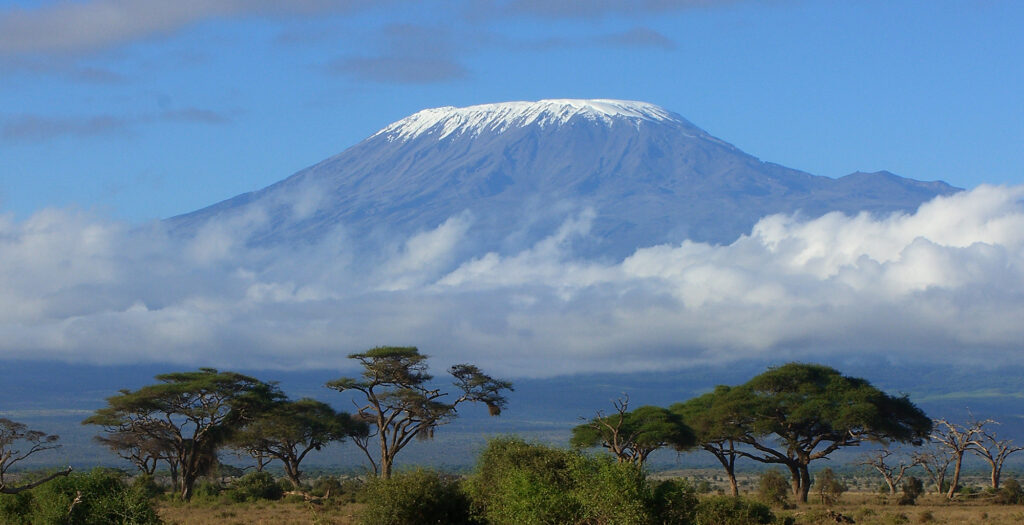
Mount Kilimanjaro is the highest mountain in Africa and one of the world’s most iconic trekking destinations. Located in northern Tanzania, it rises to 5,895 meters (19,341 feet) above sea level and attracts thousands of climbers each year.
As a dormant volcano and part of the Seven Summits (the highest peaks on each continent), Kilimanjaro offers a non-technical but demanding trek through diverse ecosystems—from lush rainforests to alpine deserts and glacial summits.
Designated a UNESCO World Heritage Site in 1987 as part of Kilimanjaro National Park, the mountain stands in splendid isolation above the surrounding plains, making it the highest free-standing mountain in the world.
This comprehensive guide covers everything you need to know to plan and successfully climb Mount Kilimanjaro in 2026, including location, facts, routes, costs, best time, difficulty, packing, and more.
Whether you’re a beginner or experienced trekker, proper preparation is key to reaching Uhuru Peak, the summit on the Kibo cone.
Where Is Mount Kilimanjaro Located?
Mount Kilimanjaro is situated in northeastern Tanzania, near the border with Kenya, in the Kilimanjaro Region. It lies within Kilimanjaro National Park, about 140 miles (225 km) south of Nairobi, Kenya, and roughly 100 miles (160 km) east of the East African Rift System.
The nearest major town is Moshi, a popular base for climbers, offering hotels, gear shops, and tour operators. The closest international airport is Kilimanjaro International Airport (JRO), located between Moshi and Arusha, about 1-2 hours from Moshi by road.
The mountain spans three main volcanic cones: Kibo (the highest and central, with Uhuru Peak), Mawenzi (jagged and eroded), and Shira (a remnant plateau). It rises dramatically from the plains at around 3,300 feet (1,000 m), creating its iconic free-standing profile.
How High Is Mount Kilimanjaro? Key Facts
Mount Kilimanjaro stands at 5,895 meters (19,341 feet) above sea level, confirmed by surveys and recognized by UNESCO and Tanzania National Parks Authority (TANAPA). Uhuru Peak on Kibo is the true summit.
Quick facts:
- Highest point in Africa.
- Highest free-standing mountain in the world (rising ~4,900 m from its base).
- Composed of three extinct/dormant volcanic cones: Kibo (dormant, last major activity ~360,000 years ago), Mawenzi, and Shira.
- Features remnant glaciers on Kibo, though shrinking due to climate change.
- Part of the Seven Summits list.
- Attracts ~30,000–50,000 climbers annually.
- UNESCO World Heritage Site since 1987 for its geological, ecological, and cultural value.
These details often appear in featured snippets due to their concise, factual nature.
Climbing Routes on Mount Kilimanjaro
There are seven main routes to the summit, each varying in duration, difficulty, scenery, crowds, and success rates. Longer routes (7+ days) offer better acclimatization via “climb high, sleep low” profiles, boosting success.
Marangu Route (“Coca-Cola Route”): 5–6 days, moderate difficulty, hut accommodation (no tents), scenic but crowded. Success rate: ~65–70% (lower on shorter versions due to poor acclimatization). Cost: Lower end.
Machame Route (“Whiskey Route”): 6–7 days, moderate-challenging, camping, stunning scenery through rainforests, moorlands, and the Barranco Wall. Success rate: 80–85% on 7 days. Popular and scenic.
Lemosho Route: 7–8 days, moderate, camping, starts in the west with rainforest and Shira Plateau views. Excellent acclimatization and scenery. Success rate: 85–95% (highest among popular routes on longer versions).
Rongai Route: 6–7 days, moderate, northern approach (drier, less rain), fewer crowds. Success rate: ~80–85% on 7 days.
Northern Circuit: 8–9 days, moderate, longest route circling the mountain. Best acclimatization and scenery. Success rate: 90–95%+ (often the highest).
Umbwe Route: 6 days, challenging (steep), direct southern approach. Success rate: ~60% (less acclimatization).
For most climbers, Lemosho (8 days) or Northern Circuit offer the best balance of success, scenery, and safety. Shorter routes increase altitude sickness risk.
Cost to Climb Mount Kilimanjaro
Costs in 2026 range from $1,800–$6,500+ per person, depending on route, duration, group size, and operator quality. Budget options (~$1,800–$2,500) use basic services; mid-range ($2,500–$3,500) offer better gear/guides; luxury ($4,000+) include premium amenities.
Typical breakdown (7-day route, mid-range):
- Park fees (conservation $70/day, camping/huts $50–60/night, rescue $20): $800–$1,200.
- Guides, porters, cooks (wages, park entry): $700–$1,000+.
- Meals, tents, transport: Included in package.
- Tips (recommended: $200–$400 total per climber for crew).
- Total: $2,500–$3,500 average for quality operators.
Avoid ultra-cheap operators (<$2,000) — they may skimp on crew welfare or safety. Prices include VAT (18%) and are higher for private/small groups.
Here’s a sample cost table:
|
Component |
Estimated Cost (USD) |
Notes |
|
Park/Conservation Fees |
$800–$1,200 |
Fixed by TANAPA |
|
Guides/Porters/Cooks |
$700–$1,000 |
Mandatory, ethical wages key |
|
Meals & Camping |
Included |
3 meals/day |
|
Transport/Transfers |
Included |
Airport to Moshi |
|
Tips |
$200–$400 |
Per climber |
|
Total Package |
$2,000–$5,000+ |
Varies by route/duration |
Best Time to Climb Mount Kilimanjaro
The best times are the dry seasons: January–March (quieter, warmer) and June–October (peak, clearest views, stable trails). These offer lower rain risk, better visibility, and higher success rates (85–95% on good routes).
- January–March: Fewer crowds, good weather, but can be colder at summit.
- June–October: Most popular, dry, clear skies—ideal for photos.
- April–May & November: Rainy seasons—muddy trails, clouds, lower success.
Avoid rainy periods unless experienced; dry months maximize safety and enjoyment.
How Difficult Is Mount Kilimanjaro? Fitness and Safety
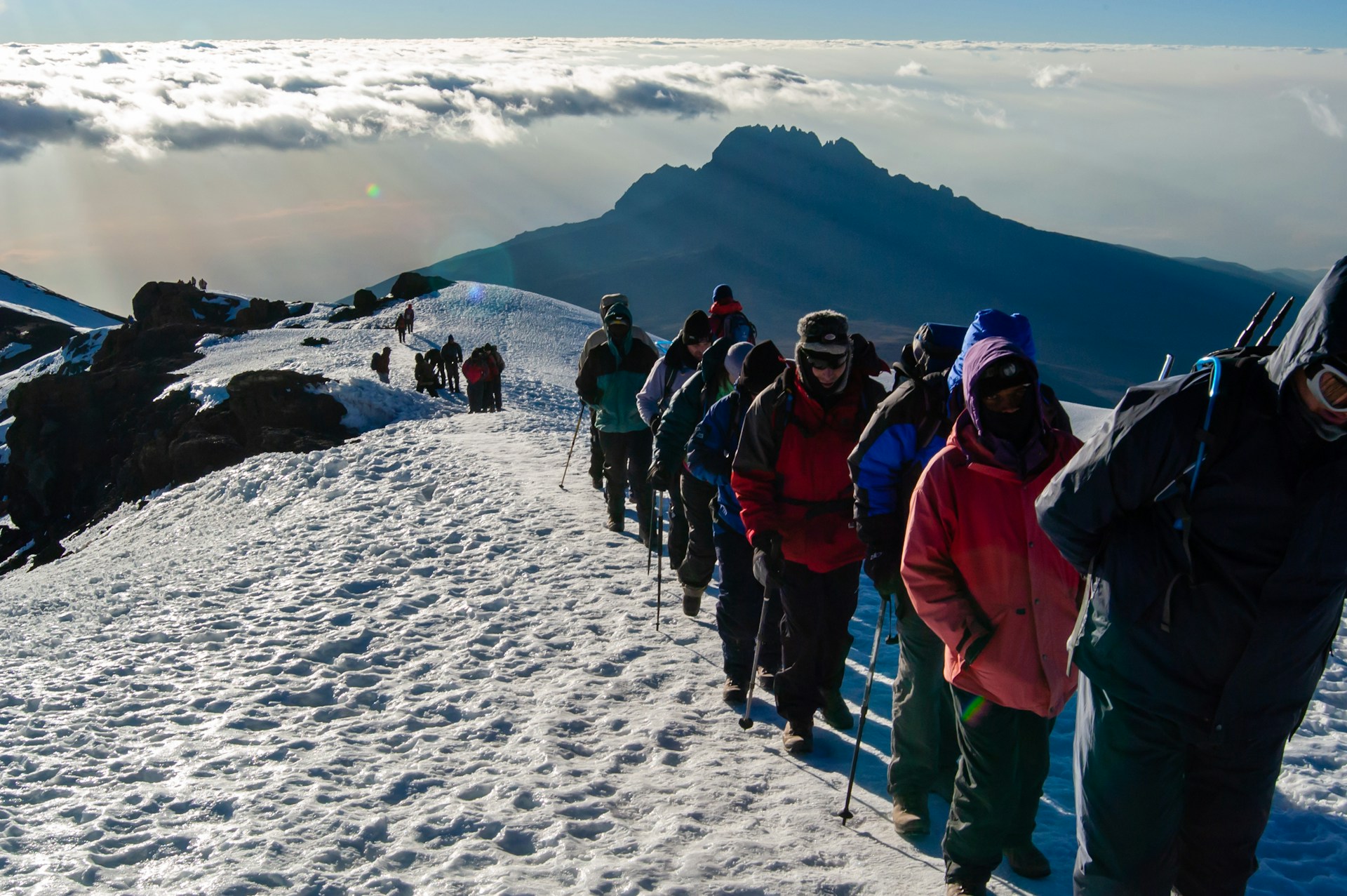
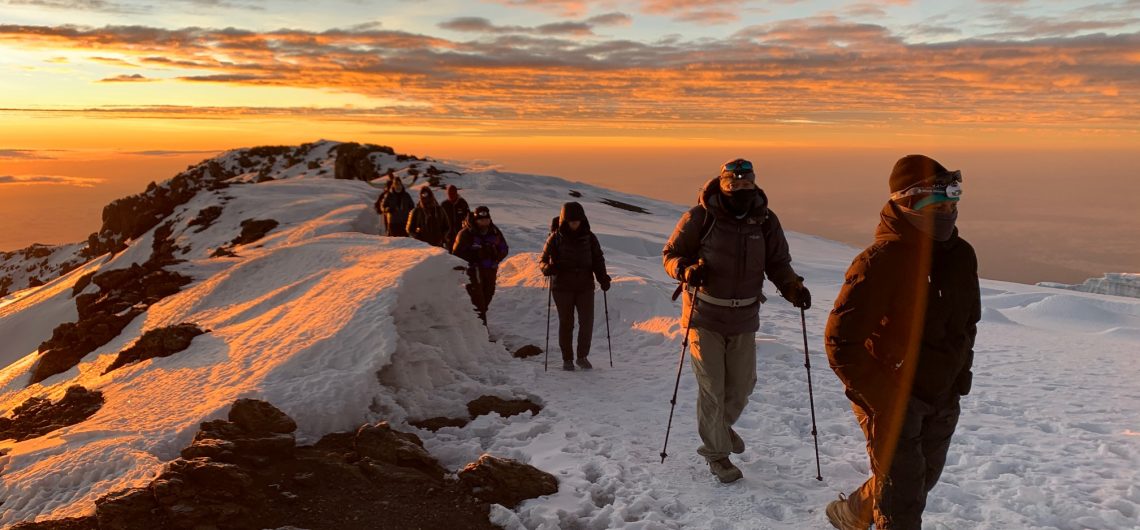
Kilimanjaro is non-technical—no ropes or climbing skills needed—but challenging due to altitude. The main hurdles: endurance (long days, summit push 12–14 hours), altitude sickness (AMS affects ~77% of climbers), and cold/summit night fatigue.
Difficulty: Moderate for fit beginners; main challenge is altitude (oxygen ~50% at summit). No prior mountaineering required, but cardio training (hiking, stairs) helps.
Success rates: Overall ~65–80%; 5–6 day routes ~45–65%; 7+ days ~80–95%+. Altitude sickness (headaches, nausea) is the top reason for failure/turnarounds.
Safety tips: Choose longer routes, stay hydrated, use Diamox if advised, descend if severe AMS. Mortality rate low (~0.03%, often altitude-related).
Mount Kilimanjaro Packing List
Layering is essential for temperature swings (tropical base to freezing summit).
Essentials:
- Clothing: Moisture-wicking base layers, fleece mid-layers, waterproof jacket/pants, down jacket (rated to -10°C+), hiking pants/shorts, thermal underwear, gloves, hat, balaclava.
- Footwear: Broken-in waterproof hiking boots, gaiters, thick socks.
- Gear: 4-season sleeping bag (0°F/-18°C rating), trekking poles, headlamp + batteries, daypack (30–40L), duffel (porters carry).
- Other: Sunglasses, sunscreen, water bottles (3–4L capacity), personal meds (incl. altitude sickness), toiletries, snacks.
Rent bulky items in Moshi if needed.
Accommodation and Travel Planning
Pre/post-climb: Stay in Moshi (hotels from budget to luxury). Airport transfers via operator.
Extend your trip: Combine with Serengeti safari, Zanzibar beaches, or Mount Meru warm-up trek.
Comparison: Mount Kilimanjaro vs. Mount Kenya
Kilimanjaro (5,895m) is higher, non-technical trek vs. Mount Kenya’s (5,199m) technical routes. Kili has better infrastructure/success rates; Kenya offers more wildlife but steeper climbs.
FAQs about Mount Kilimanjaro
Can beginners climb Mount Kilimanjaro? Yes, with good fitness and preparation—no technical skills needed.
How long does it take? 5–9 days on the mountain; longer routes recommended.
Do I need oxygen? No supplemental oxygen usually; acclimatization suffices.
Is it safe? Yes, with reputable operators; altitude is main risk.
What is the success rate? 65–95%, higher on 7+ day routes.
Can children climb? Minimum age ~10–12; consult operator.
How cold is the summit? -7°C to -20°C; windchill worse.
Best route for high success? Northern Circuit or 8-day Lemosho.