
Kigali Genocide Memorial: Rwanda’s Heart of Remembrance & Reconciliation
Kigali Genocide Memorial: The Kigali Genocide Memorial, located in the Gisozi district of Rwanda’s capital, is the final resting place for more than 250,000 victims of the 1994 Genocide against the Tutsi.
Opened on the 10th anniversary of the genocide in April 2004, it is simultaneously a cemetery, a museum, a documentation centre, an education hub, and one of the most emotionally powerful sites on the African continent.
Every year, hundreds of thousands of people — Rwandans and foreigners alike — walk its quiet gardens and sombre exhibition halls. For many visitors, it is the single most important place to understand both the depth of the 1994 tragedy and the extraordinary story of Rwanda’s rebirth.
A Place Born of Necessity
In the immediate aftermath of the genocide, bodies lay where they had fallen: in churches, schools, swamps, and under the floors of private homes. Kigali alone had tens of thousands of unidentified victims.
The new Rwandan government, working with survivor organisations and the charity that would become Aegis Trust (UK), decided that the capital needed a dignified national burial site and a permanent memorial that would tell the truth about what happened.
The chosen hill in Gisozi, a quiet residential area northwest of central Kigali, became that place. Between 1999 and 2004, mass graves were carefully excavated across the city and the remains of 258,989 victims were re-interred here. Today the memorial sits on 2.2 hectares of terraced gardens overlooking the city, a place of both profound grief and deliberate hope.
The Memorial Grounds and Mass Graves
Visitors enter through a simple gate and immediately encounter the Wall of Names — a long series of stone panels that will eventually list every identified victim of the genocide.
The work is slow and painful; families must come forward with documentation, and as of 2025 only about one-third of the names are inscribed.
To the right, terraced mass graves are covered with wide concrete slabs. Purple ribbons (the official colour of remembrance in Rwanda) and fresh roses are placed daily on the central grave, which alone contains more than 40,000 bodies. A flame of remembrance burns eternally nearby.
The gardens themselves are deliberately beautiful: flame trees, bougainvillea, and frangipani soften the landscape. Three symbolic gardens represent loss, unity, and reconciliation.
The Rose Garden, the Centenary Garden of Reflection, and the Garden of Division and Unity guide visitors through the emotional journey from horror to healing.
The Permanent Exhibition: “Wasted Lives”
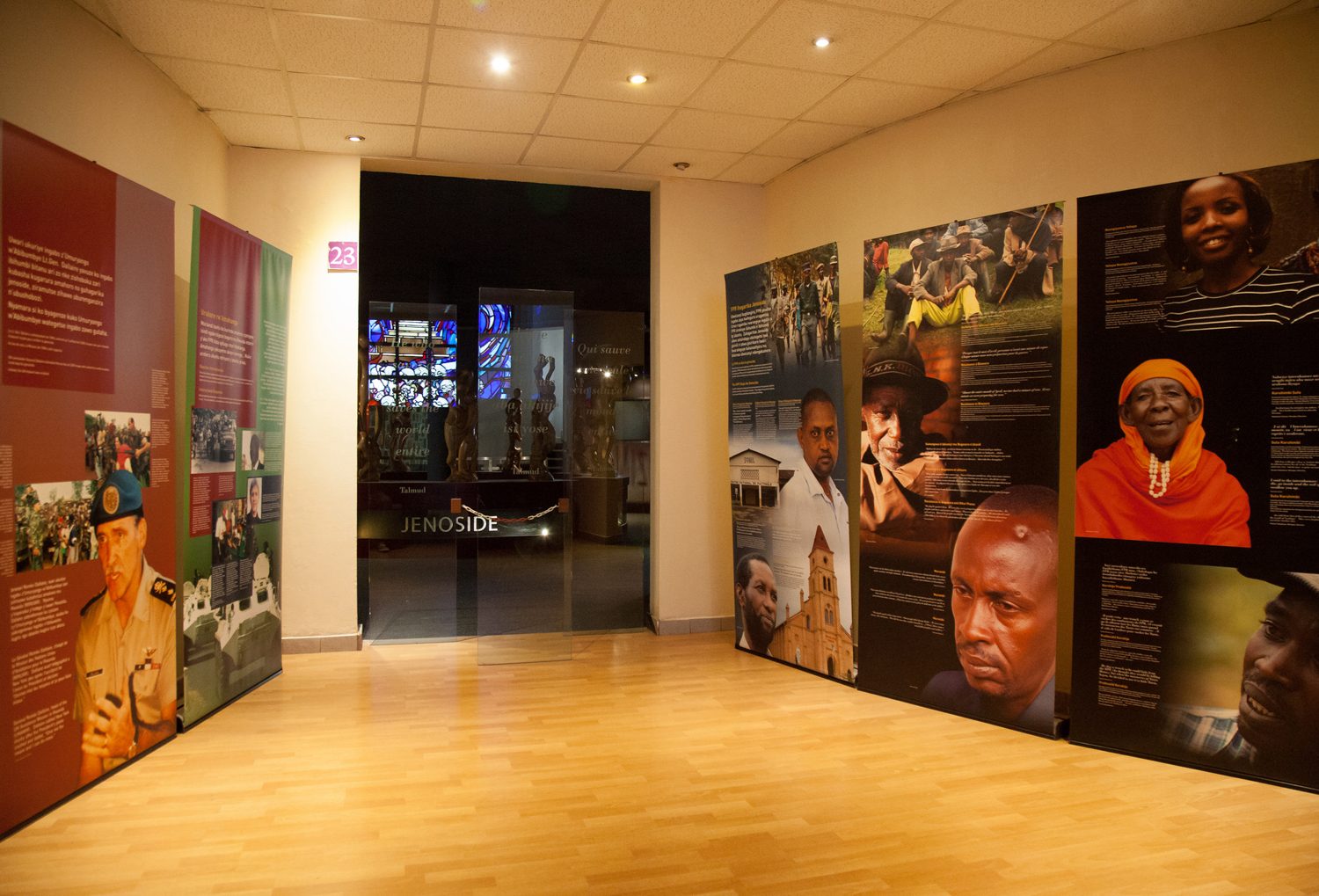
The indoor museum is divided into three main sections, each more harrowing than the last.
Part 1 – Pre-colonial and Colonial Rwanda
The exhibition begins gently, showing Rwanda before colonial rule: a society organised by clans rather than rigid ethnic categories. It then documents how Belgian colonisers, using pseudoscientific racial theories, created the “Hutu” and “Tutsi” identity cards that would later become death warrants. Large panels, photographs, and colonial-era measuring tools illustrate how division was institutionalised.
Part 2 – The Genocide Against the Tutsi
This is the heart of the museum and the part that reduces almost every visitor to silence or tears.
Life-size photos, video testimony from survivors, and personal belongings recovered from killing sites fill the darkened rooms. Children’s clothing with blood stains, a machete still bearing hair, identity cards marked “Tutsi” — the artefacts are simple but devastating.
One particularly unbearable section is dedicated to the murder of children. Photographs of smiling toddlers are accompanied by their names, ages, favourite foods, and the manner in which they were killed: “smashed against a wall”, “macheted in mother’s arms”, “burned alive”. The room is always silent except for muffled sobs.
A circular room contains hundreds of human skulls and bones, arranged respectfully on shelves behind glass. Another displays ropes, clubs, and machetes — the everyday tools that killed almost a million people in 100 days.
Part 3 – The World’s Failure and Rwanda’s Rebirth
The final section examines why the international community abandoned Rwanda. Original UN cables, French and American diplomatic memos, and the infamous “genocide fax” that General Roméo Dallaire sent to New York (and which was ignored) are displayed.
The exhibition ends on a note of cautious hope: footage of community courts (Gacaca), reconciliation villages where survivors and perpetrators now live side by side, and Rwanda’s remarkable development since 1994.
A separate upstairs wing, opened in 2014, documents other 20th-century genocides: the Holocaust, Armenia, Cambodia, Bosnia, and the Herero and Nama genocide in Namibia. The message is clear — this must never happen again, anywhere.
The Children’s Room: A Space of Special Pain
Perhaps the most visited secondary exhibition is the small room dedicated to murdered children. Large portrait photos hang from the ceiling, each accompanied by a plaque:
“Filiette Uwase, age 2 – loved singing and dancing – killed by machete at her church.”
“Ariane Umutoni, age 4 – favourite toy: doll – last words: ‘Mummy, where are you?’”
The room is always full of people crying quietly. Many leave flowers or handwritten notes.
Education Centre and Research Archives
Behind the public areas lies one of the most important genocide documentation centres in the world. The memorial houses more than 50,000 photographs, 3,000 audio and video testimonies, and thousands of legal documents from the International Criminal Tribunal for Rwanda (ICTR) and Gacaca courts.
School groups visit daily. Rwanda mandates that every secondary student visits the memorial at least once, and the centre runs teacher-training programmes across the country. The goal is simple: ensure that future generations know exactly what happened and why it must never be repeated.
Visiting the Kigali Genocide Memorial: Practical Information
Location: KG 14 Ave, Gisozi, Kigali (10–15 minutes by car or moto from city centre)
Opening hours: 8:00 am – 5:00 pm daily (last entry 4:00 pm)
Entry fee (2025):
- Foreign adults: 10,000 RWF (~US$8)
- East African citizens & residents: 3,000 RWF
- Rwandan citizens & refugees: free
- Survivors: free lifetime access
Free audio guides are available in English, French, Kinyarwanda, German, Spanish, Italian, and several other languages. Photography is strictly forbidden inside the exhibition halls but permitted in the gardens.
The memorial has a small café and bookshop. All proceeds support survivor organisations.
Best Time to Visit the Kigali Genocide Memorial
The memorial is busiest during Kwibuka (the 100-day period of official mourning from 7 April to 4 July) and on the first Saturday of every month during Umuganda community service, when many Rwandans come to pay respects.
For a quieter, more contemplative visit, weekday mornings are ideal.
Combining the Memorial with Other Genocide Sites
Many visitors extend their remembrance journey to other key locations:
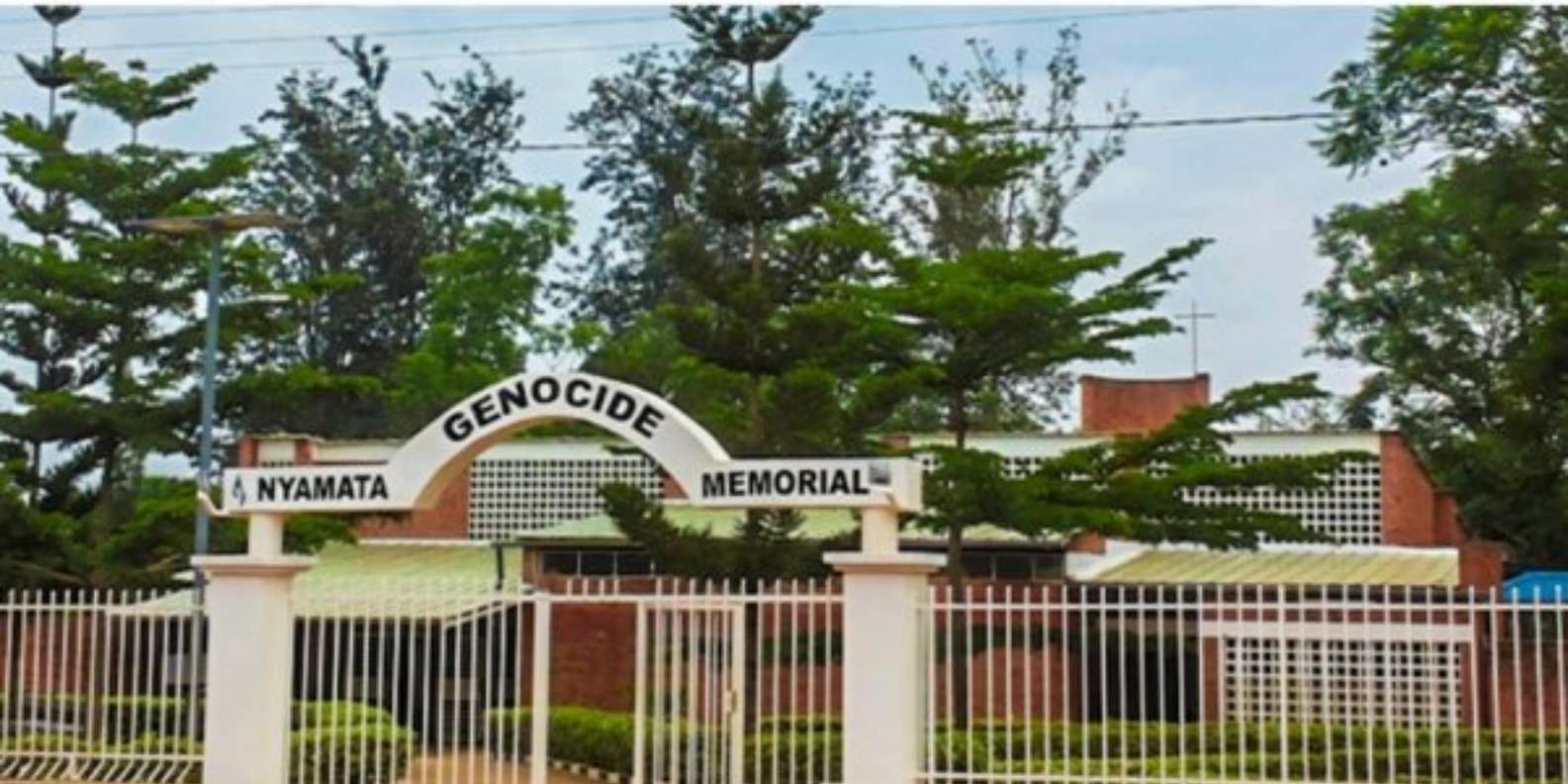
- Nyamata Church (35 km south of Kigali) – 10,000 people murdered inside; bullet holes and blood-stained altar cloth remain.
- Ntarama Church (40 minutes away) – 5,000 killed; the church has been left exactly as it was found.
- Murambi Genocide Memorial (near Gikongoro) – perhaps the most graphic site, with 850 preserved bodies in the classrooms where they were killed.
- Bisesero “Hill of Resistance” – where Tutsi fought back for weeks before being overwhelmed.
Most tour operators offer respectful day trips from Kigali that combine the capital’s memorial with one or two of these churches.
Why the Kigali Genocide Memorial Matters Today
Thirty-one years after the genocide, Rwanda is one of the safest, cleanest, and fastest-growing countries in Africa. Life expectancy has more than doubled, extreme poverty has fallen by 70%, and the country regularly ranks among the least corrupt in the region.
Yet the memorial refuses to let visitors leave with a simplistic “everything is fine now” message. Instead, it forces each person to confront uncomfortable truths: how ordinary people became killers, how the world looked away, and how hate speech and dehumanisation can still destroy societies today.
For Rwandans, the site is sacred ground. Survivors come to speak to their dead. Former perpetrators come to ask forgiveness (and sometimes receive it). Young people born after 1994 come to understand why their parents still flinch at certain sounds.
For international visitors, it is often a life-changing experience. Many leave in tears, determined to learn more about genocide prevention and to challenge division in their own countries.
FAQs about the Kigali Genocide Memorial
Is the Kigali Genocide Memorial too disturbing for children?
Rwanda brings schoolchildren from age 13 upwards. For foreign families, the staff recommend age 12+ with parental guidance.
How long should I plan to spend at the memorial?
Most visitors spend 2–3 hours. Those who listen to the full audio guide or watch all the survivor testimonies often stay 4 hours or more.
Is it appropriate to take photos?
Never inside the exhibition halls or near human remains. Photography is allowed in the gardens if done respectfully.
Are there survivor guides available?
Yes. Many of the memorial’s guides are genocide survivors themselves. Their personal stories add an irreplaceable dimension.
Can I leave flowers or a message?
Yes. There are designated areas in the gardens and next to the mass graves.
Is the site wheelchair accessible?
Most areas are accessible, though some garden paths are steep. Wheelchairs are available on request.
Final Thoughts
The Kigali Genocide Memorial does not offer comfort. It was never meant to. What it offers instead is truth — raw, necessary, and ultimately redemptive.
In a country that has chosen reconciliation over revenge, education over denial, and unity over division, Gisozi stands as both a tomb and a classroom. It reminds the world that even after the worst horrors, human beings can choose to build something better.
Every visitor leaves changed. Many leave crying. Almost everyone leaves with a deeper understanding of what Rwanda lost — and what Rwanda, against all odds, has managed to become.