

Chimpanzee Mating Rituals: Social Behavior, Biology & Reproduction
Chimpanzee mating rituals are fascinating aspects of primate behavior that reveal much about the evolutionary strategies of one of our closest relatives in the animal kingdom.
These rituals encompass a range of social, biological, and environmental factors that influence how chimpanzees reproduce and maintain their communities.
By studying chimpanzee mating rituals, scientists gain insights into chimpanzee reproduction, chimpanzee social behavior, primate mating systems, and chimpanzee breeding behavior.
This knowledge not only enhances our understanding of primate evolution but also supports conservation efforts by informing strategies to protect endangered populations.
In this article, we explore the scientific underpinnings of these behaviors, drawing from decades of field research to provide an educational perspective.
Chimpanzees (Pan troglodytes) are highly intelligent primates native to the forests and savannas of Central and West Africa. Their mating rituals are not random but are deeply intertwined with their complex social structures.
Observing these behaviors helps researchers address broader questions in evolutionary biology, such as how genetic diversity is maintained in wild populations. Moreover, understanding chimpanzee mating rituals contributes to primate research by highlighting parallels and differences with human social dynamics, albeit in a strictly scientific context.
This educational exploration emphasizes the importance of ethical observation and conservation, ensuring that our knowledge benefits the species without harm.
Overview of Chimpanzee Social Structure
To fully appreciate chimpanzee mating rituals, it’s essential to understand the social framework in which they occur. Chimpanzees live in multi-male, multi-female communities, often numbering between 20 to 150 individuals.
These groups are fluid, with subgroups forming and dissolving based on foraging needs, social alliances, and reproductive opportunities.
This fission-fusion society allows for dynamic interactions that directly impact chimpanzee reproduction and chimpanzee breeding behavior.
At the heart of chimpanzee social behavior is the dominance hierarchy, a ranked system where individuals vie for status through displays of strength, coalitions, and social maneuvering.
Alpha males typically hold the highest rank, granting them preferential access to resources, including mating opportunities.
However, dominance is not solely about physical prowess; it involves political savvy, such as forming alliances with other males to maintain power. Females also have their own hierarchies, though less rigid, influencing their roles in primate mating systems.
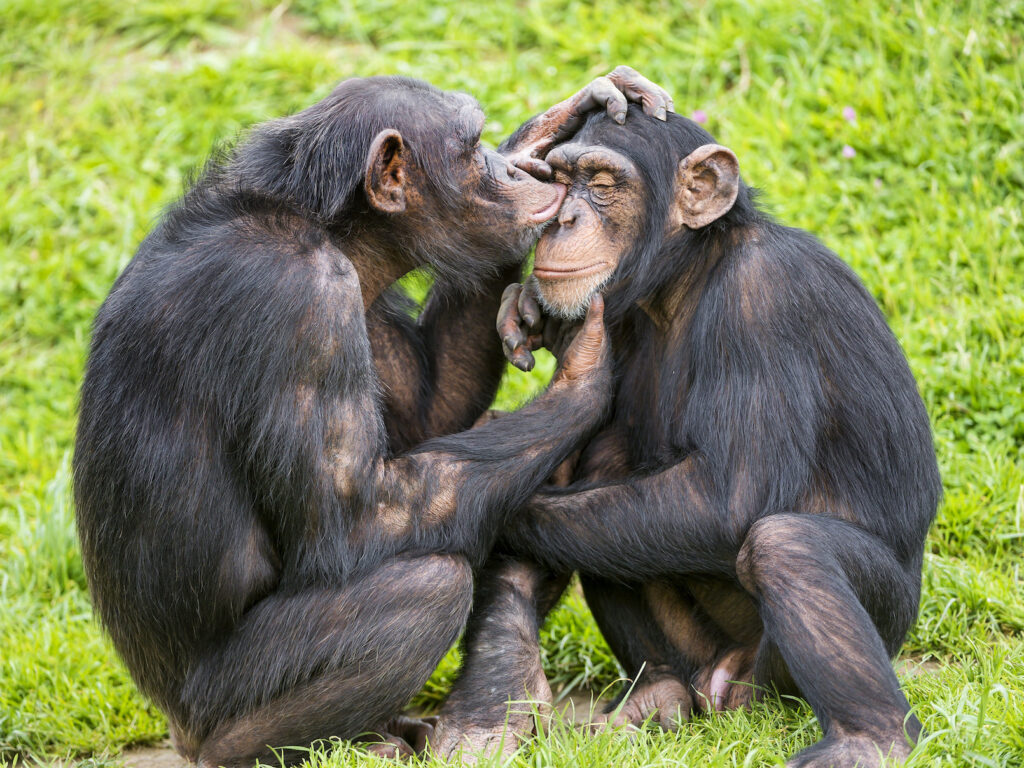
Group dynamics play a pivotal role in chimpanzee mating rituals. In these communities, social bonds are strengthened through grooming, sharing food, and cooperative hunting. Such interactions foster trust and reciprocity, which extend to reproductive strategies.
For instance, subordinate males may form temporary alliances to challenge the alpha, indirectly affecting mating access. This social complexity underscores why chimpanzees are often studied as models for understanding early human societies, providing valuable data for evolutionary anthropology.
Research from sites like Gombe Stream National Park in Tanzania, pioneered by Dr. Jane Goodall, illustrates how these structures evolve over time.
Long-term observations show that disruptions, such as habitat loss, can alter hierarchies and, consequently, chimpanzee breeding behavior. By examining these elements, we see how chimpanzee social behavior is adaptive, ensuring survival in varying environments.
Mating System of Chimpanzees
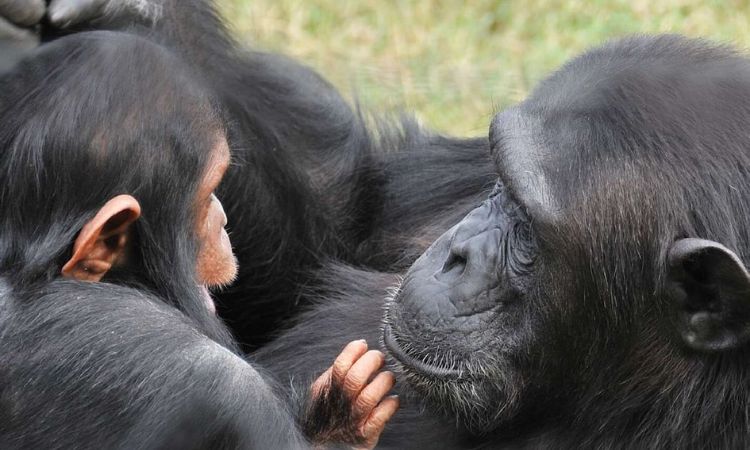
Chimpanzees exhibit a promiscuous mating system, a key feature of their primate mating systems where individuals engage with multiple partners. This approach contrasts with monogamous or polygynous systems seen in other primates and promotes genetic diversity within groups.
The evolutionary advantages are clear: by diversifying offspring genetics, populations become more resilient to diseases and environmental changes.
In scientific terms, this promiscuity is driven by natural selection pressures. Females in estrus attract multiple males, leading to sperm competition, where the quality and quantity of sperm determine fertilization success.
This biological mechanism encourages males to develop strategies beyond mere dominance, such as persistence and social bonding. Studies in behavioral ecology highlight how this system reduces inbreeding risks, a critical factor in small, isolated communities.
Importantly, chimpanzee mating rituals in this context focus on the “why” rather than explicit details. The promiscuous nature supports population health, as evidenced by genetic analyses from wild troops.
For example, DNA paternity tests from field studies reveal that while alpha males sire a disproportionate number of offspring, subordinates also contribute significantly, ensuring broad genetic input. This balance is vital for chimpanzee reproduction and long-term species viability.
Environmental factors further influence this system. In resource-rich areas, promiscuity may increase due to larger group sizes, while in scarcer habitats, it might be tempered by energy conservation needs. Overall, the promiscuous mating system exemplifies adaptive chimpanzee breeding behavior, honed over millions of years of evolution.
Female Estrus & Signaling
A cornerstone of chimpanzee mating rituals is the female estrus cycle, a period of heightened fertility marked by physiological and behavioral changes.
Estrus, scientifically known as the ovulatory phase, lasts approximately 10-14 days in a 36-day menstrual cycle. During this time, females exhibit signals that communicate reproductive readiness to males, facilitating chimpanzee reproduction.
Physical signals include swelling of the anogenital region, a visual cue that peaks mid-cycle and indicates optimal fertility. Behaviorally, females may increase proximity to males, engage in more grooming, or display submissive postures to encourage interaction.
These signals are interpreted by males through a combination of visual, olfactory, and auditory cues, allowing them to assess timing accurately.
Fertility awareness in chimpanzees is sophisticated; males often form consortships, temporarily isolating a female to maximize mating chances. This behavior underscores the role of signaling in primate mating systems, where clear communication reduces conflict and enhances efficiency.
Research from the Tai Forest in Ivory Coast shows that females in estrus can attract up to a dozen males, leading to competitive yet structured interactions.
From an educational standpoint, understanding estrus helps explain seasonal breeding patterns and population dynamics. It also informs veterinary practices in captive settings, where monitoring cycles aids in managed chimpanzee breeding behavior. By focusing on these biological processes, we appreciate the intricate balance in chimpanzee social behavior.
Male Competition & Courtship Behavior
Male chimpanzees employ a variety of strategies in chimpanzee mating rituals, centered on competition and courtship within their hierarchical societies.
Displays of strength, such as charging, branch-shaking, and vocalizations like pant-hoots, serve to assert dominance and deter rivals. These behaviors are part of chimpanzee social behavior, where physical prowess signals genetic fitness.
Vocalizations play a crucial role, with specific calls used to attract females or intimidate competitors. Grooming emerges as a key social bonding tool, fostering alliances that can lead to cooperative mating access.
Males often form coalitions, where subordinates support each other against the alpha, illustrating the political nature of primate mating systems.
Dominance is not absolute; strategic males may use stealth or persistence to gain opportunities, bypassing direct confrontation. Long-term studies, such as those at Kibale National Park in Uganda, reveal that while alphas secure more matings, clever subordinates achieve paternity through alternative tactics. This diversity in approaches highlights evolutionary adaptations in chimpanzee breeding behavior.
Courtship also involves gift-giving, like sharing food, to build rapport. These non-aggressive methods emphasize the multifaceted nature of male strategies, blending competition with cooperation to optimize chimpanzee reproduction.
Role of the Alpha Male
The alpha male holds a central position in chimpanzee mating rituals, often gaining preferential access through maintained dominance. Achieving alpha status involves a mix of physical strength, intimidation, and alliance-building, as observed in classic studies by Jane Goodall at Gombe.
Alphas face constant challenges from subordinates, leading to dynamic power shifts. Political behavior, such as mediating conflicts or supporting key allies, is essential for longevity in rank. Examples from research show alphas siring up to 50% of offspring in their tenure, underscoring their impact on chimpanzee reproduction.
However, alpha status is precarious; injuries or coalition uprisings can lead to demotion. This fluidity ensures that chimpanzee social behavior remains adaptive, preventing monopolization of genes.
Mating Strategies of Female Chimpanzees
Female chimpanzees exhibit proactive mating strategies in chimpanzee mating rituals, exercising choice to optimize offspring success. Mate selection often favors dominant males for protection but includes subordinates for genetic variety, promoting diversity in chimpanzee breeding behavior.
To avoid aggression, females may sneak away with preferred partners or use signaling to manage male attention. This strategic avoidance minimizes risks during vulnerable periods. Genetic diversity is a core goal, as females mate with multiple partners to confuse paternity and reduce infanticide threats.
Protection of offspring is paramount; strong social bonds with males ensure communal support. Studies from Budongo Forest in Uganda highlight how females leverage alliances for infant safety, illustrating the sophistication of chimpanzee social behavior in primate mating systems.
Seasonal Patterns & Environmental Influence
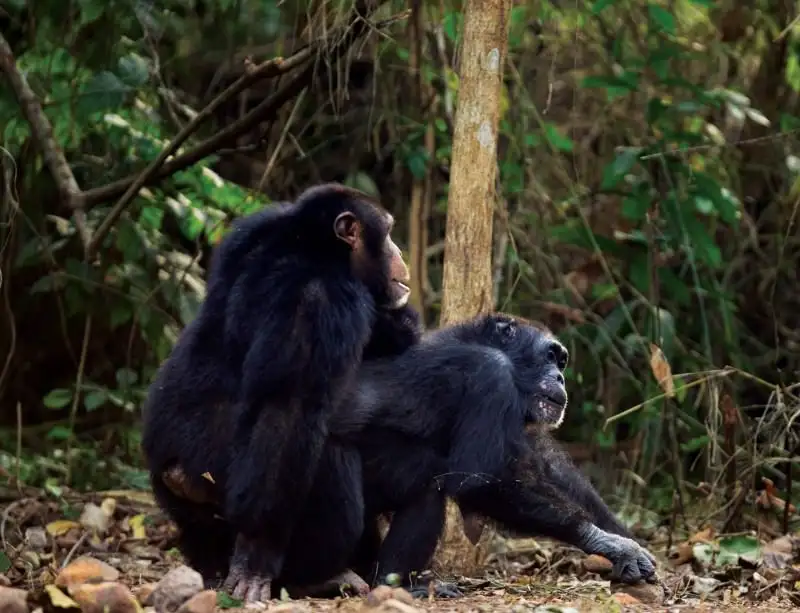
Chimpanzee mating rituals are influenced by seasonal and environmental factors, with peaks often aligning with food abundance during rainy seasons. Rainfall boosts fruit availability, providing energy for chimpanzee reproduction and increasing estrus frequency.
In forests, breeding is more year-round, while savanna populations show pronounced seasonality due to resource scarcity. Habitat differences affect group sizes and dynamics, impacting chimpanzee breeding behavior.
Climate change poses threats by altering these patterns, as noted in conservation reports. Understanding these influences aids in predicting population trends and implementing protective measures.
Pregnancy, Birth & Infant Care
Following successful chimpanzee mating rituals, pregnancy lasts about 230 days, a gestation period allowing for fetal development. Birth spacing averages 5-6 years, ensuring maternal investment in each offspring.
Births occur singly, with mothers seeking seclusion for safety. Mother-infant bonding is immediate, involving constant carrying and nursing. Group members, including siblings and allies, contribute to care, exemplifying communal chimpanzee social behavior.
This extended care phase is crucial for survival, teaching young chimpanzees social norms and survival skills integral to primate mating systems.
Differences Between Chimpanzees and Other Primates
Comparing chimpanzee mating rituals with other primates reveals unique adaptations. Gorillas employ a polygynous system, where silverback males dominate harems, contrasting chimpanzees’ promiscuity.
Bonobos, close relatives, emphasize female bonds and use affiliative behaviors for conflict resolution, differing from chimpanzee male hierarchies. Humans share some traits like concealed ovulation but diverge in cultural influences on primate mating systems.
These comparisons enrich our knowledge of evolutionary divergences in chimpanzee reproduction.
Conservation Importance of Understanding Mating Behavior
Knowledge of chimpanzee mating rituals is vital for conservation. It informs population management in protected areas, ensuring genetic viability through habitat corridors.
Captive breeding programs use behavioral insights to mimic natural chimpanzee breeding behavior, boosting reintroduction success. Human activities like deforestation disrupt these rituals, leading to declines; thus, education promotes habitat protection.
Organizations like the Jane Goodall Institute leverage this for advocacy, highlighting the link between research and preservation.
Ethical Research & Observation Guidelines
Studying chimpanzee mating rituals requires ethical protocols. Researchers maintain distances of at least 7 meters to avoid stress, using non-invasive methods like camera traps.
Non-interference ensures natural behaviors, as per guidelines from the International Primatological Society. This trustworthiness bolsters scientific validity and public support for primate studies.
FAQs about Chmpanzee mating rituals
How do chimpanzees choose mates?
Chimpanzees select mates based on dominance, alliances, and genetic benefits, with females often choosing multiple partners for diversity in chimpanzee reproduction.
Do chimpanzees mate for life?
No, chimpanzees have a promiscuous system and do not form lifelong pairs, differing from some birds or primates.
What role does dominance play in mating?
Dominance grants alphas priority in chimpanzee mating rituals, but subordinates use strategies to participate.
How long is a chimpanzee pregnancy?
Chimpanzee gestation is approximately 230 days, supporting complex brain development.
How is chimp mating different from gorillas?
Chimpanzees are promiscuous, while gorillas are polygynous with one dominant male per group.
Why study chimpanzee mating rituals?
It aids conservation, evolutionary biology, and understanding primate mating systems.
What influences seasonal breeding in chimpanzees?
Food availability and rainfall drive peaks in chimpanzee breeding behavior.
How do females signal fertility?
Through physical swelling and behavioral cues during estrus.