

Tree Climbing Lions Uganda: Ultimate Guide to Seeing Ishasha’s Unique Pride
Tree climbing lions uganda: Discover Uganda’s famous tree-climbing lions in the Ishasha Sector of Queen Elizabeth National Park. Learn why they climb trees, the best time to see them, how to get there, safari costs, and top lodges near Ishasha.
Introduction
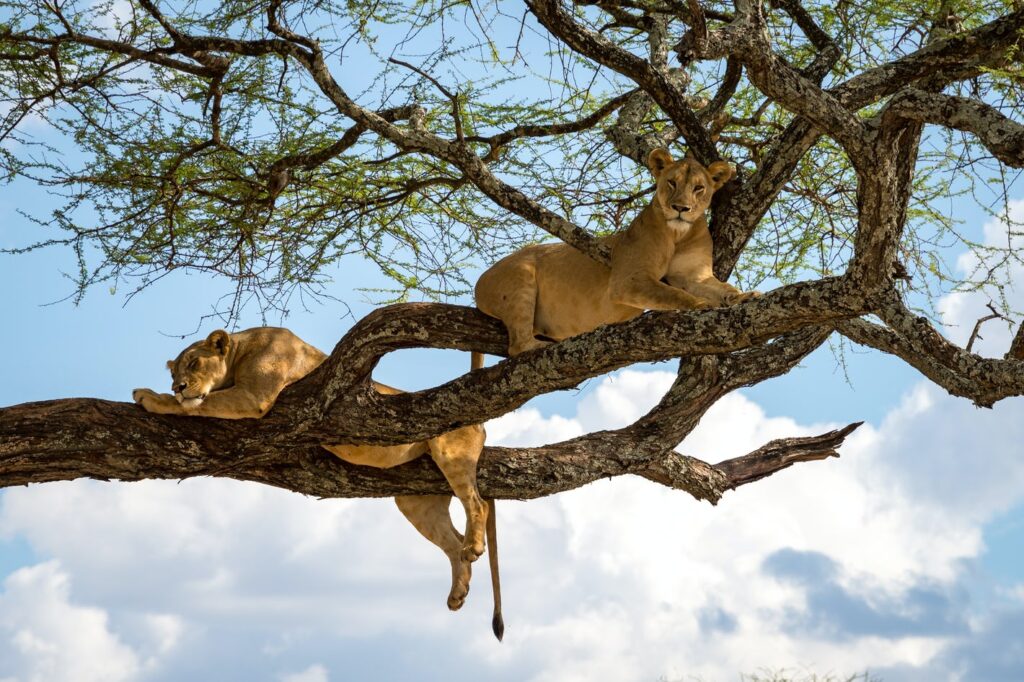
Tree climbing lions Uganda are one of Africa’s most captivating wildlife spectacles, drawing safari enthusiasts from around the world to witness these majestic big cats lounging high in the branches.
Unlike typical lions that roam the savannas on the ground, these unique felines have adapted to an arboreal lifestyle, making Uganda famous for this rare behavior.
The prime spot to see them is the Ishasha Sector of Queen Elizabeth National Park, where prides regularly scale fig and candelabra trees for rest and vantage points.
This phenomenon, observed primarily here and in a few other isolated areas, offers an unforgettable glimpse into the wild. Whether you’re a first-time visitor or a seasoned traveler, planning a trip to spot tree climbing lions Uganda promises adventure, stunning scenery, and close encounters with nature’s wonders. In the following guide, we’ll cover everything from their behaviors to safari tips, helping you craft the perfect itinerary.
What Makes Uganda’s Tree-Climbing Lions Unique
Uganda’s tree-climbing lions stand out in the animal kingdom due to their extraordinary habit of ascending trees, a behavior not commonly seen in other lion populations across Africa.
While most lions avoid trees after reaching adulthood—except in dire situations like escaping buffalo herds—these lions in the Ishasha Sector make it a regular part of their routine.
Weighing between 200-400 pounds, their ability to climb is impressive, showcasing powerful muscles and sharp claws that grip bark effectively.
Why do lions climb trees? Several theories explain this unique adaptation. One popular idea is to escape the heat; Uganda’s tropical climate can be sweltering, and elevated branches provide cooler breezes and shade. Another suggests they avoid biting insects like tsetse flies that swarm at ground level.
A better vantage point for spotting prey is also cited, allowing them to survey the savanna from above. Finally, trees offer a safe resting spot away from larger threats like elephants or hyenas.
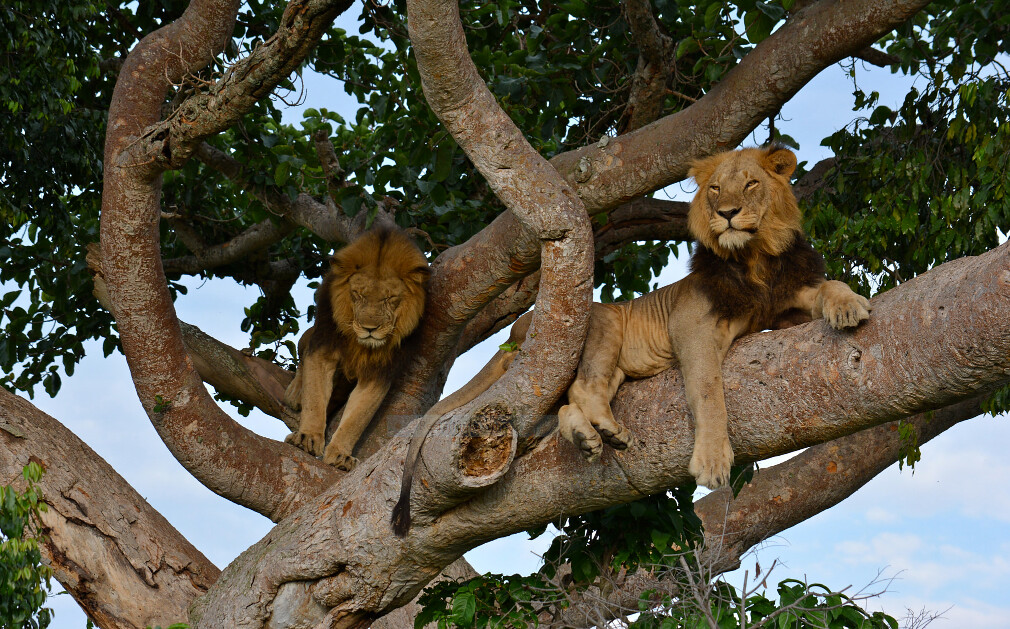
Behaviorally, these unique lions in Uganda differ from regular lions by spending more time aloft, often in groups. They prefer specific tree species, such as large fig trees with sprawling branches for support and candelabra euphorbia trees with sturdy limbs.
This arboreal lifestyle adds a layer of intrigue, making them a must-see for anyone interested in why lions climb trees and the evolutionary quirks of African wildlife.
Where to See Tree-Climbing Lions in Uganda
For high-intent travelers seeking tree-climbing lions, the Ishasha Sector in Queen Elizabeth National Park is the undisputed hotspot.
This remote southern area, bordering the Democratic Republic of Congo, is renowned for its tree climbing lions Ishasha, with prides frequently spotted draped over branches in the open savanna woodlands.
The success rate of sightings here is high, especially during game drives, where rangers guide visitors along well-established routes like the northern and southern circuits.
These paths wind through acacia-dotted plains, increasing chances of encounters—often with 70-80% success on multi-day visits.
Queen Elizabeth National Park lions are iconic, but Ishasha stands out for this specific behavior. Best sightings occur late morning to afternoon when lions retreat to trees for shade.
For comparison, secondary mentions include Tanzania’s Lake Manyara National Park, where tree-climbing lions are also observed, though less predictably.
In Lake Manyara, the behavior is more sporadic and influenced by denser forests, whereas Uganda’s Ishasha offers more open terrain for easier viewing.
While both locations share genetic traits possibly linked to this habit, Uganda’s prides are larger and more habituated to vehicles, providing better photo opportunities.
If you’re debating between the two, Ishasha’s integration with broader Uganda safaris—like gorilla trekking—makes it a superior choice for comprehensive adventures.
Behavior & Ecology
The lion behavior Uganda showcases in Ishasha is fascinating, blending typical feline traits with arboreal twists. Daily routines for the Ishasha lion pride involve early morning hunts, followed by climbing trees around mid-morning to rest during the hottest hours.
They descend in the late afternoon for more activity, with climbing patterns peaking in dry seasons when ground heat is intense.
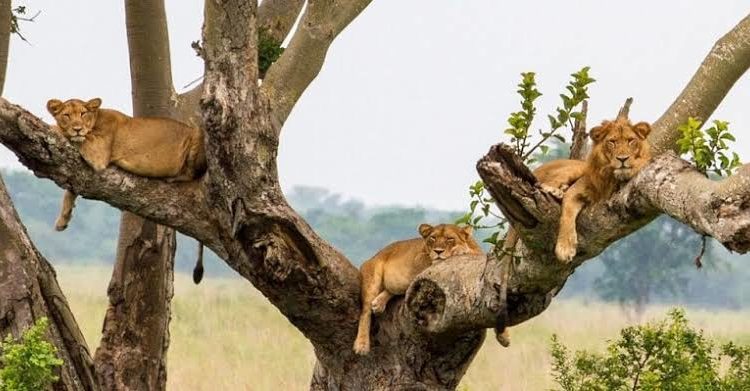
Hunting behavior remains predatory; these lions ambush prey like Uganda kobs and topis from the ground, using trees more for post-hunt relaxation than strategy. Socially, prides here are matriarchal, with 5-15 members, including dominant males who patrol territories.
Climate impacts their habits—dry spells concentrate wildlife near water sources, making sightings easier, while wet seasons disperse them amid lush vegetation.
Ecologically, these lions play a vital role in balancing the ecosystem, controlling herbivore populations in the savanna woodland habitat.
Best Time to See Tree Climbing Lions Uganda
The best time to see tree climbing lions Uganda aligns with the dry seasons: June to September and December to February. During these periods, shorter grass and concentrated water sources make prides easier to locate, with lions more likely to climb for cooling. Wet seasons (March-May, October-November) offer lush scenery but harder sightings due to tall vegetation and scattered animals.
For Ishasha game drives, opt for early mornings (6-10 AM) or late afternoons (3-6 PM), when lions are active or resting visibly in trees. Midday (11 AM-3 PM) can surprise with lions high up, escaping heat.
Safari Experience in Ishasha Sector
An Ishasha Sector safari immerses you in raw African wilderness. Game drives Uganda here typically last 3-4 hours, using open 4×4 vehicles for optimal viewing. Expect ranger-guided tours focusing on lion hotspots amid savannah woodlands dotted with fig trees.
The scenery is breathtaking—rolling plains, acacia groves, and the Ishasha River attracting diverse wildlife. Beyond lions, spot topis, buffalo, elephants, Uganda kobs, and hyenas. Combine with boat cruises or bush walks for a full experience.
Conservation of Tree-Climbing Lions
Uganda lion conservation faces challenges like habitat loss from agriculture, human-wildlife conflict, snares, and poaching. In Queen Elizabeth, lion numbers have dropped to about 39, with threats including livestock predation leading to retaliatory killings.
Efforts by the Uganda Wildlife Authority (UWA) include monitoring, anti-poaching patrols, and community programs around Ishasha. Responsible tourism supports this by funding conservation and educating visitors on protecting tree climbing lions.
How to Get to Ishasha Sector
Reaching Ishasha Sector involves road or air travel. From Kampala, it’s about 450km, taking 7-8 hours via Mbarara. From Kasese (north), it’s 100km south; from Kihihi (near Bwindi), 50km; from Bwindi’s Buhoma, 60km (2-3 hours).
Roads are gravel, better in dry seasons; 4×4 recommended. Nearby airstrips: Kihihi (closest) and Mweya.
Park Entrance Fees & Costs
Queen Elizabeth NP entrance fee for 2025: Foreign non-residents $40/day, foreign residents $30, East African citizens UGX 20,000. Guide fees add $20-30, Ishasha game drives $50-100/person. 4×4 vehicle required; rentals $100-200/day.
Uganda wildlife fees include annual passes for frequent visitors.
Where to Stay Near the Tree-Climbing Lions
Ishasha accommodation options cater to all budgets.
Luxury: Ishasha Wilderness Camp offers tented suites with river views ($400+/night). Kyambura Gorge Lodge provides upscale eco-luxury ($500+).
Mid-range: Enjojo Lodge features thatched cottages ($150-300). Ishasha Jungle Lodge offers eco-friendly stays ($200+).
Budget: Savannah Resort and Pumba Safari Cottages provide basic comforts ($50-100).
Photography Tips for Tree-Climbing Lions
Tree climbing lion photography demands preparation. Use telephoto lenses (300-600mm) for close-ups without disturbing animals. Capture from low angles to emphasize height, focusing on eyes for emotional impact.
Ideal angles: Side profiles against sky or branches. Natural light is key—golden hour enhances fur tones. Maintain respectful distance (30m+); use binoculars first. Stabilize with bean bags on vehicles.
Wildlife photography Uganda thrives here—patience yields stunning shots.
FAQs about Tree climbing lions Uganda
Why do lions in Uganda climb trees? To escape heat, avoid insects, gain vantage points, or rest safely.
Are tree-climbing lions dangerous? Like all lions, they can be if provoked, but they’re generally relaxed around safari vehicles.
How many tree-climbing lions are in Uganda? Around 39 in Queen Elizabeth NP.
Which park has tree-climbing lions? Primarily Queen Elizabeth’s Ishasha Sector.
What time can you see them? Late morning to afternoon in trees; early/late for activity.
Can I combine Ishasha with gorilla trekking in Bwindi? Yes, they’re nearby—many tours link them seamlessly.
In conclusion, Uganda’s tree-climbing lions offer a once-in-a-lifetime spectacle that blends thrill, beauty, and conservation.
Don’t miss this—book your adventure with us at Gorilla Nests Safaris, where expert guides ensure unforgettable sightings, seamless itineraries combining Ishasha with gorilla trekking, and responsible tourism that supports lion protection. Contact Gorilla Nests Safaris today to turn your dream safari into reality!