1 Week Uganda Wildlife Safari: An Epic Wildlife Adventure
1 Week Uganda Wildlife Safari: Here’s a detailed 7-day Uganda safari itinerary (approximately 1,000 words) designed as a classic, immersive adventure focusing on Uganda‘s premier wildlife highlights: chimpanzee tracking in Kibale National Park, savanna game drives and boat cruises in Queen Elizabeth National Park (with chances to spot tree-climbing lions), and the pinnacle experience of mountain gorilla trekking in Bwindi Impenetrable National Park.
This mid-range to luxury route starts and ends in Entebbe (or Kampala), uses private 4×4 transport for scenic drives (total 1,100–1,300 km), and assumes advance booking of limited gorilla ($800 per person in 2026) and chimpanzee ($200) permits through the Uganda Wildlife Authority or a reputable operator.
This itinerary suits active travelers seeking primate close encounters, diverse ecosystems (rainforest to savanna), and cultural glimpses, with moderate physical demands (treks 2–7 hours on uneven trails).
1 Week Uganda Wildlife Safari Tour Highlights
Embarking on a 1-week Uganda safari is an unparalleled adventure into the heart of Africa’s Pearl of Africa, where lush rainforests, expansive savannas, and mist-shrouded mountains converge to offer some of the world’s most intimate wildlife encounters.
This itinerary focuses on gorilla trekking in the ancient Bwindi Impenetrable Forest, chimpanzee tracking in the primate-rich Kibale National Park, and thrilling game drives and boat safaris in Queen Elizabeth National Park, home to the iconic tree-climbing lions and diverse Big Five species (lion, elephant, buffalo, leopard, and rhino—though rhinos are often viewed in sanctuaries).
Key highlights include up-close observations of endangered mountain gorillas, sharing 98% of human DNA, as you trek through dense foliage with expert rangers. In Kibale, witness playful chimpanzees swinging through the canopy, alongside 13 other primate species like red colobus monkeys and L’Hoest’s monkeys.
Queen Elizabeth adds drama with boat cruises on the Kazinga Channel, teeming with hippos, crocodiles, and over 600 bird species, making it a birder’s paradise. Cultural immersions with local Batwa pygmy communities provide insights into indigenous forest life, while scenic drives reveal Uganda‘s volcanic landscapes, crater lakes, and the majestic Rwenzori Mountains.
This safari emphasizes sustainable tourism, supporting conservation efforts that protect these fragile ecosystems. Expect moderate physical activity, with treks lasting 2-7 hours, rewarding you with life-changing moments amid Uganda‘s biodiversity hotspots.
Brief Itinerary of the 1 Week Uganda Wildlife Safari
This 7-day Uganda safari is designed for efficiency, minimizing long transfers while maximizing wildlife experiences. Starting and ending in Entebbe, it covers the southwestern circuit, ideal for first-time visitors seeking primates and classic safari action.
- Day 1: Arrival in Entebbe/Kampala – Settle in, optional city tour.
- Day 2: Transfer to Kibale National Park – Afternoon arrival, evening nature walk.
- Day 3: Chimpanzee Tracking in Kibale – Morning trek, afternoon Bigodi Wetland visit.
- Day 4: Transfer to Queen Elizabeth National Park – Morning drive, afternoon game drive.
- Day 5: Queen Elizabeth Exploration – Boat cruise on Kazinga Channel, evening game drive.
- Day 6: Transfer to Bwindi Impenetrable Forest – Gorilla trekking.
- Day 7: Optional Activities and Departure – Relax at Lake Bunyonyi or return to Entebbe.
This outline assumes mid-range lodging, private 4×4 transport, and all necessary permits. Total driving distance: approximately 1,200 km round-trip.
Detailed Itinerary of the 1 Week Uganda Wildlife Safari
Day 1: Arrival in Entebbe/Kampala – Gateway to Uganda’s Wonders
Your Uganda safari begins upon landing at Entebbe International Airport (EBB), situated on the shores of Lake Victoria, Africa’s largest lake. A private transfer whisks you to your hotel in Entebbe or nearby Kampala, Uganda‘s vibrant capital.
Depending on your flight time, ease into the trip with a relaxed afternoon exploring the Entebbe Botanical Gardens, established in 1898, where you might spot vervet monkeys and exotic birds like the African grey parrot. Alternatively, visit the Uganda Wildlife Education Centre for an introduction to rescued animals, including lions and elephants.
Entebbe offers a gentle acclimation to Uganda‘s tropical climate, with temperatures averaging 25-30°C (77-86°F). Enjoy a welcome dinner featuring local staples like matooke (steamed plantains) and luwombo (stewed meats). Overnight at a mid-range lodge like the Boma Hotel or similar, resting up for the adventures ahead. This day sets the tone for cultural and natural immersion, highlighting Uganda‘s colonial history and modern conservation efforts. (200 words)
Day 2: Transfer to Kibale National Park – Primate Capital
After breakfast, depart early for the 5-6 hour drive (about 300 km) northwest to Kibale National Park, dubbed the Primate Capital of the World. The journey winds through rolling tea plantations and rural villages, offering glimpses of daily Ugandan life—farmers tending banana groves and children waving from roadside markets.
Arrive by midday at your lodge, such as Kibale Forest Camp, nestled in the forest edge. In the afternoon, embark on a guided nature walk to spot birds like the great blue turaco and primates.
Kibale spans 766 sq km of rainforest, hosting over 1,500 chimpanzees and 12 other primate species. Evening brings sounds of the forest—distant chimp calls and nocturnal creatures.
Dinner includes fresh tilapia from nearby lakes, with a briefing on tomorrow’s trek. This park’s conservation story is inspiring: habituated chimp groups allow ethical viewing, supporting local communities through tourism revenue.
Day 3: Chimpanzee Tracking in Kibale – Up-Close Primate Encounters
Rise early for a hearty breakfast before heading to the park headquarters for a ranger briefing. Your chimpanzee tracking adventure begins around 8 AM, lasting 2-5 hours through muddy trails and thick undergrowth. Trackers lead you to a habituated chimp family, where you’ll observe their social behaviors—grooming, tool-using, and vocalizations that echo through the canopy.
Chimpanzees, sharing 98% of our DNA, offer profound insights into human evolution. Expect to see mothers with infants, males patrolling territories, and perhaps inter-group interactions.
After one hour with the chimps, return for lunch. Afternoon: Visit Bigodi Wetland Sanctuary, a community-run project for birdwatching (over 200 species) and spotting monkeys.
This eco-tour supports local education and health initiatives. Relax at the lodge with sundowners, reflecting on the day’s thrills. Kibale‘s biodiversity extends to butterflies, reptiles, and rare forest elephants. (300 words)
Day 4: Transfer to Queen Elizabeth National Park – Savannah Transition
A 2-3 hour drive (about 150 km) south takes you to Queen Elizabeth National Park, Uganda‘s most popular reserve at 1,978 sq km. En route, pass crater lakes formed by ancient volcanic activity, stopping for photos.
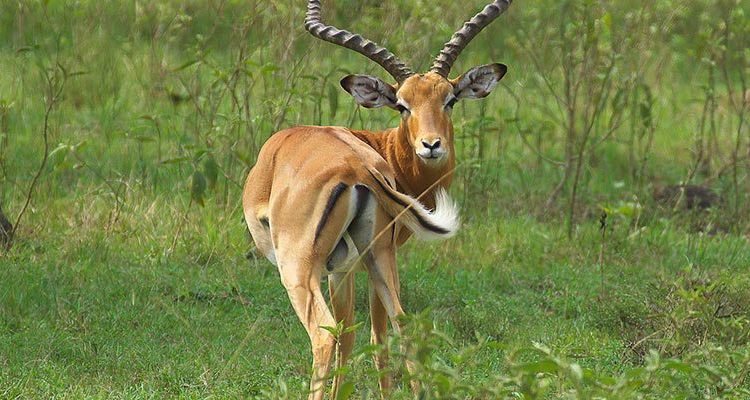
Arrive by lunch at a lodge like Mweya Safari Lodge, overlooking the Kazinga Channel. Afternoon game drive in the Kasenyi Plains, searching for lions, elephants, buffaloes, and Uganda kob (antelopes). This park boasts 95 mammal species and 600+ birds, including flamingos on salt lakes. Evening drive reveals nocturnal hunters like leopards. Dinner features grilled meats, with stories around a campfire.
Queen Elizabeth, named after the British monarch, protects diverse habitats from savanna to wetlands, crucial for migratory birds.
Day 5: Queen Elizabeth Exploration – Water and Land Safaris
Start with a morning game drive in the Ishasha Sector, famed for tree-climbing lions lounging in fig trees to escape heat and insects. Spot topi, warthogs, and herds of elephants.
Midday, embark on a 2-hour boat cruise along the Kazinga Channel, a 32-km waterway linking Lakes George and Edward. Witness massive hippo pods (up to 100 individuals), Nile crocodiles, and bathing buffaloes. Birdlife abounds: African fish eagles, pelicans, and kingfishers. This is one of Africa‘s densest wildlife concentrations.
Afternoon free for optional activities like a lion tracking experience with researchers. Evening relaxation at the lodge, perhaps with a spa session. Queen Elizabeth‘s role in anti-poaching efforts has revived populations, making it a conservation success story.
Day 6: Transfer to Bwindi Impenetrable Forest – Gorilla Trekking Climax
Drive 3-4 hours (160 km) southwest to Bwindi Impenetrable National Park, a UNESCO site spanning 321 sq km of montane forest. The road climbs into misty highlands, passing terraced farms.
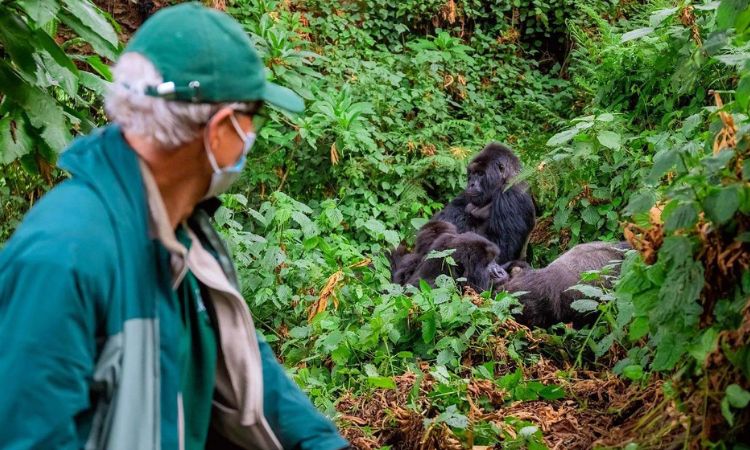
Upon arrival at Bwindi, like Gorilla Forest Camp, receive a briefing. Your gorilla trekking starts early: Hike 2-7 hours with porters and rangers to find a habituated family. Spend one magical hour with mountain gorillas—silverbacks guarding troops, juveniles playing, mothers nursing. With only 1,000 left worldwide, this is a privilege.
Return exhilarated for lunch and optional Batwa cultural visit, learning from forest pygmies about traditional hunting and herbal medicine. Evening celebrates with local dances. Bwindi‘s name evokes its dense, “impenetrable” vegetation, home to half the world’s gorillas. (300 words)
Day 7: Optional Activities and Departure – Farewell to Uganda
If time allows, detour to nearby Lake Bunyonyi (1 hour drive), Africa‘s second-deepest lake, for canoeing amid terraced hills and bird islands. Relax with swimming or hiking.
Transfer back to Entebbe (8-10 hours drive, 500 km, or optional 1-hour flight). Reflect on encounters during the journey. Depart from Entebbe Airport, carrying memories of Uganda‘s wild soul. Extensions available for Murchison Falls or Rwanda borders.
Distance to be Covered
This safari involves scenic drives on mostly paved and gravel roads, with 4×4 vehicles for comfort. Total distance: about 1,200 km. Breakdown:
- Day 1: Airport to hotel – 10-40 km.
- Day 2: Entebbe to Kibale – 300 km (5-6 hours).
- Day 3: Local treks – Minimal driving.
- Day 4: Kibale to Queen Elizabeth – 150 km (2-3 hours).
- Day 5: Park drives – 50-100 km.
- Day 6: Queen Elizabeth to Bwindi – 160 km (3-4 hours).
- Day 7: Bwindi to Entebbe – 500 km (8-10 hours) or fly (minimal road).
Roads can be bumpy; motion sickness meds advised. Flights reduce fatigue for returns.
|
Day |
Route |
Distance (km) |
Estimated Time |
|
1 |
Entebbe Airport to Hotel |
20 |
30 min |
|
2 |
Entebbe to Kibale NP |
300 |
5-6 hours |
|
3 |
Within Kibale (treks) |
20 |
Local |
|
4 |
Kibale to Queen Elizabeth NP |
150 |
2-3 hours |
|
5 |
Within Queen Elizabeth (drives/cruise) |
100 |
4-5 hours |
|
6 |
Queen Elizabeth to Bwindi |
160 |
3-4 hours |
|
7 |
Bwindi to Entebbe |
500 |
8-10 hours |
|
Total |
All Routes |
1,250 |
Varies |
Tour Inclusions
Typical mid-range Uganda safari packages include: Private 4×4 transport with English-speaking driver-guide; all accommodations (full board: breakfast, lunch, dinner); gorilla permit ($700/person); chimp permit ($200/person); park entrance fees; game drives and boat cruises; bottled water; cultural visits; emergency evacuation insurance.
Exclusions
International flights; visas ($50); travel insurance; tips ($10-20/day/guide); alcoholic drinks; optional activities (e.g., balloon rides); personal items; laundry; COVID tests if required.
Travel Gear to Consider for this safari
Pack light (15-20 kg soft bag for flights). Essentials: Neutral clothing (khaki pants, long-sleeve shirts for insects); sturdy hiking boots; rain jacket/poncho; hat, sunglasses, sunscreen; binoculars (8×42); camera with zoom lens/extra batteries; insect repellent (DEET); malaria prophylactics; quick-dry towel; reusable water bottle; flashlight; personal meds/first-aid kit; adapters (Type G plugs); cash (USD for tips). Layers for variable weather: cool mornings (15°C), warm days (30°C). Avoid bright colors. (150 words)
Best Time to Travel
The optimal periods for Uganda safari and gorilla trekking are the dry seasons: June to August and December to February, with clear trails, easier wildlife spotting, and less rain. January-February offers pleasant temps and fewer crowds. Wet seasons (March-May, October-November) bring lush greenery and discounts but muddy paths and potential trek delays. Year-round temps hover 20-30°C, but book permits 6-12 months ahead for peaks.