
Ngorongoro Crater: Wildlife, Safari Guide, Fees & Best Time to Visit
Ngorongoro Crater in Tanzania is one of Africa’s most iconic natural wonders, often hailed as the “Eighth Wonder of the World.” This massive volcanic caldera, the largest intact and unfilled one on the planet, spans an impressive 264 square kilometers and plunges to depths of up to 600 meters.
Situated in northern Tanzania within the Ngorongoro Conservation Area, a UNESCO World Heritage Site since 1979, it offers unparalleled wildlife viewing opportunities year-round.
Home to the famous Big Five—lions, elephants, leopards, buffaloes, and black rhinos—the crater’s natural enclosure creates a self-sustaining ecosystem with some of the highest animal densities in Africa. Whether you’re planning a Ngorongoro Crater safari for the first time or seeking detailed travel tips, this guide covers everything from animals and game drives to entry fees, accommodations, and the best time to visit.
With stunning panoramic views, diverse wildlife, and cultural encounters with the Maasai people, Ngorongoro stands out as a must-visit destination for safari enthusiasts seeking an unforgettable African adventure.
Ngorongoro Crater Location & Geography
Nestled in the heart of northern Tanzania, the Ngorongoro Crater is part of the larger Ngorongoro Conservation Area, which covers a vast 8,292 square kilometers.
This protected region lies approximately 180 kilometers west of Arusha, the gateway city for many Tanzanian safaris, and borders the renowned Serengeti National Park to the northwest.
The drive from Arusha to the crater typically takes about 3-4 hours on well-maintained roads, though the final descent into the crater involves a steep, winding path that’s best navigated with a 4×4 vehicle.
For those combining trips, the Serengeti is just a short drive away, making Ngorongoro an ideal stop on multi-park itineraries.
Geographically, the Ngorongoro Crater is a marvel formed around 2-3 million years ago when a massive volcano erupted and collapsed inward, creating the caldera we see today.
The crater floor measures about 19 kilometers in diameter, encompassing 264 square kilometers of diverse habitats including grasslands, swamps, forests, and a soda lake called Lake Magadi.
The crater walls rise dramatically to heights of 400-600 meters, providing a natural barrier that traps moisture and supports lush vegetation even during dry periods.
The altitude varies significantly: the crater rim sits at around 2,200-2,400 meters above sea level, while the floor averages 1,800 meters.
This elevation contributes to cooler temperatures, often ranging from 10-20°C (50-68°F), and can lead to misty mornings that add to the ethereal atmosphere.
Visitors often describe the descent as entering a lost world, with the rim offering breathtaking panoramic views over the crater below.
To visualize its location, imagine Ngorongoro as part of Tanzania’s Northern Circuit, which includes Arusha National Park, Lake Manyara, Tarangire, Serengeti, and Ngorongoro itself.
A simple map would show it positioned in the Arusha Region, near the town of Karatu, with coordinates approximately at 3°S latitude and 35°E longitude.
This strategic placement not only enhances its accessibility but also boosts its appeal for location-based searches, as it’s easily combined with other top safari spots in Tanzania.
Why Ngorongoro Crater Is Special
What is special about the Ngorongoro Crater? Beyond its geological origins as the world’s largest unbroken caldera, it’s a unique “natural zoo” where wildlife thrives in a confined, fertile basin.
Unlike open savannas, the crater’s steep walls create a microcosm of Africa, supporting over 25,000 large animals in a relatively small area.
This results in exceptional game viewing—predators and prey coexist in high densities, offering sightings that are reliable and often dramatic. It’s one of the few places where you can spot the endangered black rhino in the wild, with a population of around 30 individuals protected here.
The crater is also a birdwatcher’s paradise, hosting over 500 species, including flamingos that turn Lake Magadi pink during certain seasons.
Culturally and historically, Ngorongoro stands out as a multiple land-use area where conservation meets human habitation. The Maasai people, semi-nomadic pastoralists, share the landscape with wildlife, grazing their cattle alongside zebras and wildebeests. This harmonious coexistence exemplifies sustainable ecotourism. Archaeologically, the nearby Olduvai Gorge, often called the “Cradle of Mankind,” has yielded fossils like the 1.75-million-year-old Zinjanthropus boisei skull discovered by Dr. Louis Leakey in 1959, and the 3.6-million-year-old Laetoli footprints, evidence of early bipedalism. These discoveries underscore Ngorongoro’s role in human evolution studies.
Environmentally, the crater’s diverse ecosystems—from acacia woodlands to soda lakes—support year-round wildlife without the need for seasonal migrations within its bounds. It’s been voted one of the Seven Natural Wonders of Africa and is part of the Ngorongoro Lengai UNESCO Global Geopark, the only one in Sub-Saharan Africa.
Films like “Out of Africa” were partially shot here, adding to its cinematic allure. In essence, Ngorongoro’s specialness lies in its blend of natural beauty, biodiversity, cultural richness, and historical significance, making it a bucket-list destination that transcends a typical safari.
Animals Found in Ngorongoro Crater
The Ngorongoro Crater boasts an astonishing array of wildlife, making it a premier spot for Ngorongoro Crater safari experiences. With one of the highest mammal densities in Africa, visitors are almost guaranteed sightings of the Big Five. Lions are particularly abundant, with the crater hosting the densest population in the world—around 60-70 individuals forming prides that hunt on the open grasslands.
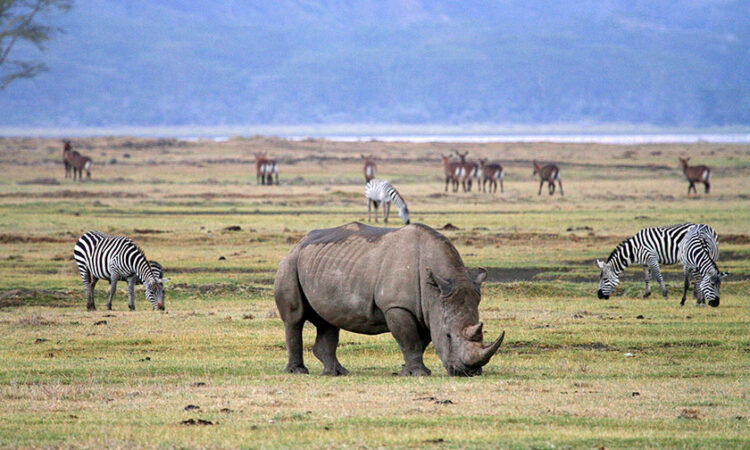
Black rhinos, critically endangered, roam the floor, often seen grazing near swamps; Ngorongoro is one of the best places to spot them in their natural habitat.
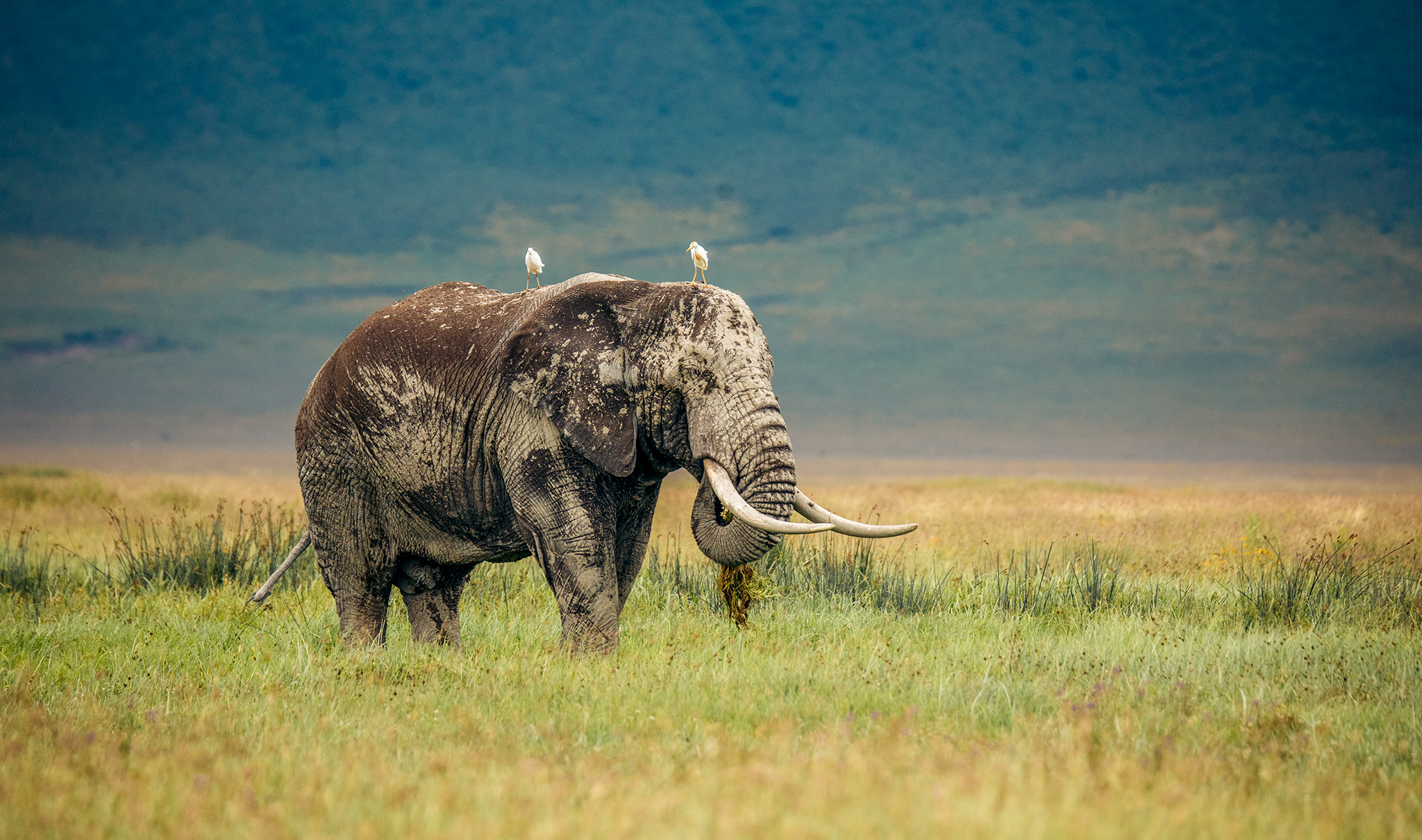
Elephants, primarily large bulls with impressive tusks, frequent the Lerai Forest, while massive herds of buffaloes—numbering in the thousands—dot the plains. Leopards are more elusive, hiding in the acacia trees, but patient observers might catch them during early morning drives.
Beyond the Big Five, the crater teems with herbivores: over 7,000 wildebeests, 6,000 zebras, and thousands of gazelles create a constant spectacle of grazing and movement.
Hippos wallow in the pools and Lake Magadi, while hyenas, jackals, and cheetahs add to the predator lineup. Birdlife is prolific, with ostriches, kori bustards, secretary birds, and migratory species like European rollers enhancing the diversity.
For readability, here’s a table of key animals and their highlights:
|
Animal |
Key Facts |
Best Viewing Spots |
|
Lion |
Densest population; prides of 20+ |
Grasslands |
|
Black Rhino |
~30 individuals; endangered |
Swamps, open areas |
|
Elephant |
Large bulls; forest dwellers |
Lerai Forest |
|
Buffalo |
Herds of 1,000+ |
Plains |
|
Leopard |
Tree-climbing; nocturnal |
Acacia woodlands |
|
Zebra |
Thousands; migratory patterns |
Near waterholes |
|
Wildebeest |
Calving season in Feb |
Southern plains |
|
Hippo |
Pods in lakes |
Lake Magadi |
|
Flamingo |
Pink flocks in wet season |
Soda lake shores |
This biodiversity ensures every safari is unique, with interactions like lion hunts or rhino sightings creating lifelong memories.
Ngorongoro Crater Safari Experience
A Ngorongoro Crater safari is an immersive adventure that combines thrilling game drives with stunning scenery. Most safaris involve descending the crater’s steep walls via a single access road, entering a world teeming with wildlife.
Game drives typically last 5-6 hours, though full-day options are available for deeper exploration. Starting early—at gates open around 6 AM—maximizes chances of seeing active predators like lions on the prowl or leopards returning from nocturnal hunts.
The crater floor’s loop roads allow for comprehensive coverage, with stops at viewpoints like the Hippo Pool or picnic sites overlooking the landscape.
Photography opportunities abound, from wide-angle shots of the caldera to close-ups of animals at waterholes. Specialized activities include walking safaris on the rim (not inside the crater for safety), hot-air balloon rides over the plains for aerial views, and cultural visits to Maasai villages.
For a more intimate experience, opt for private Ngorongoro Crater game drives with knowledgeable guides who share insights on animal behavior and ecology. The safari’s compact nature means you can see the Big Five in one day, unlike larger parks requiring multi-day stays.
However, the descent is limited to one per vehicle per day, so plan accordingly. Whether in an open-sided 4×4 or a luxury vehicle, the experience is magical, often culminating in a picnic lunch amid the wilderness.
Ngorongoro Crater Entry Fees & Costs
Planning a trip to Ngorongoro requires understanding the costs, especially for non-residents. How much does it cost to go to Ngorongoro park for non-residents? Entry fees are structured to support conservation, with separate charges for individuals, vehicles, and crater access.
Here’s a detailed price table (as of 2025, subject to change; check official sources for updates):
|
Category |
Fee (USD) |
Notes |
|
Adult (16+ years) |
71 per person per 24 hrs |
Non-residents/foreigners |
|
Child (5-15 years) |
24 per person per 24 hrs |
Non-residents/foreigners |
|
Child (under 5) |
Free |
|
|
Crater Service Fee |
295 per vehicle per trip |
Required for descent into crater |
|
Vehicle Fee (up to 2000kg) |
47.20 |
Foreign vehicles |
|
Vehicle Fee (2001-3000kg) |
177 |
|
|
Vehicle Fee (3001+ kg) |
236-354 |
Depending on weight |
These fees are in addition to accommodation and tour costs. For example, a family of four (two adults, two children 5-15) with a standard 4×4 would pay about $410 for entry and crater access alone for one day. Budget for guides (around $50-100/day) and any concessions.
Residents and East Africans pay reduced rates, but non-residents fund much of the conservation efforts. Always pay at the Loduare Gate or via pre-arranged permits to avoid delays.
Best Time to Visit Ngorongoro Crater
The best time to visit Ngorongoro Crater depends on your priorities, but the dry season from June to October is ideal for wildlife viewing. During this period, animals congregate around water sources like Lake Magadi and the Gorigor Swamp, making sightings easier amid sparse vegetation.
Temperatures are mild, with lows around 10°C at night and highs of 20-25°C during the day, and roads are dry and accessible. August and September offer peak conditions, with clear skies perfect for photography.
The wet season (November to May) brings lush greenery, fewer crowds, and lower accommodation rates—often 1.5-2 times cheaper. November to February is great for birdwatching, with migratory species arriving, and February sees wildebeest calving on the southern plains.
However, March to May can be rainy, leading to muddy roads and scattered wildlife, though the scenery is vibrant with blooming flowers. Ngorongoro Crater weather is influenced by its altitude, so expect cooler, foggier mornings year-round.
Accommodation Near Ngorongoro Crater
Ngorongoro Crater accommodation ranges from luxury lodges to budget camps, with many perched on the rim for stunning views.
The iconic Ngorongoro Crater Lodge, a luxury option by &Beyond, features stilted suites inspired by Maasai architecture, with fireplaces, butler service, and rates starting at $1,000 per night.
Other high-end choices include the Ngorongoro Serena Safari Lodge and Lemala Ngorongoro Tented Camp, offering en-suite tents with crater views.
For mid-range, consider Gibbs Farm or Plantation Lodge near Karatu, providing comfortable rooms and gardens for $300-500/night. Budget travelers can opt for public campsites like Simba A on the rim ($50/person) or community sites outside the area.
Accommodations inside the conservation area are limited and pricier due to exclusivity, while options outside (e.g., in Karatu) are more affordable and accessible. Book in advance, especially during dry season, and choose based on whether you prefer rim views or proximity to gates.
Ngorongoro Conservation Area & Maasai Culture
The Ngorongoro Conservation Area (NCA) is a pioneering model of multiple land use, established in 1959 to protect wildlife while allowing Maasai habitation. Who owns the Ngorongoro Crater? It’s owned and managed by the Tanzanian government through the Ngorongoro Conservation Area Authority (NCAA), an arm of the Ministry of Natural Resources and Tourism. The NCAA oversees conservation, tourism, and community relations across the 8,292 km² area.
The Maasai, who migrated to the region in the 18th century from the Nile Valley, live harmoniously with wildlife, herding cattle in designated zones.
Cultural tours allow visitors to experience their traditions—visiting bomas (villages), learning about beadwork, dances, and warrior rituals.
This co-existence boosts E-E-A-T by highlighting sustainable practices, with the Maasai benefiting from tourism revenue. The area also includes archaeological sites like Olduvai Gorge, adding educational depth.
Rules & Safari Tips
To preserve Ngorongoro’s pristine environment, strict rules apply: no off-road driving, speed limits of 50 km/h, and no walking on the crater floor without a ranger. Gates close at 6 PM, and crater access ends at 4 PM.
Safari tips include starting early for better light and animal activity, packing layers for variable weather, and bringing binoculars and a good camera.
Wear neutral colors to blend in, stay hydrated, and respect wildlife by keeping distance. For photography, mornings offer soft light; afternoons have fewer vehicles. What to pack: sunscreen, hat, insect repellent, and snacks for picnics.
Ngorongoro Crater vs Serengeti
Comparing Ngorongoro Crater vs Serengeti highlights their complementary strengths. Ngorongoro’s compact 264 km² caldera offers dense, year-round wildlife in a scenic bowl, ideal for short safaris (1-2 days) with easy Big Five sightings.
The Serengeti, spanning 14,763 km², features vast plains and the Great Migration of over 2 million animals, best for extended trips (3+ days) chasing seasonal movements.
Ngorongoro is better for concentrated viewing and cultural elements, while Serengeti excels in diversity and scale—endless horizons vs. enclosed drama.
For short vs. long safaris, choose Ngorongoro for efficiency; Serengeti for immersion. Many combine both for the ultimate Tanzania experience.
FAQs about Ngorongoro Crater
Is Ngorongoro Crater worth visiting? Absolutely—its unique caldera, dense wildlife, and UNESCO status make it a highlight of any African safari.
How long do you spend in Ngorongoro Crater? Most visitors spend 5-6 hours on a game drive, though full-day or multi-day stays are possible.
Can you stay inside the crater? No, accommodations are on the rim or outside; no lodging on the floor to protect wildlife.
Is Ngorongoro Crater safe? Yes, with guided safaris; follow rules to avoid risks from animals or terrain.
Do you see the Big Five in Ngorongoro? Yes, it’s one of the best spots, with reliable sightings year-round.
What is special about the Ngorongoro Crater? Its intact caldera, high animal density, Big Five, and Maasai culture integration.
Who owns the Ngorongoro Crater? Managed by the Tanzanian government’s NCAA.
How much does it cost to go to Ngorongoro park for non-residents? Around $71/adult entry + $295/vehicle crater fee, plus extras.