Where Do Mountain Gorillas Live? Habitat, Countries & National Parks
Where Do Mountain Gorillas Live: Mountain gorillas live exclusively in the high-altitude tropical forests of East-Central Africa. Their entire global population is confined to two isolated regions: the Virunga Mountains and the Bwindi Impenetrable Forest. This limited distribution makes them one of the most range-restricted great apes in the world.
They inhabit only three countries: Uganda, Rwanda, and the Democratic Republic of the Congo. No other locations on Earth support wild mountain gorillas.
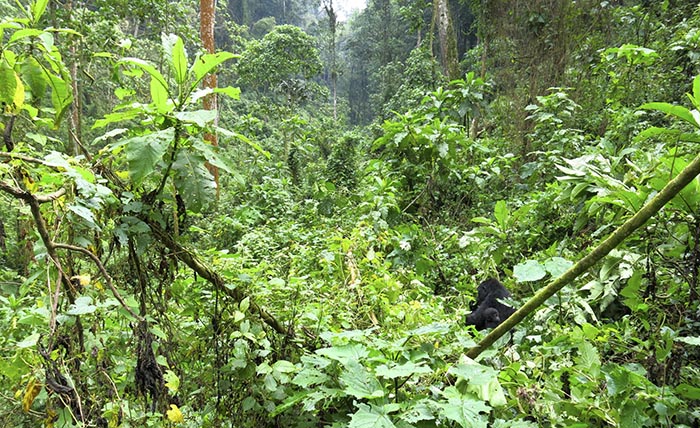
Their habitat consists of montane and bamboo forests situated between 2,200 and 4,000 meters above sea level. These elevations create a cool, misty environment unlike the lowland forests where eastern and western lowland gorillas thrive.
The answer to “where do mountain gorillas live” is remarkably precise because centuries of habitat loss and human expansion have pushed them into these final strongholds. Today, every mountain gorilla you could ever encounter in the wild calls one of these three countries home.
National Parks Where Do Mountain Gorillas Live
Mountain gorillas are protected within a network of UNESCO World Heritage Sites and national parks that form the core of their mountain gorilla habitat. These parks are the only places where responsible gorilla trekking is permitted.
Uganda
- Bwindi Impenetrable National Park: Home to roughly half the world’s mountain gorillas (about 459 individuals). This 331 km² UNESCO site in southwestern Uganda is famous for its dense, ancient rainforest and over 20 habituated gorilla groups.
- Mgahinga Gorilla National Park: Uganda’s smallest park (33 km²) on the Virunga slopes. It protects a small but vital population and offers stunning views of volcanic peaks.
Rwanda
- Volcanoes National Park: The Rwandan sector of the Virunga Massif. This park is renowned for Dian Fossey’s pioneering research and currently hosts more than 300 mountain gorillas across several habituated families.
Democratic Republic of the Congo
- Virunga National Park: Africa’s oldest national park and the largest sector of the Virunga Massif. Despite challenges, it remains a critical sanctuary for the cross-border gorilla population.
These exact locations are the only places on Earth where you can legally and safely observe mountain gorillas in their natural mountain gorilla habitat.
Habitat of Mountain Gorillas
The mountain gorilla habitat is a world of dense, misty forests blanketed in thick vegetation. At elevations of 2,200–4,000 meters, temperatures drop significantly compared to lowland areas, creating a cool, foggy climate that mountain gorillas have evolved to thrive in.
These forests feature bamboo stands, giant lobelia, nettles, and a rich understory of herbs and vines—perfect food sources for these herbivores who consume up to 30 kg of vegetation daily.
The rugged mountainous terrain provides natural protection from predators and humans alike. Mist and rain keep the environment humid, supporting the lush growth that sustains entire gorilla families.
This specific high-altitude ecosystem is ideal because it offers abundant, year-round food with minimal competition from other large mammals. The cool climate also helps regulate their body temperature, as their thick fur would be uncomfortable in hotter lowlands.
Why Mountain Gorillas Live in These Areas Only
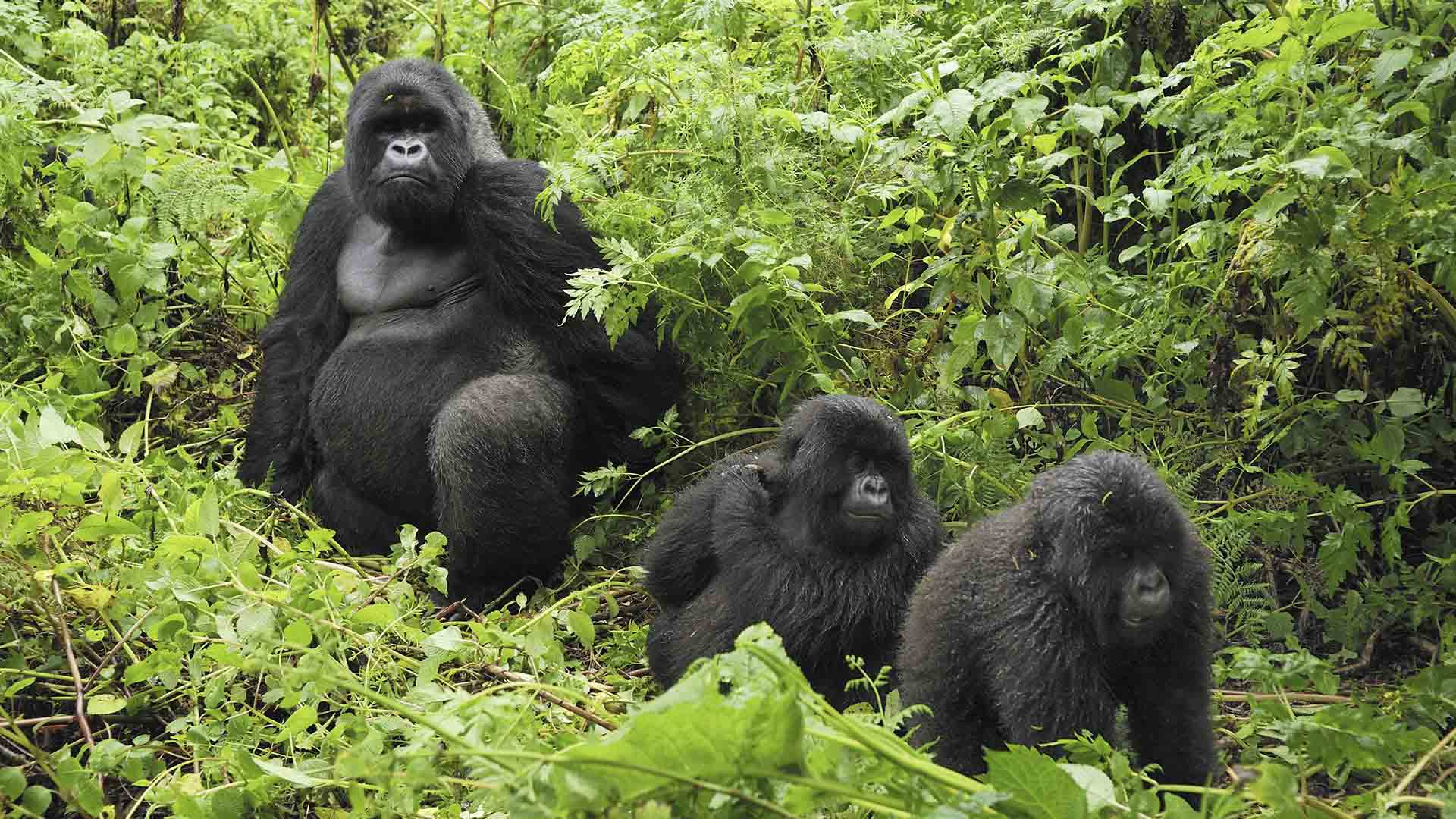
Historically, mountain gorillas had a wider distribution across the Albertine Rift Valley. However, centuries of agricultural expansion, logging, and poaching drastically reduced their range. Today, their limited natural range is a direct result of human encroachment that fragmented ancient forests.
The remaining populations survive only because these specific high-altitude zones were designated as protected areas in the early 20th century.
Strict conservation measures, international funding, and community involvement have prevented further loss. Outside these parks, habitat destruction and conflict make survival impossible.
Their isolation in two separate populations (Virunga and Bwindi) also reflects how human development created barriers that gorillas cannot cross.
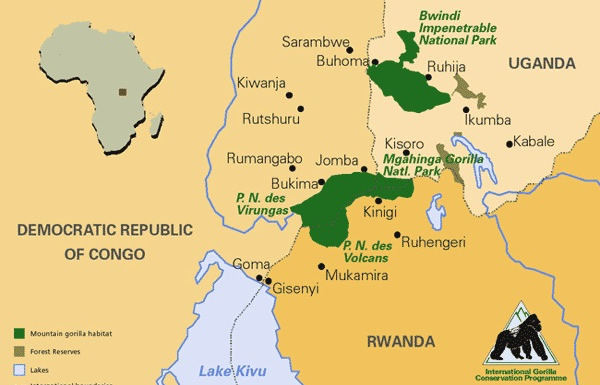
Mountain Gorilla Range (Virunga vs Bwindi)
Scientists recognize two distinct mountain gorilla populations that together answer the question “where are mountain gorillas found”:
- Virunga Mountains Population (shared by Rwanda, Uganda, and DRC)
- Spans the transboundary Virunga Massif across Volcanoes, Mgahinga, and Virunga National Parks.
- Home to over 600 individuals.
- Features volcanic slopes, bamboo zones, and higher elevations up to 4,500 m.
- Bwindi Forest Population (primarily Uganda, with a small extension into Sarambwe, DRC)
- Entirely within Bwindi Impenetrable National Park and adjacent reserves.
- Approximately 459 gorillas.
- Lower average elevation (2,000–2,600 m) with denser, more impenetrable rainforest.
These two ranges are separated by about 50 km of farmland, making gene flow extremely rare. This separation adds to the species’ vulnerability but also highlights the success of park-specific conservation.
africageographic.com
Map of Where Mountain Gorillas Live
Can You See Mountain Gorillas in the Wild?
Yes — and the only way to do so responsibly is through regulated gorilla trekking experiences in the national parks listed above.
Guided visits are available daily in Bwindi Impenetrable National Park and Volcanoes National Park (with limited permits in Mgahinga and Virunga). Small groups of 8 tourists per gorilla family, accompanied by armed rangers and expert trackers, spend one precious hour observing the gorillas.
This conservation tourism model generates vital revenue that funds anti-poaching patrols, community projects, and habitat protection. Bwindi remains the most popular destination for visitors seeking mountain gorilla habitat experiences in Uganda.
Conservation and Protected Areas
The mountain gorilla habitat is fiercely protected by national wildlife authorities: Uganda Wildlife Authority (UWA), Rwanda Development Board (RDB), and Institut Congolais pour la Conservation de la Nature (ICCN).
International partners including the World Wildlife Fund (WWF), Dian Fossey Gorilla Fund, and the Greater Virunga Transboundary Collaboration work tirelessly to safeguard these forests.
Tourism revenue, community education, and veterinary programs have helped the population quadruple since the 1980s. Every gorilla trekking permit directly supports habitat protection, making responsible travel one of the strongest tools for their survival.
Interesting Mountain gorilla Habitat Facts
- Mountain gorillas have never lived in zoos — all attempts to keep them in captivity have failed due to their specific high-altitude needs and sensitivity. Every individual you will ever see belongs to the wild population.
- They build new nests every single night using branches and leaves.
- A single gorilla family may roam across 5–30 km² of forest, moving daily in search of fresh vegetation.
- Their diet is almost entirely vegetarian, with occasional insect snacks.
FAQs – Where Do Mountain Gorillas Live
Which countries have mountain gorillas?
Only Uganda, Rwanda, and the Democratic Republic of the Congo.
Where can I see mountain gorillas in Africa?
In Bwindi Impenetrable National Park and Mgahinga Gorilla National Park (Uganda), Volcanoes National Park (Rwanda), and Virunga National Park (DRC).
What type of habitat do mountain gorillas live in?
Dense, misty high-altitude tropical forests between 2,200–4,000 meters with abundant bamboo and herbaceous vegetation.
Are mountain gorillas only found in Uganda?
No. While Bwindi (Uganda) holds nearly half the population, the Virunga Mountains are shared with Rwanda and DRC.
Why do mountain gorillas live in forests?
These forests provide their only food source, shelter from weather, and protection from humans and predators. The high-altitude environment matches their evolutionary adaptations perfectly.
At All Uganda Safari Tours, we specialize in immersive, responsible tours that take you straight into the heart of Bwindi Impenetrable National Park and the Virunga Mountains.
Our expert guides, comfortable lodges, and seamless logistics ensure you witness these gentle giants in complete safety while supporting conservation.
Book one of our most popular gorilla safari packages today:
Don’t just read about where mountain gorillas live — come see them with us today. Secure your gorilla permit and join an unforgettable All Uganda Safari Tours adventure that directly protects their future. Contact us now to start planning your journey into their misty mountain home.
No responses yet